



The Russia-Ukraine conflict and rising inflation rates in global markets are negatively impacting Bangladesh’s shrimp exports.
Russia and Ukraine were both markets of significance to Bangladesh’s shrimp exporters until the beginning of the war in March 2022. But Bangladesh’s exports to Russia in the most recent fiscal year, which ended 30 June, dropped to 240 metric tons (MT), down 67.2 percent year-on-year, while the value of its exports to Ukraine dropped 72.5 percent, from BDT 110 million (USD 1.09 million, EUR 1.14 million) to BDT 30.2 million (USD 298,400, EUR 312,300).
Bangladesh Frozen Foods Exporters Association Vice President Humayun Kabir told the Dhaka Tribune on 26 September shrimp exports from Bangladesh to Russia and Ukraine have been suspended due to the war. As a result, many of the country’s shrimp farmers are facing losses and have responded by shifting to farming of whitefish species.
In the last fiscal year, a post-pandemic surge in global seafood demand helped the country recover from heavy declines suffered as a result of the COVID-19 crisis. The country exported frozen seafood worth USD 532 million (EUR 556.7 million) in the period, up 12 percent year-over-year. Higher prices as a result of the surge in demand helped boost Bangladesh’s seafood exports to a six-year last year, The Daily Star reported in July.
However, the recovery was short-lived, as beside the negative impact from the Russia-Ukraine war, rapidly rising inflation rates in the U.S. and Europe and the risk of a global recession have created market uncertainty.
"The purchasing power of consumers in both the U.S. and Europe are falling because of high inflation. Shrimp is not an essential commodity. So, its demand is likely to fall," a leading exporter in Chattogram, Bangladesh, told The Daily Star, on condition of anonymity.
BFFEA President Md Amin Ullah said he fears the country’s seafood exports will drop this year as a result of deteriorating market conditions.
Export orders have dropped by almost 40 percent since July, BFFEA Vice President S Humayun Kabir said. Kabir urged Bangladeshi shrimp firms to produce more value-added products to allow them to better compete in global markets and recommended that the government increase subsidies given to exporters to increase their competitiveness.
Companies from Bangladesh have seen sales of black tiger shrimp and freshwater shrimp decline consistently since 2014 in the face of fierce competition from lower-priced vannamei shrimp produced in China, India, Southeast Asia, and Ecuador. To reverse the trend, the government of Bangladesh has granted permission for a number of companies to conduct pilot farming of vannamei recently. In another trial scheme, the government will also consider allowing 13 other companies to process vannamei for exports, The Daily Star reported.
As a result of a similar research program, production of farmed fish in Bangladesh has risen 400 percent over the past 12 years, the Dhaka Tribune reported on 21 September.
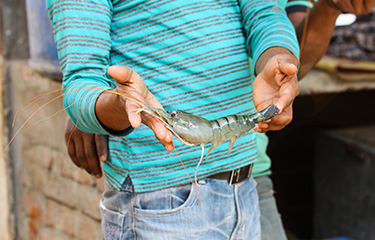
Photo courtesy of Oikeo Projects/Shutterstock
