


The U.S. government has allocated over USD 17 million (EUR 17 million) to support tribes after the declaration of disasters in multiple tribal salmon fisheries on the West Coast from 2014 to 2019.
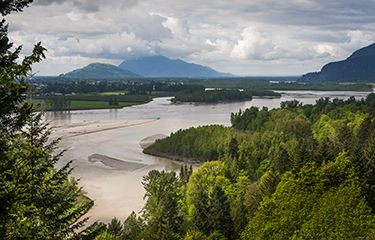
In early September 2022, U.S. Secretary of Commerce Gina M. Raimondo said salmon fisheries on the Fraser, Skagit, Nooksack, and Klamet rivers, as well as Puget Sound, had met criteria to be declared as disasters. Previously, requests for the declarations were made by the tribes after reports of “extremely low” runs of sockeye, chinook, chum, coho, and pink salmon.
The affected tribes include the Swinomish Indian Tribal Community, Tulalip, Upper Skagit Tribes, Lummi Nation, Squaxin Island Tribe, Port Gamble S'Klallam Tribe, and the Yurok Tribe. The tribes told the U.S. Department of Commerce that some salmon runs were so low the fisheries could not be opened, prompting requests for disaster relief funds.
“It’s our hope that this disaster declaration will help the affected tribes recover from these disasters and increase their ability to combat future challenges,” U.S. Secretary of Commerce Gina M. Raimondo said.
The Department of Commerce’s National Oceanic and Atmospheric Administration (NOAA) said the funds can be used to assist commercial fishermen, charter businesses, shore-side infrastructure providers, and subsistence users. Activities that can be considered for funding include fishery-related infrastructure projects, habitat restoration, tribal and fishing permit buybacks, and job retraining.
“With climate change impacts further stressing our fisheries and waterways, it is essential that we work together to take on the challenges in our ecosystems and communities,” NOAA Fisheries Assistant Administrator Janet Coit said.
The disaster declarations come amid mixed preliminary results for this year’s salmon runs along the Pacific.
While many river systems in the U.S. and Canada have reported strong returns this year, estimated numbers for 2022’s Fraser River run have disappointed, despite strong expectations.
The Fraser Salmon Commission released its latest in-season count on 9 September, upgrading its forecast total for Fraser sockeye returns to 6.4 million fish. While the latest figure is an increase from an earlier estimate of 5.5 million made at the end of August, it is well short of the 9.8 million sockeye that were expected before the opening of the season.
The weak numbers issued by the commission prompted Canadian Fisheries Minister Joyce Murray to keep Canadian commercial fisheries for Fraser River sockeye salmon closed, though the move wasn’t immediately reciprocated by U.S. government fishery managers.
The lower returns have led some local fisheries experts to question the health of the Fraser River watershed.
“The numbers are disturbing,” said Greg Taylor, a fishing industry veteran and senior advisor to the Vancouver, British Columbia-based Watershed Watch Society Salmon Society. “For it to fail to achieve the modest forecasts DFO set out pre-season, when most other sockeye returns in the Pacific – from Russia to Alaska and down to the Columbia – did as well, or better than expectations, speaks to something deeply wrong within the Fraser watershed, the Salish Sea, or both.”
Photo courtesy of Edmund Lowe Photography/Shutterstock
