





New research shows that China will soon spend much more money on scientific research and development (R&D) initiatives compared to the U.S. and that the gap is likely to continue growing.
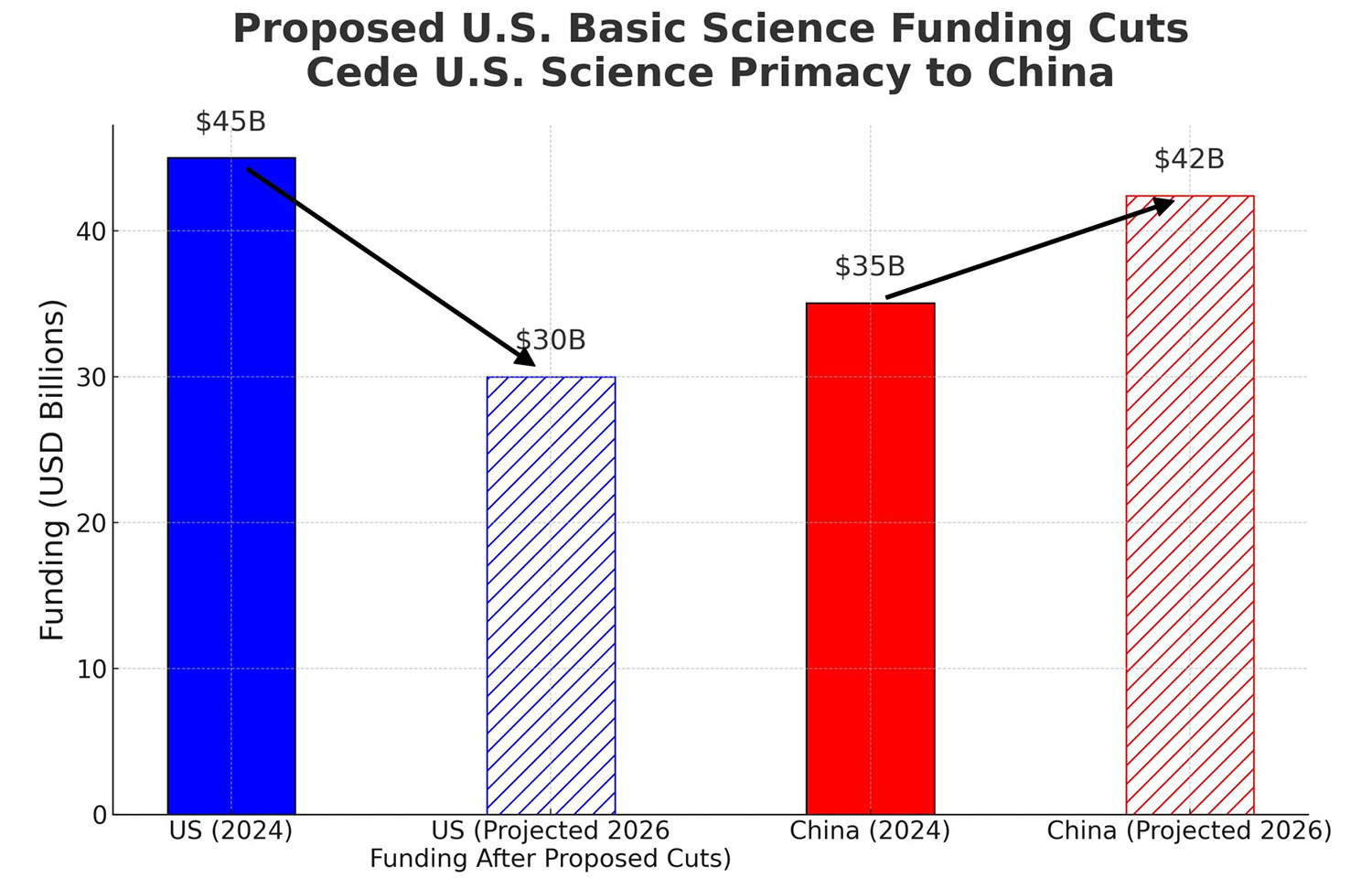
James Goodrich, a senior technology analysis advisor for the RAND Corporation and a fellow at the University of California Institute on Global Conflict and Cooperation, recently published research showing China is now projected to spend USD 42 billion (EUR 36 billion) on basic research in 2026, which would represent 10 percent annual growth.
“With proposed 34 percent U.S. funding cuts based on [American Association for the Advancement of Science] analysis, America will fall behind China for the first time since World War II and the Cold War – a shocking reversal after nearly eight decades of global leadership,” Goodrich said.
Kevin Fitzsimmons, an aquaculture specialist and an environmental science professor at the University of Arizona, said that this gap has effects on both countries’ seafood industries.
“In fisheries and aquaculture, these trends are even more obvious. In the last six months in the U.S., the Aquaculture Innovation Lab consortium, led by Mississippi State University, was eliminated. NOAA’s National Marine Fisheries programs and scientists have been cut or fired. Grant programs are being cut. These programs conducted a mix of basic and applied research that documented very positive returns on invested dollars. At the same time we are trying to increase domestic supply of seafood, we are eliminating the paths to do so sustainably,” Fitzsimmons said. “In China, meanwhile, visiting new labs outfitted with state-of-the-art equipment compared to U.S. labs cramped in 100-year-old buildings with faulty electrical connections leaves us envious. Other metrics like number of international patents received and articles published in scientific journals by Chinese scientists confirm the trends, too.”
Fitzsimmons said he believes the U.S. is “setting the stage for a mix of high-priced imports and overfishing of domestic stocks,” while simultaneously, China is “investing heavily in sustainable aquaculture and regulating domestic fishing.”
Earlier this year, Fitzsimmons warned that cuts to U.S. Agency for International Development (USAID) projects would benefit China and are even contradictory to many goals laid out by the administration of U.S. President Donald Trump.
“USAID, Peace Corps, Farmer to Farmer volunteers, and more have supported hundreds of thousands of small businesses to start up and build free market economies that have raised the standard of living for millions around the world,” he said. “These kept potential migrants in their home countries and turned many into consumers of U.S. trucks, boats, and farm tools. I can guarantee that lack of U.S. investment will induce them to buy from China or the E.U. instead.”
