






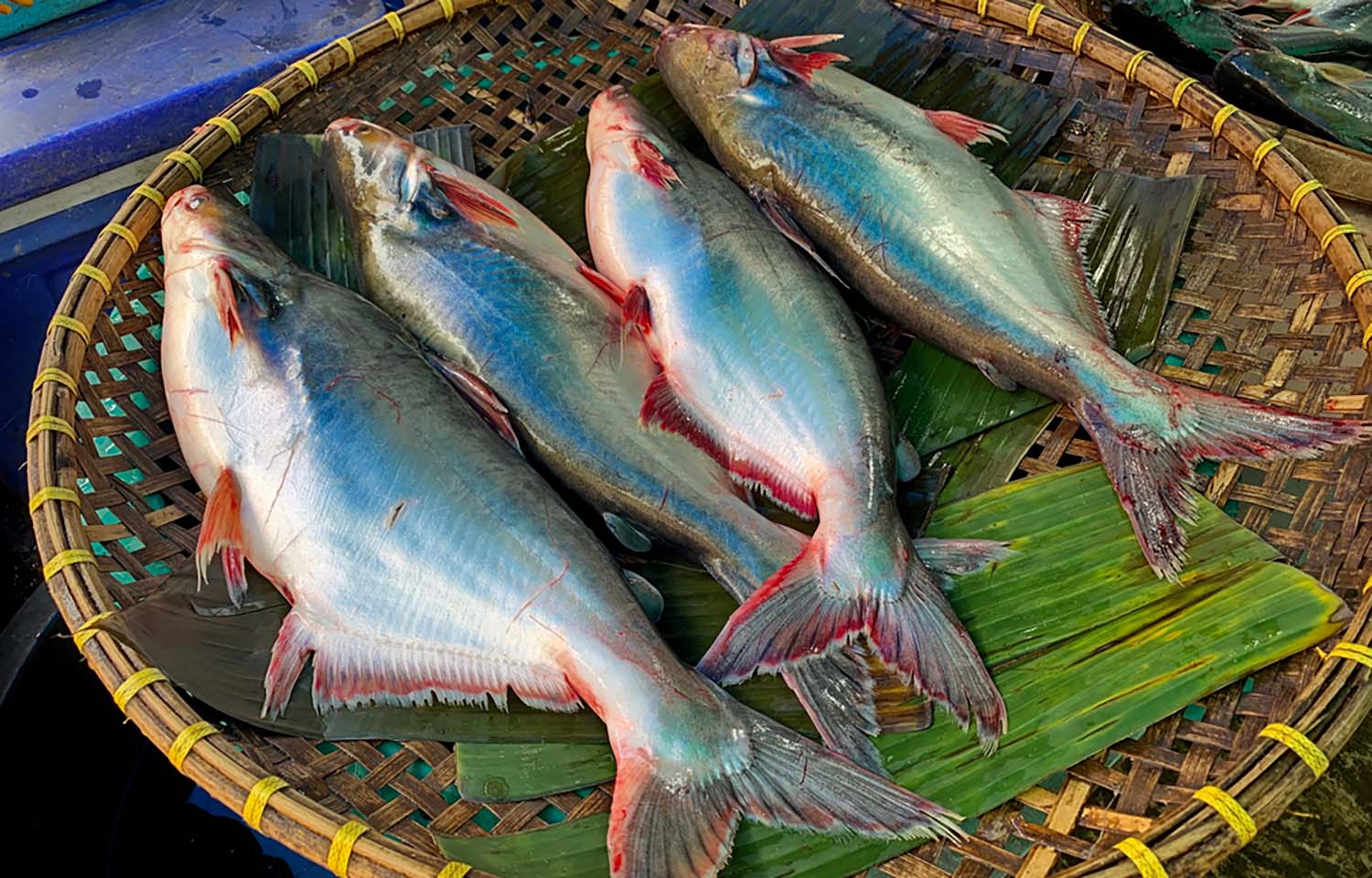
Chinese producers of tilapia are trying to take advantage of ongoing trade volatility to challenge the stranglehold that cheaper imported pangasius has in China, especially as U.S. tariffs have threatened their top export market.
Within the past few years, imported pangasius has become a staple menu item at such value-based chains as Tai Er and Yu Ni Zai Yiqi, which have stores both in China and across Asia.
Similarly, Chinese fast food restaurant Suan Xiao Qi offers bowls of fish soup for prices ranging from CNY 26 (USD 3.62, EUR 3.14) to CNY 30 (USD 4.17, EUR 3.62) – a rate kept possible by heavily featuring pangasius and other low-cost fish like snakehead on its menu.
A Suan Xiao Qi manager in Beijing told SeafoodSource that the company’s central franchiser, Suzhou Hengxin Catering Management Co., buys pangasius for the over 5,000 Suan Xiao Qi locations directly from a producer in Vietnam.
As tariffs implemented by U.S. President Donald Trump have affected many sectors within the Chinese economy, China has instituted measures to encourage more domestic business deals in a push that the country’s tilapia sector has tried to capitalize on.
For example, supermarket chain Freshippo, owned by Alibaba, opened a fast-track path earlier this year for export companies to test the domestic market on its e-commerce platform.
Additionally, central and regional governments in China, such as Guangdong, have organized matchmaking events to connect exporters with local buyers.
Despite this push for more domestic business, Chinese tilapia producers still face a series of challenges in competing with foreign pangasius.
A senior executive at a major tilapia producer and processor in China who asked not to be named in order to be forthright about the challenges facing tilapia in the domestic market told SeafoodSource pangasius not only retains an edge over tilapia in price but also in perception in the Chinese catering sector.
“Pangasius has less of a muddy flavor that many Chinese diners find off-putting. Also, it has a very neutral flavor profile, which allows it to absorb various seasonings more effectively than tilapia does while also having a better texture in cooking, standing up to prolonged boiling and keeping its structure. By contrast, tilapia tends to fall apart quickly when cooked in soup,” the executive said. “Once pangasius started becoming popular and profitable, everyone rushed to sell it and then came the inevitable price wars. Distributors naturally want what sells easily, so they prioritize pangasius and don’t even consider tilapia. Try explaining the merits of tilapia to them, and most won’t even listen. People here just want to sell what’s already selling. This mentality is everywhere in the Chinese market.”
Efforts to rebrand and rename tilapia have not been successful, and the fish has continuously struggled with a lack of product diversification and branding.
Rather than seek to compete with pangasius in China, the executive said “it may be more meaningful to think strategically about how to regain market share from pangasius in places like the U.S. or even Europe,” regardless of the current volatility.
“Ironically, I believe Chinese tilapia producers owe the most gratitude to American consumers. It’s the U.S. market that has consistently accepted tilapia and paid relatively strong prices for it,” the executive said. “Even though the recent tariff hike has us gasping for air, maybe instead of just waiting for the tariffs to drop, the industry here should focus on how to rebuild demand in the U.S. when the opportunity arises.”
Others in the sector don’t see eye to eye with that methodology.
Josef Zheng, head of sales at Xiamen Heron Seafood, told SeafoodSource in May that the sector has to look at new markets in order to survive.
“China doesn’t have a social security system that’s as generous as that in Europe. This means we have no choice; we have to go out and find markets to survive,” Zheng said.
