






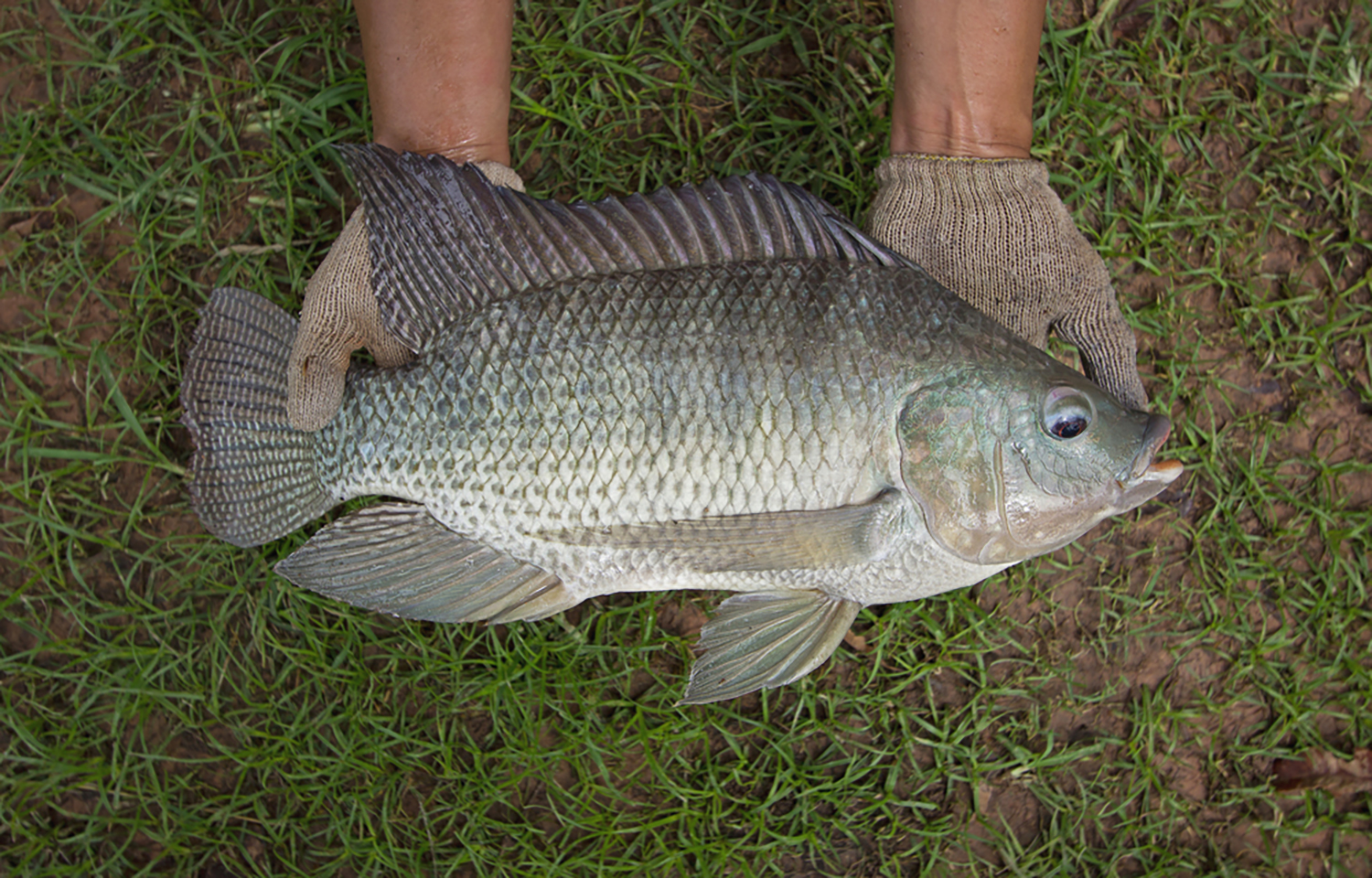
Even though the U.S. and China agreed to lower duties on each other’s goods for 90 days effective 14 May, Chinese tilapia producers and processors are pursuing several avenues in order to diversify their sales away from the U.S., trying to guard themselves against trade uncertainty.
One such path is to sell more to the domestic market, and the Chinese government has instituted initiatives to help companies hurt by tariff volatility do just that.
Online retailer JD.com has heeded government calls to promote domestic sales by sending its employees to Chinese companies involved in foreign trade, directly purchasing their products such as tilapia, and setting up a special area on its e-commerce platform to sell these products and direct traffic and marketing support accordingly.
Supermarket chain Freshippo, owned by JD.com rival Alibaba, also opened a fast-track path for export companies to test the domestic waters on its e-commerce platform.
For the tilapia sector in particular, this helps to solve arguably its biggest problem, according to Li Ruiwei, the director of the Maoming Maonan Sangao Tilapia Farm: overreliance on a single market and a lack of product diversification and branding.
China’s tilapia industry is characterized by “homogenous competition based on price, not product development,” he told Southern Rural News.
Aside from leaning on e-commerce companies to help alleviate the issues Ruiwei pointed out, central and regional governments in China, such as Guangdong, are also organizing matchmaking events to connect exporters with local buyers.
Additionally, Li Bo, the mayor of Fusha in the province of Zhongshan, which boasts large tilapia production, suggested China will double down on tilapia production but seek to add value by deeper processing and innovation of new products. For instance, Zhongshan, he said, would set up cooking classes to teach chefs across China how to use tilapia.
Though the Chinese market is the largest consumer market in the world and, therefore, offers massive potential, there is heavy competition both from other whitefish like pangasius and carp, and consumer demand in China has remained tepid due to new and existing headwinds.
So, another option for tilapia producers is to seek alternative markets abroad, but each international market carries its own challenges, too.
Access to major African markets, for example, tends to fluctuate according to Chinese aid and infrastructure programs, as well as economic and political instability, Josef Zheng, head of sales at Xiamen Heron Seafood, which has clients across Africa, told SeafoodSource.
In 2018, sales into Kenya, he explained, fell when the government limited the entry of Chinese seafood due to a reduction of Chinese investment in East African railway lines.
Heron currently focuses on West Africa, where China has several infrastructure projects in place. Nevertheless, entry to those markets remains “challenging,” Zheng acknowledged, but he said Chinese seafood companies like his will continue to chip away at difficult, distant markets like Africa out of sheer necessity.
“China doesn’t have a social security system that’s as generous as that in Europe. This means we have no choice; we have to go out and find markets to survive,” Zheng said.
Other firms like Guangdong Evergreen Conglomerate are seeking European buyers for tilapia and snakehead.
“We had been exporting 70 percent of our tilapia exports to the U.S., so the tariffs are a big challenge for us,” Remona Huang, the vice general manager for international trade at Guangdong Evergreen, told SeafoodSource at the 2025 Seafood Expo Global, which took place 6 to 8 May in Barcelona, Spain.
Evergreen already has the luxury of having a presence in several global markets, with connections to Africa and the Middle East providing the firm with experience in penetrating and maintaining relations to diverse markets.
“We have investments in Egypt and in Saudi Arabia, and we are talking with potential partners in Indonesia about investing there,” Huang said.
For firms trying to explore international markets for the first time, however, places like Latin America may be more difficult to crack in the future.
Becky Fan, sales manager at Tongwei Hainan Products, said that Brazil is emerging as a major tilapia producer in Latin America and blocks imports of Chinese tilapia to protect its nascent industry.
“There are many countries now looking at tilapia,” Fan said, adding that she hopes a resolution of the trade war between China and the U.S. will be reached to give more certainty to Chinese tilapia producers reliant on exports.
