






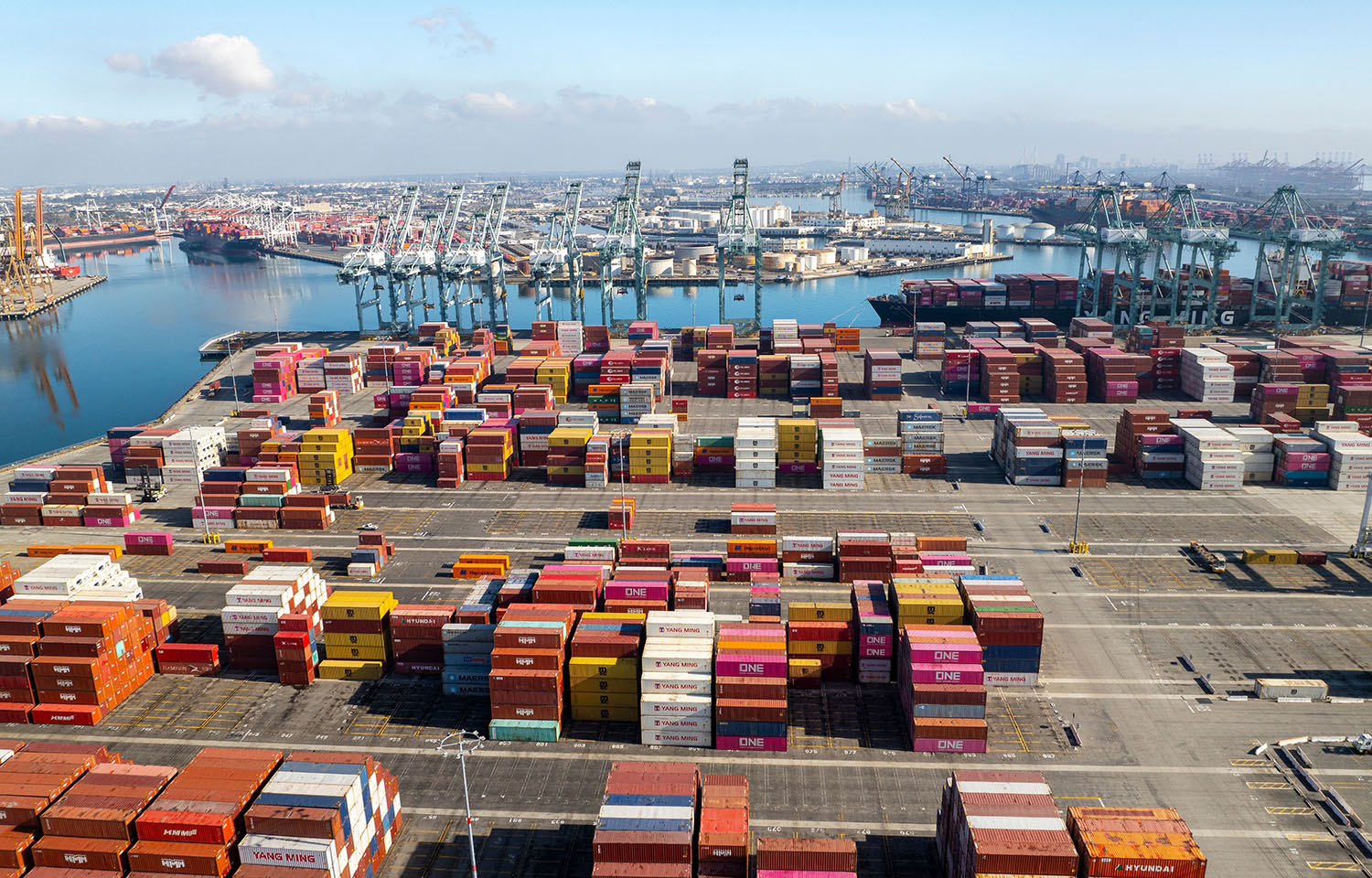
East and Gulf coast ports in the U.S. narrowly avoided a strike recently when the International Longshoremen’s Association (ILA) and the United States Maritime Alliance (USMX) came to a tentative contract agreement.
The threatened strike, however, was only the most recent issue in a series of upheavals for shippers in 2024, which saw multiple crises impact shipping routes – including missle attacks in the Red Sea and droughts impacting the Panama Canal’s ability to host large ships.
Many experts are predicting widespread disruptions will continue in 2025.
Steve Raptis, an insurance lawyer at law firm Reed Smith, told SeafoodSource that though importers are likely feeling relieved about the averted strike, this is the time for them to plan for the next upheaval.
"Insurance policies are awful to read ... but [shippers] really need to look at their insurance policies and figure out what they're covered for and what they're not because there are so many misconceptions," he said. “Lots of people buy property policies, and they see that it has business interruption coverage. They mistakenly assume that an event like a strike, which interrupts their business, will be covered. The cause of the interruption has to be physical loss or damage, which is what the policy itself covers. So, unless the [striking] port workers set everything on fire or torpedo the ships, there’s not physical loss or damage to cover.”
Darin Miller, the national marine manager at insurance claims adjuster Sedgwick agreed, saying that he has seen many denied claims over cargo delays because most are not caused by the shipper involved but, rather, by outside forces like the strike activity, terrorism, and weather events that caused delays last year.
“Most of the time delays are denied coverage; they’re not a coverable loss,” Miller said.
Raptis said this requires shipping firms to put in a bit more legwork.
"The good news is that there is coverage out there that will cover strikes, but you have to go out specifically and buy it," he said. "It’s a specialized product that’s called a few different things, and it goes by different names because it’s marketed by different insurers. At the end of the day, what it really is is supply chain insurance. That’s what you buy when you want to get coverage for your loss of net profits because a strike means that you can’t load and unload your ships.”
Miller advocates for this kind of creative risk management as well, further suggesting that even though everyone in the shipping industry should be insured, they should make decisions about cargo losses as if they weren’t.
“With the insured, we tell them, ‘You have to act as a prudent uninsured. Act as if you don’t have insurance,’” he said.
Miller proposed the example of a seafood importer whose frozen cargo is “temperature-abused” during shipping, which means that the importer is unable to determine if it has been kept at a certain temperature throughout the transportation process. Often, cargo that experiences temperature abuse amounts to a total loss for shippers, but Miller said that there are strategies to mitigate this.
“Sometimes, we can sell this stuff to salvage on the secondary market. If [the product] has suffered some temperature abuse but it’s not spoiled, [the importer] can’t sell it to their client, but we can go and settle it in a secondary market," he said. “We have those conversations with [businesses] and just try to minimize the loss."
Risk management should be pursued as early as possible in 2025, according to experts.
"The Trump administration will be taking over [in January], and there are still clouds of uncertainty around what that means for consumers and businesses alike," FreightWaves Market Analyst Zach Strickland said.
The National Retail Federation (NRF) has argued that the administration's proposed tariffs could pass major costs on to American consumers, and be most onerous for low and middle-income families; it is likely that importers will see higher insurance premiums, too, as import tariffs raise the price of their goods.
A number of other questions remain heading into this year.
In the beginning of 2024, Houthi militia attacks in the Red Sea saw shippers diverting and extending their global routes to avoid conflict in the area, which provoked a sharp increase in cargo rates.
That crisis continues, and is linked to the Israel-Hamas war, and though current U.S. President Biden said on 13 January that Israel and Hamas were “on the brink” of a ceasefire agreement in Gaza, it is unclear how such an agreement would change the environment in the Red Sea and how the situation will shift when Trump takes office on 20 January.
Other major shipping thoroughfares are also experiencing upheaval.
The Red Sea crisis has caused a huge drop in revenue in the Suez Canal, and the Panama Canal has experienced droughts that have caused major shipping disruption in recent years and has lately become a focus of the President-elect Trump.
How these issues will continue to affect seafood importers remains to be seen, but experts warn that businesses would be wise to expect – and prepare for – the unexpected.
“Uncertainty means slow growth is likely as a general trend until policy becomes clearer," Strickland said. "The risk for sharp swings in either direction remains high. For many companies, it will be like driving in the fog. Vigilance and visibility will be crucial for avoiding running off the road and being able to hit the accelerator when the time is right.”
