






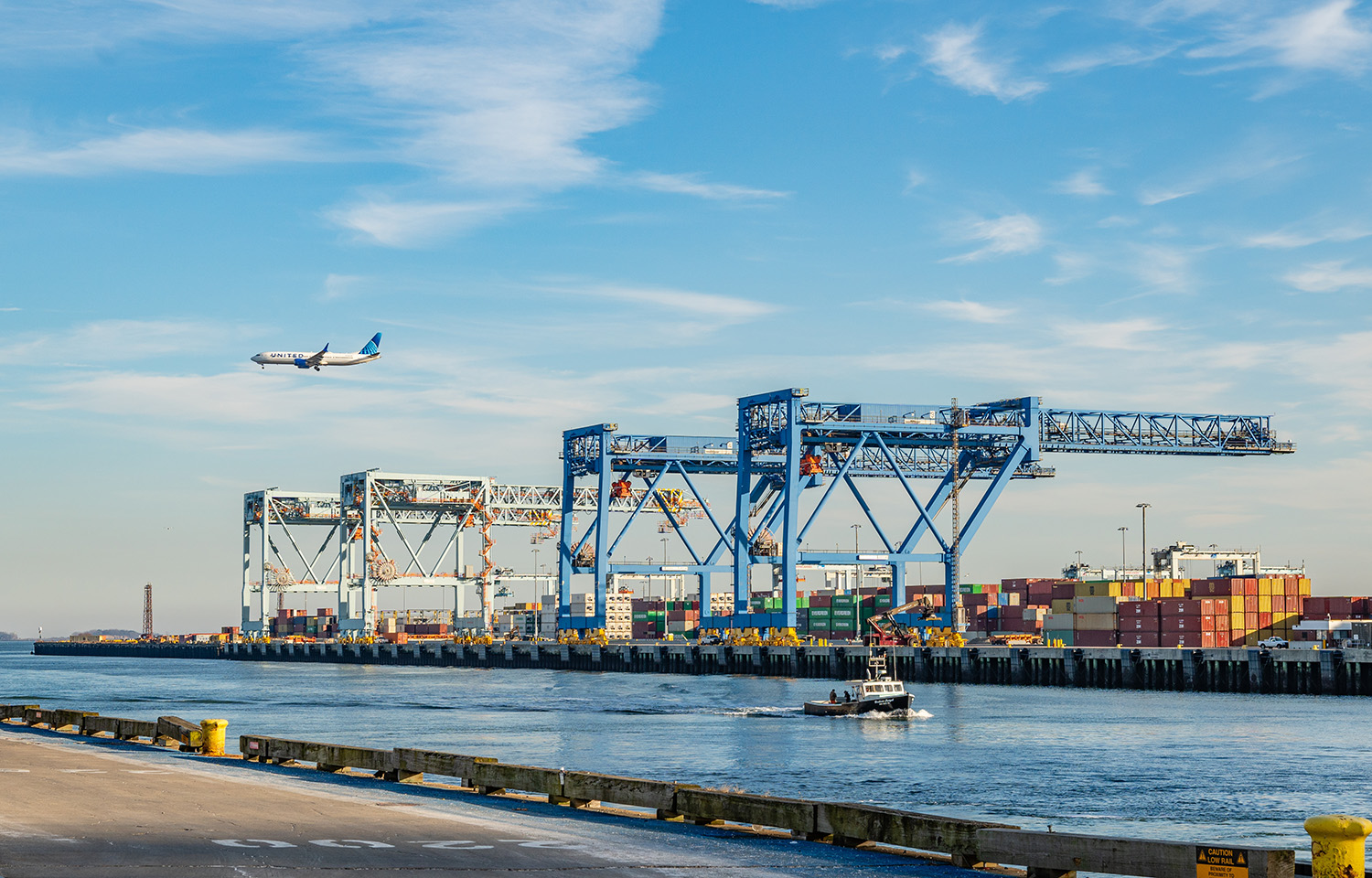
The International Longshoremen’s Association (ILA) and the United States Maritime Alliance (USMX) came to a tentative agreement in their ongoing contract dispute before their 15 January strike deadline.
Though this came as a relief to many, experts are still forecasting that the nation’s major ports are still going to see surges in cargo volume and costs through January.
National Retail Federation (NRF) Vice President for Supply Chain and Customs Policy Jonathan Gold said that the drawn-out negotiations were among a number of factors that were contributing to cargo surges.
“The agreement came at the last minute, and retailers were already bringing in spring merchandise early to ensure that they would be well-stocked to serve their customers in case of another disruption, resulting in higher imports,” he said in a 10 January NRF release. “The surge in imports has also been driven by President-elect Trump’s plan to increase tariffs because retailers want to avoid higher costs that will eventually be paid by customers. The long-term impact on imports remains to be seen.”
Hackett Associates Founder Ben Hackett agreed, saying though the strike was avoided, its effects would not disappear immediately.
“We have narrowly averted a strike, but that doesn’t mean there hasn’t been an impact," he said. "Importers had already front-loaded cargo in anticipation of delays, giving a boost to imports in December and early January.”
As Gold told SeafoodSource in November, the businesses most likely to be harmed by the situation are small- and medium-sized importers. He expected that most businesses would need to pass some costs onto customers this year but that this would be especially harmful to small companies which could not absorb the same losses as their bigger competitors.
“It’ll be consumer choices. If [consumers] decide those products have become too expensive, they’re not going to buy those products," he said. "Those small- and medium-sized companies have fewer sales, which means they could potentially go out of business.”
Many seafood importers operate such small- and medium-sized businesses. They also have less flexibility than dry goods companies when it comes to storing merchandise, which, in the case of seafood, has to be kept frozen.
“Port costs are and, unfortunately will remain, high for the foreseeable future," the National Fisheries Institute said. "Regardless, we are pleased that an even more costly strike has been avoided.”
The NRF and Hackett Associates released their monthly Global Port Tracker report on 10 January, which showed that U.S. ports, not counting New York and New Jersey, which have not yet reported final data, had handled 2.17 million 20-foot equivalent units (TEUs) in November 2024, up 14.7 percent from the same month the previous year.
December’s numbers are not yet in, but the Global Port Tracker has forecast the month at 2.24 million TEUs, which would be up 19.2 percent year over year. The likely total TEUs for the year is 25.6 million, up 15.2 percent from 2023 – an increase that the analysts attributed to the port contract strike and subsequent negotiations.
The Global Port Tracker is predicting 2.16 million TEUs nationwide in January 2025, which would be up 10 percent from the previous year. February will likely see a dip in TEU volume due to Lunar New Year in China; March is projected at 2.13 million TEUs, up almost 11 percent from the previous year.
