





In their March 2025 forecasts, shipping and logistics experts are warning those who rely on the industry to expect continued disruption, and in order to survive a chaotic landscape, they are advising businesses to spend money conservatively, work with trusted partners, and make comprehensive contingency plans.
“In the face of uncertainty, what else do you do? You just hold off on major investments you are going to make,” Sunderesh Heragu, a professor at Oklahoma State Univesity and the president-elect of the Institute of Industrial and Systems Engineers, told SeafoodSource. “If you have the capacity to adapt, by all means, go ahead and do it."
Industry leaders who spoke at a recent webinar hosted by Container xChange painted a picture of a sector under pressure from all sides.
“Uncertainty is toxic for trade, and businesses today are overwhelmed by shifting regulations, unpredictable tariffs, and constantly changing trade dynamics,” said Xeneta Chief Analyst Peter Sand.
Hysun Containers CEO Amanda Marr added that “the uncertainty around tariffs is creating ripple effects across the entire container logistics ecosystem.”
Participants in the workshop said that among the many challenges they faced, they were most worried about tariff and trade restrictions affecting their businesses. Many were also concerned that if the Red Sea Crisis were to end, an oversupply of containers would push prices down.
Currently, according to Container xChange, average prices for 40-foot-high cube cargo containers have increased in Europe, Central and Southeast Asia, Latin America, and Southen Africa but declined in North America, the Middle East, Northeast Asia, and East Afria.
These price trends likely reflect the ways in which geopolitical tensions, especially those related to U.S. tariffs, are already reshaping trade routes.
“We’re already seeing enhanced efforts to reroute cargo through alternative markets like the Middle East, the Indian Subcontinent, and Southeast Asia,” Marr said.
Heragu agreed, telling SeafoodSource that China is particularly taking advantage of the situation thanks to its ability to quickly execute new trade policy goals and form powerful new alliances.
"In China, it’s one party rule. They have more control, and they think through these things much more long term," he said.
He pointed to China’s recent development of ports in South America and Africa as evidence of both of those assets.
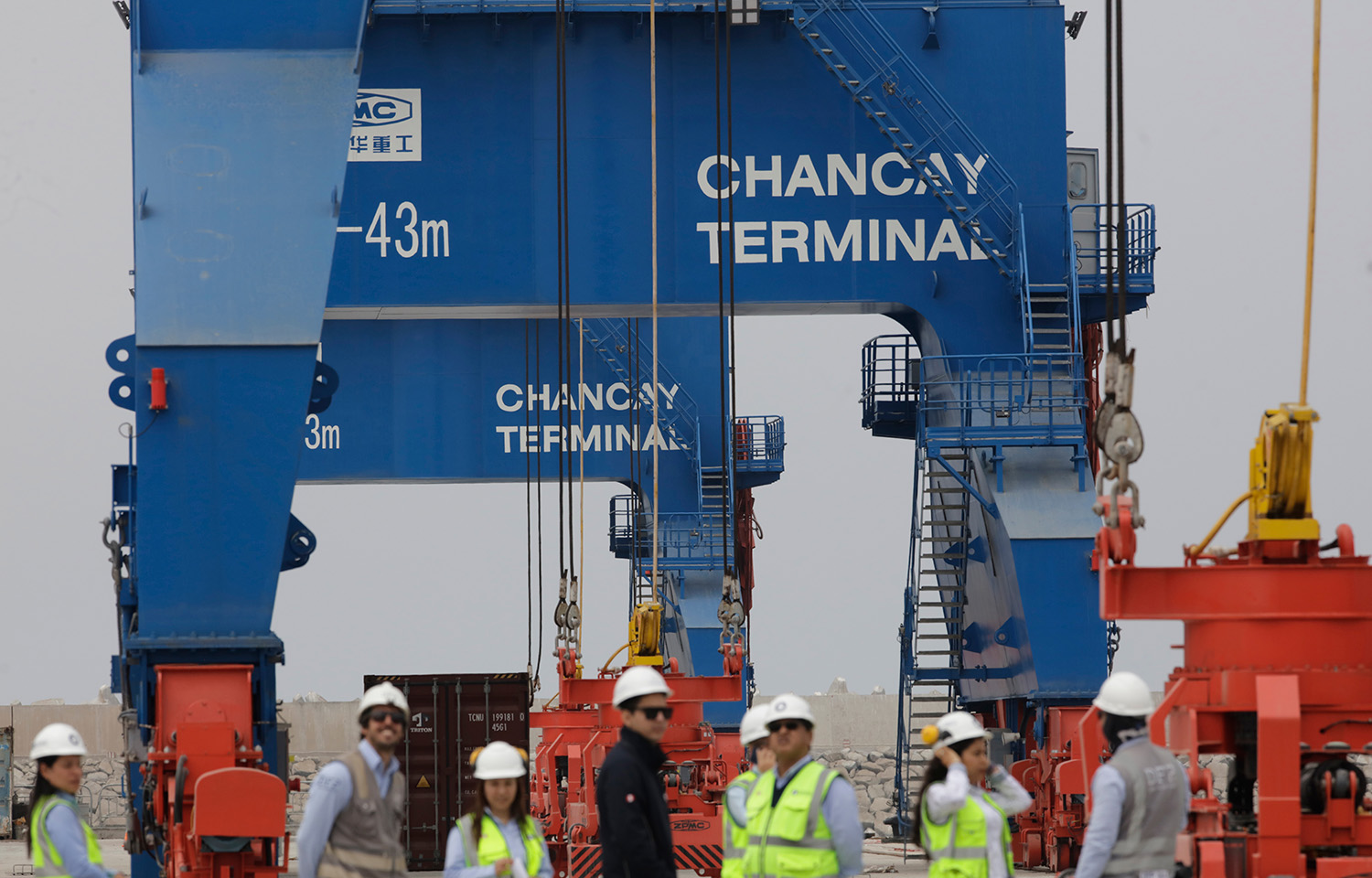
“China is a major player. They’ve got alliances all over the world," he said. "They’ve built ports in important places like Peru, most recently, but in African countries, too, [and] Sri Lanka, so they are trying to create alliances with dictatorial regimes in some of these countries and then trying to protect their sea lanes and their capacity to move goods around the world.”
Heragu added that China will also likely benefit by engaging in transshipment. In particular, Heragu thought it was likely that China would “move some of their last-mile production to Mexico [and] Canada” to avoid tariffs.
Sogese CEO Andrea Monti told Container xChange that this volatile situation, while unpredictable, could present some opportunities for not just China but also smaller shippers or logistics businesses that can adapt quickly, though it may be a risky play.
“Smaller and more agile players have an opportunity to gain market share as trade routes diversify,” she said, noting that new Non-Vessel Operating Common Carrier (NVOCC) services, which contract for other businesses but do not own the vessels they ship on, were emerging in Southeast Asia and Latin America.
As for the Red Sea, Container xChange Market Intelligence and Brand Lead Ritika Kapoor said that although disruptions were continuing to bedevil the industry, it was possible that the situation could change quickly.
"If the Red Sea passage proves safe again … we can expect a domino effect, with one carrier's return prompting others to rapidly follow suit,” she said.
Container xChange Co-Founder and CEO Christian Roeloffs said that the possible reopening of the Red Sea passage was just one force adding to the likelihood that container prices will drop. The reopening of the passage would lead to “a massive surge in container availability,” he said, as well as a corresponding drop in prices.
Another factor adding to uncertainty in the sector is the United States Trade Representative’s (USTR) recent proposal to require fees from Chinese-built and -operated vessels entering American ports.
Sand said that this proposal, if implemented, “will have a far-reaching impact, as every top six carrier in the world has at least 20 percent of its active fleet built in China – and 40 percent of its order book tied to Chinese shipyards."
"This isn’t just a hit to individual carriers; it’s a challenge to globalization and free competition," he said. “The best advice? Stay calm, keep your options open, and avoid locking into long-term commitments without a clear upside."
Heragu said he expected costs for capital expenditures of all kinds to go up and advised businesses to avoid them whenever they could, no matter how much they wanted to expand.
“My advice would be to not have quick reactions to these things that come up,” Heragu said. "Wait it out."
