



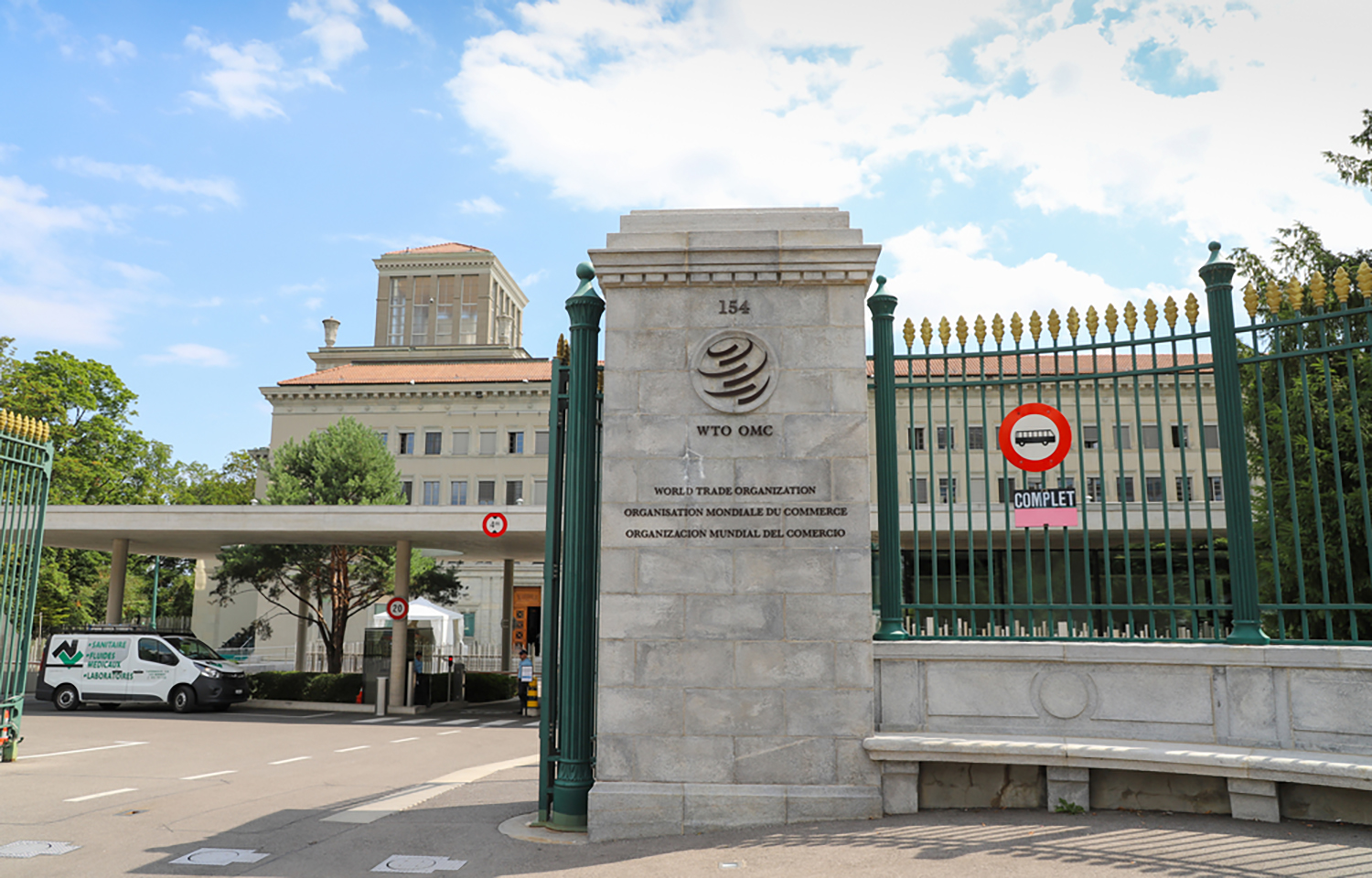
Considering the U.S.’s launch of a global trade war and U.S. President Donald Trump’s disdain for international collaboration, experts are warning that the U.S. may soon leave the World Trade Organization (WTO), a move that could render trade rules unenforceable among developing economies and throw global trade further into chaos.
“We should not preclude a prospect where the U.S. will leave the WTO in the coming 18 months,” said Hosuk Lee-Makiyama, the director of the European Center for International Political Economy (ECIPE) and a former Swedish trade expert in WTO affairs. “On one hand, the U.S. outside of the system is a much better option than China being expelled and unhinged outside the system. On the other hand, the U.S. trade deficit is financing a lot of export-led growth around the world. Without that market access underwriting WTO rules, there would be no incentives for compliance among emerging markets.”
A breakdown of WTO discipline would endanger various agreements meant to regulate the global seafood supply chain, including a 2022 deal limiting harmful fishery subsidies which negotiators have been trying to improve upon with a follow-up agreement. Those talks have currently been parked while trade diplomats grapple with the consequences of Trump’s tariffs.
In relation to the tariffs, China recently filed a WTO complaint against the U.S., while Canada similarly launched a dispute against China over additional duties on agricultural and fishery products.
It’s not clear whether the disputes will be heard by the governing body.
“The main current problem with the WTO dispute settlement [system] is that it has no functional appellate body since the U.S. decided to block the selection of new appellate body members some years back. So, a dispute can still go through the panel phase, but if a party to a dispute decides to appeal, it can be blocked,” a trade expert following proceedings at the WTO told SeafoodSource. “That being said, some members have decided to establish a Multi-Party Interim Appeal Arbitration Arrangement [MPIAA] to try to address this. So, between two WTO members that are parties to this MPIAA, like China and Canada, you can still have an effective dispute settlement process that includes an appeal function. But the U.S., of course, is not a party.”
On 16 April, the U.S. ratcheted up tariffs on Chinese goods to 245 percent.
