






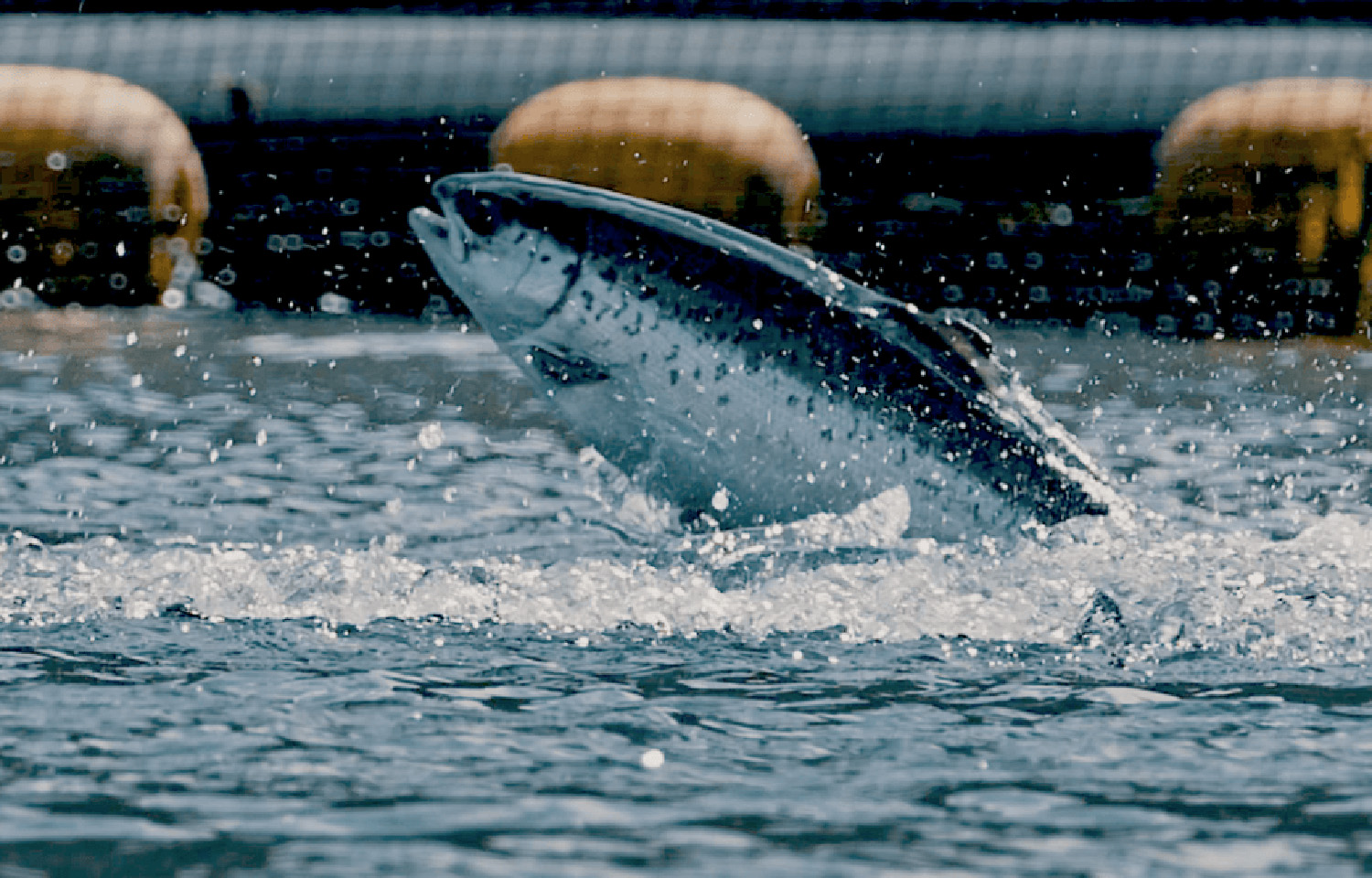
In 2019, Sørvágur, Faroe Islands-based aquaculture firm Hiddenfjord began brainstorming an idea to reduce the carbon emissions present in its supply chain.
Although salmon farming as a whole has relatively low carbon emissions compared to other protein production, Hiddenfjord CEO Atli Gregersen thought more could be done to ensure his firm’s product was as environmentally responsible as possible.
"Before you send the salmon to market, it's a relatively good protein carbon-wise. It's about the same as chicken but much better than red meat," Gregersen said. "But, when you fly it to market, it goes up.”
After calculating the carbon emissions of the air freight it uses, the firm decided it would stop flying its products to market by the end of 2020 by launching the "Fish Don't Fly" campaign. As of 21 March, the company had not flown any of its products to market in 1,621 days.
Almost five years later, Gregersen said that Hiddenfjord’s market position has only improved, but he has been dismayed that no competitors have followed suit.
"Since we started, the amount of salmon flown to market has exploded," he said. "We have invited our competitors to copy us."
The Fish Don’t Fly campaign was a gamble for a lot of reasons, Gregersen said. Even though Hiddenfjord had customers in the U.S. who trusted them and were willing to give the new project a chance, he knew they had to deliver a good product.
"If we couldn't deliver a product of the same quality, we would lose our foothold right away. Our customers were willing to try the new route, but we had to pay if anything failed,” he said.
The firm was particularly well-suited to take the risk, however, because it is family-owned, which gave it the freedom to make decisions without worrying about how shareholders would react, Gregersen said.
“Many public companies need to deliver short-term results all the time, while we are thinking about how to make this a long-term sustainable business for us and for the Faroe Islands,” he said.
Nevertheless, the campaign required Hiddenfjord to work intensively to improve its supply chain and get the fish to international suppliers as soon as possible at as high of quality as possible.
Thanks to that legwork, it now takes nine days from when Hiddenfjord’s salmon is sent from its processing facilities in Sørvágur to when it arrives in Portland, Maine, which is down from the 13 days it took when they started in 2020. The firm keeps its fish at a low temperature upon placement in shipping containers in the Faroe Islands, and the company then fills the containers with ice.
"When the fish arrives in New York, maybe a day after Portland, and they open the containers, it's still full of ice," Gregersen said. "Our product is, in many cases, fresher than fish that has been flown to the market and waiting in the sun in airports on the way.”
Gregersen said the number of clients and cities that Hiddenfjord has partnered with in the U.S. has grown, explaining that his firm has started selling to supermarkets and restaurants and even transporting the salmon to Los Angeles, California, since the initiative kicked off.
"It's a bit paradoxical that we have gotten deeper into the market after our supply time got longer," he said.
The gamble has seemed to pay off, as it had nearly doubled its sales since 2018 before the campaign began. In 2018, the company's net sales were DKK 680 million Danish Krone (USD 99 million, EUR 91.2 million). In 2023, the last publicly available annual report the firm has released, net sales had almost doubled to more than DKK 1.3 billion DKK (USD 189 million, EUR 174 million).
Moving forward, Hiddenfjord is trying to find ways to enter new markets while continuing to forgo air freight. Specifically, it is working on improving its frozen product supply chain and increasing sales in Asia without having to fly.
To achieve the former goal, Gregersen said Hiddenfjord will be investing more in perfecting its frozen fillets so that they diversify their market, especially as uncertainties surrounding U.S. trade decisions continue to arise.
"Our dream is to be able to deliver fish across the globe without flying,” Gregersen said.
