



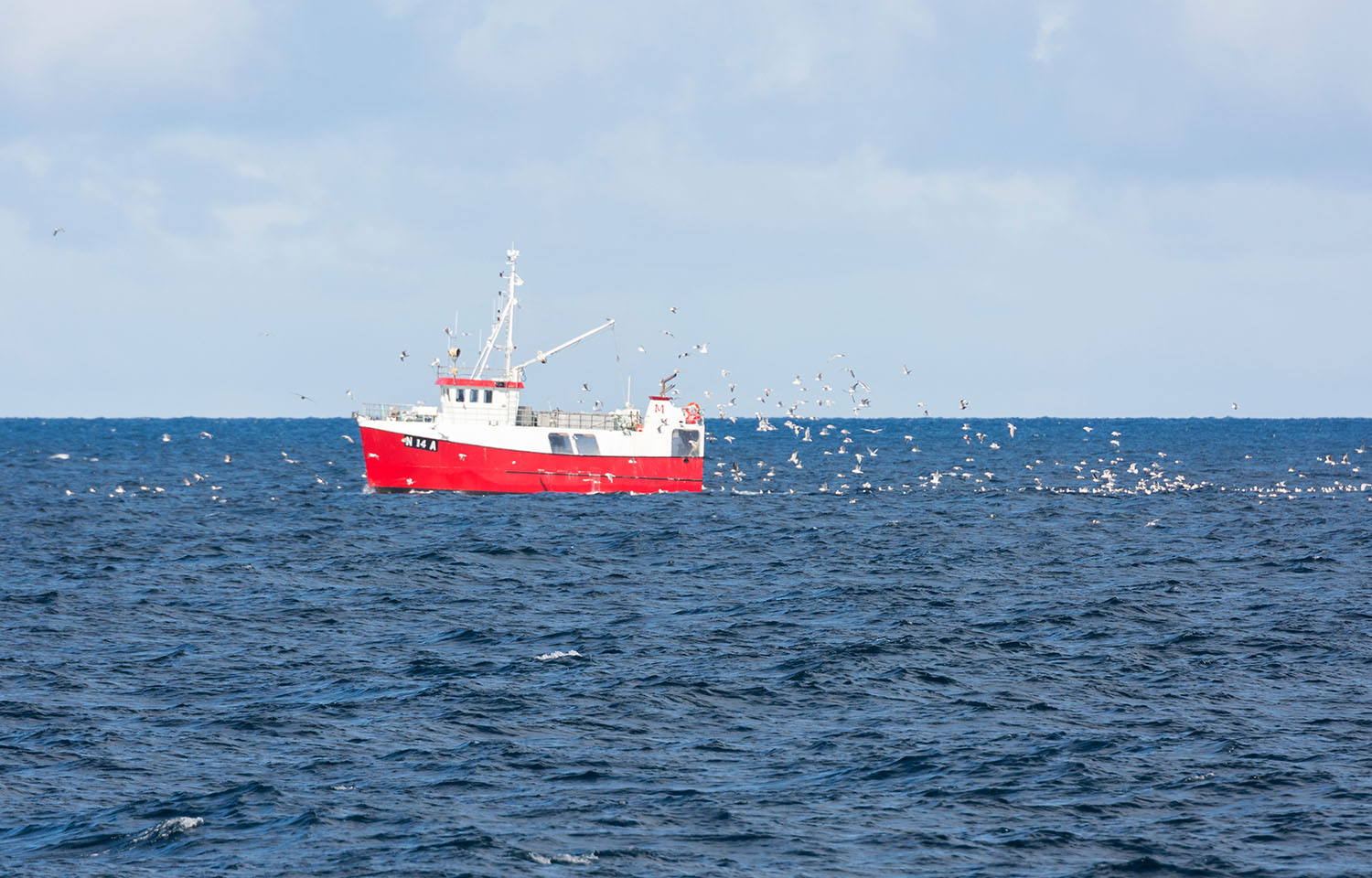
Commercial fishers are asking regulators to maintain the current quota for northern shelf cod after a scientific body recommended that no commercial catch should take place in 2026.
“Implementing zero catch quotas for cod would be fleet-ending madness,” Shetland Fishermen’s Association (SFA) Chair James Anderson said in a release. “Governments cannot expect fishing businesses, surrounded by cod, to tie up for a year and still be here in 2027.”
On 23 September, the International Council for the Exploration of the Sea (ICES), a regional fishery advisory body that makes scientific recommendations for sustaining commercial fisheries in the North Atlantic, proposed eliminating commercial fishing for all northern shelf cod in 2026. The council found that any harvesting of the southern substock of cod would result in it dipping below biomass limits. While the body found that 1,280 tons of fish could be theoretically harvested from the two other cod substocks, because all three cod subspecies are caught together, no catch of any substock should be allowed in 2026.
“ICES advises that when the maximum sustainable yield (MSY) approach and precautionary considerations are applied, there should be zero catch in 2026 for all substocks,” the council said while admitting it was making the decision with limited data.
Phil Taylor, the director of conservation NGO Open Seas, told Ireland Live it was “staggering that scientists now recommend a complete stop to cod fishing in the southern North Sea for 2026.” Taylor called on regulators to follow ICES’ advice.
“The government must learn from those mistakes from the past and ensure that decisions about this fishery are grounded in what makes sense for the ecosystem,” Taylor said.
In response, the SFA called the council’s advice “outrageous” and “marred by procedural delays, technical errors, and scientific uncertainties.” The association also claims that because cod mix with other whitefish, a ban on cod harvests would result in more discards and fishers tying up their vessels and going out of business.
“We hear a lot from governments about following the best available scientific advice, but – when there is only one source of scientific advice, and that advice is unreliable – there is danger in proceeding on the basis of uncertainty,” SFA Executive Officer Daniel Lawson said in a release. “Following such extreme advice, littered with uncertainties and assumptions as it is, would be an irresponsible and hugely damaging thing for governments to do.”
The association has urged the U.K., European Union, and Norwegian governments to reject the council’s advice and continue allowing some commercial harvest. The SFA is instead proposing an expanded closure over spawning grounds in the North Sea, a voluntary 30 percent reduction in the total allowable catch of haddock and whiting to reduce cod bycatch, increasing the scientific quota for cod research, and a limit to annual quota fluctuations to provide some stability for commercial fishers.
“Fishing crews in Shetland do not believe that further quota reductions would do anything to encourage growth in the cod stock, so we are proposing a series of measures which will more successfully balance stock sustainability and economic stability – until the various scientific uncertainties around cod are better resolved,” Anderson said.
