






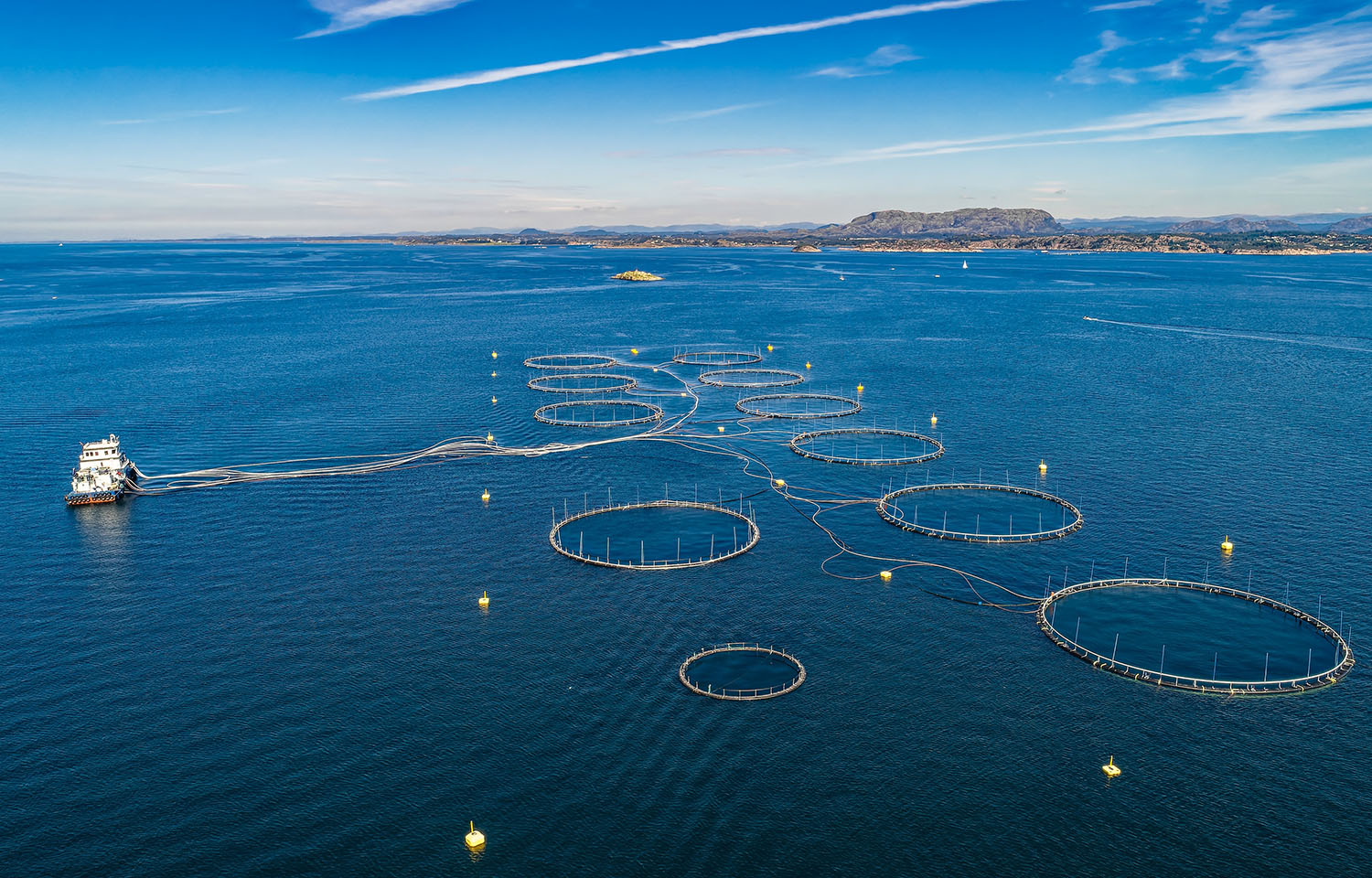
A new long-term analysis by data firm Kontali is projecting the salmon industry is poised to have a “turnaround” and see big increases in production over the next several years.
The new long-term analysis by the company projects salmon production will increase by 27 percent by 2030 and as much as 40 percent by 2033. The company said enhancements in fish health, strategic investments, and an increase in land-based production will all contribute to the improvement.
"The projected 27 percent growth in global salmon production by 2030 marks a pivotal moment for the industry,” Kontali Senior Financial Analyst Filip Szczesny said. “Investments in fish health and land-based production are key drivers, but overcoming regulatory and environmental challenges will be crucial to realizing this potential."
The new long-term forecast said regulatory limits, along with environmental regulations, are the biggest challenges to growth in the salmon industry.
The forecast mirrored comments made by Kontali Chief Analyst Ragnar Nystoyl, who revealed the data firm’s predictions for 2025 recently at the Global Seafood Alliance’s Responsible Seafood Summit in St. Andrews, Scotland.
“I would highlight that regulatory capacity, or capacity for farming granted on the licensing side, is becoming more scarce,” Nystoyl said.
The forecast by Kontali also said climate change will be a major challenge as weather and temperature shifts bring new issues for salmon farmers.
Despite those headwinds, the data firm is projecting global salmon production will surpass 4 million metric tons (MT) by 2029 and continue to increase beyond that through 2023. Europe will lead the growth by increasing production by roughly 25 percent, while the Americas will increase by around 11 percent. Australia and New Zealand will see 17 percent growth in salmon production, and Asia will see more gradual expansion as land-based and offshore projects come online, “though large-scale production is yet to be fully realized,” Kontali said.
The prediction said Norway will recover from “recent productivity challenges” and will grow thanks to improved production planning, fish health measures, and investments in new submersible cage technologies. However, the company also said the country’s traffic light system and taxes could slow growth.
The U.K., Faroe Islands, and Iceland will all benefit from investments in larger smolt production and shorter production cycles – though Iceland is also facing regulations aimed at protecting wild salmon stocks.
In Chile, political uncertainty around the future of salmon farming is a continued risk, and biosecurity risks are also a factor as the sector “nears maximum productive capacity,” Kontali said.
In North America, Canada’s transition to land-based systems will be underway as regulatory changes in British Columbia take effect, limiting growth. Canada placed a five-year time limit on in-ocean net pens in British Columbia, capping off that sector’s ability to grow. In the U.S., Kontali predicts ocean-farmed production will remain stable but land-based and offshore will contribute to growth.
In Australia and New Zealand, warmer sea temperatures are slowing growth, but Kontali predicts Australia will recover from the issue and that New Zealand’s coastal projects will replace existing production to contribute to global growth.
Kontali also predicts Russia will develop new salmon farming and infrastructure as demand for the species grows in the country, “though actual production may fall short of ambitious targets.” Additionally, in Asia, mainly in China, land-based and offshore projects could contribute, “but large-scale production has yet to be realized.”
Overall, Kontali said land-based salmon production will be the largest growth segment across the industry as projects come online.
“Norway is developing flow-through technology, while North America and Asia are becoming increasingly attractive regions for new investments due to proximity to major markets. Significant investments are also being made in Iceland to support stricter biosecurity regulations,” Kontali said.
Meanwhile, the company predicted wild catch of salmon will remain stable and average between 800,000 MT and 900,000 MT per year.
