






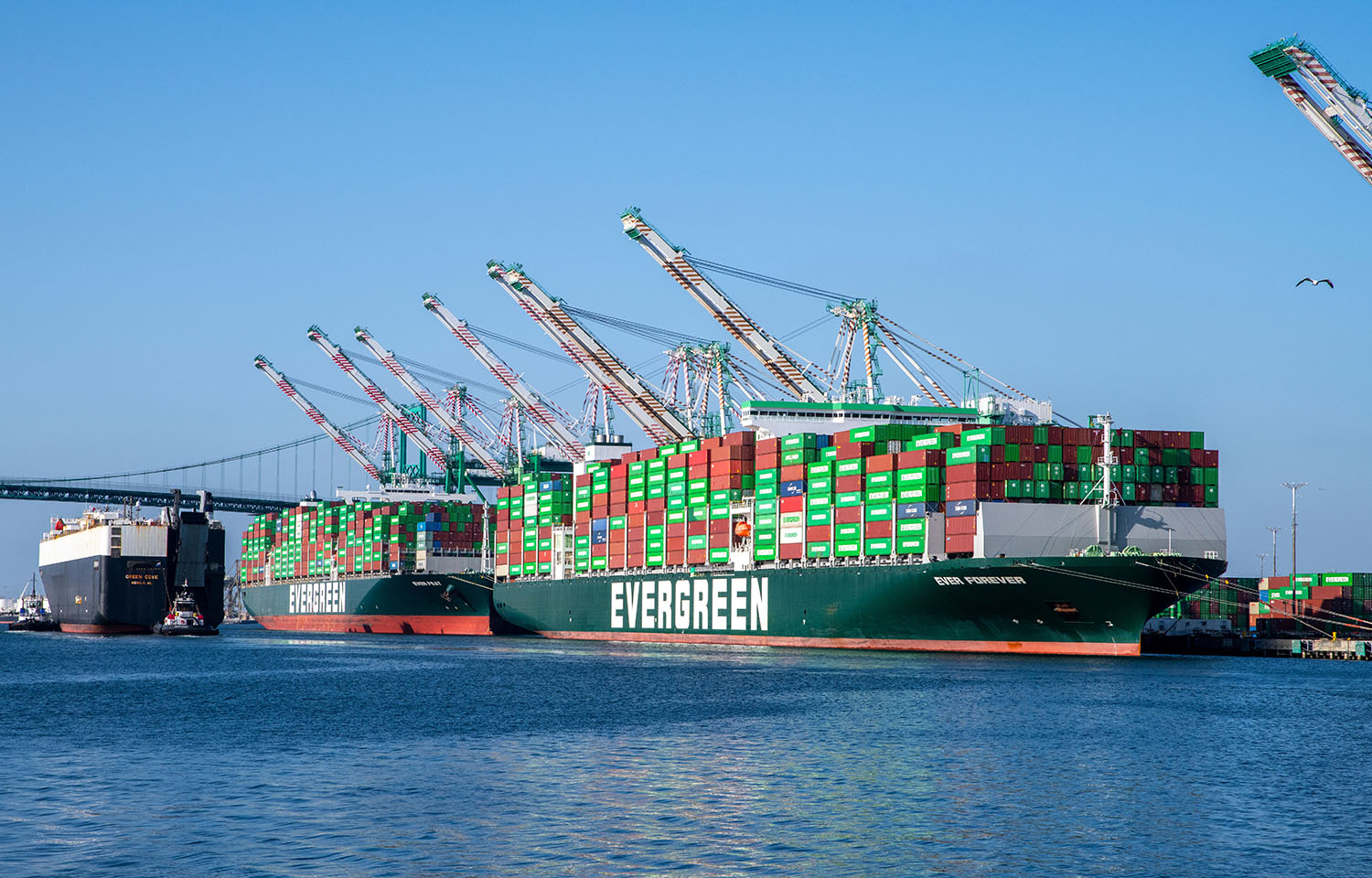
The U.S. shipping and logistics industry is beginning to feel the effects of the Trump administration’s tariffs on Chinese imports, and experts are warning U.S. consumers that they will soon start to see changes themselves.
Investors Observer, a investment trade publication, analyzed the U.S. states that are most and least reliant on Chinese imports in order predict the economic fallout of tariffs.
Unsurprisingly, the publication said that the nation’s two busiest ports, the Port of Los Angeles and the Port of Long Beach, both in California, were likely to suffer from a drop in Chinese imports, since 25 percent of the state’s total imports – equivalent to 12 percent of the state’s GDP – come from China.
Port of Los Angeles Executive Director Gene Seroka echoed the same concern in a board of commissioners meeting on 24 April, telling those in attendance that “essentially, all shipments out of China for major retailers and manufacturers have ceased,” according to Investor’s Business Daily (IBD).
“United States consumers and manufacturers alike will find difficult decisions in the weeks and months to come if policies don’t change,” Seroka said.
The reciprocal tariff pause had not helped matters, he added, since retailers and manufacturers put in orders from Asian manufacturers months in advance.
According to Investors Observer, other states that are highly vulnerable are Nevada, which has the highest reliance on Chinese imports in terms of tonnage, and Tennessee, where imports from China make up 22 percent of the state’s GDP.
“States with major ports or manufacturing sectors (California, Illinois, Texas, Tennessee) are most exposed to the impact of higher tariffs or supply chain shocks due to their high import volumes and economic dependence on Chinese goods," the publication reported.
Apollo Global Management (APG) Chief Economist Torsten Sløk, who runs a blog called The Daily Spark, also identified worrying economic trends. He predicted that the Trump administration’s economic policies would spark a recession in the U.S. by late May or early June, when he expected to see layoffs in the trucking and retail industry begin.
According to FreightWaves, a logistics industry trade publication, those layoffs have already started. At least six trucking firms had either laid off staff or filed for bankruptcy in April, FreightWaves reported on 30 April.
The Logistics Managers’ Index (LMI), a monthly index of logistics metrics related to transportation, warehousing, and inventory, compiled by leading researchers, said that as early as March there was “already some evidence of a slowdown in inbound goods,” that was likely to reshape cargo rates in the nation’s ports.
“Carriers may choose to frequent fewer ports. Meaning that agricultural products which often ship out of the Port of Oakland may instead have to be shipped down to Southern California to limit the number of stops that ships have to make (and therefore fees they will need to pay). A shift in patterns could also impact volume in certain lanes (e.g., eastbound on Interstate 80), shifting the prices OTR carriers will be able to charge. Ocean carriers are nervous as well, with Atlantic Container Line CEO Andrew Abbot predicting that this will send prices up and that his firm may end up shutting down as a result," the publication reported.
The LMI also reported that transportation prices were down significantly in March, the largest drop “since July of 2022 when Transportation Prices moved from expansion to contraction, signaling the start of what we now know was an 18-month freight recession.”
Sløk said the logistics industry losses would come first, but that a nationwide recession would hit by summer. He based this claim on other signs of a worsening economic outlook, such as new orders to manufacturers slowing down dramatically and a sharp decline in corporate capex spending plans, of which experts have warned since the Trump tariff plans were announced.
AGM also noted the sharp decline in cash purchases of homes in the U.S., lowered hotel demand (which the asset management firm attributed to a precipitous drop in foreign tourism to the U.S.), a rise in delinquency rates, and a significant rise in the share of credit card accounts only making the minimum payment.
The firm also reported that a record share of consumers expressed low confidence in the U.S. economy, with nearly 65 percent saying they expected business conditions to worsen within the year. That number was a dramatic increase from the historical data on which AGM drew, which goes back to 1980. The share of the population that was worried about the economy is roughly 20 points higher today than it has ever been at any point in the last 44 years.
According to AGM, CEOs were starting to speak publicly about the downturn. Southwest Airlines CEO Robert Jordan, whose company announced it was cutting some routes this week because uncertainty was making it too hard to predict consumer demand, said that his industry was experiencing a recession, while Chipotle CEO Scott Boatwright said that customers were cutting their visits to the eatery because they were concerned about their finances.
"Relative to where we were three months ago, we probably aren’t feeling as good about the consumer now," PepsiCo CFO Jamie Caulfield said.
