


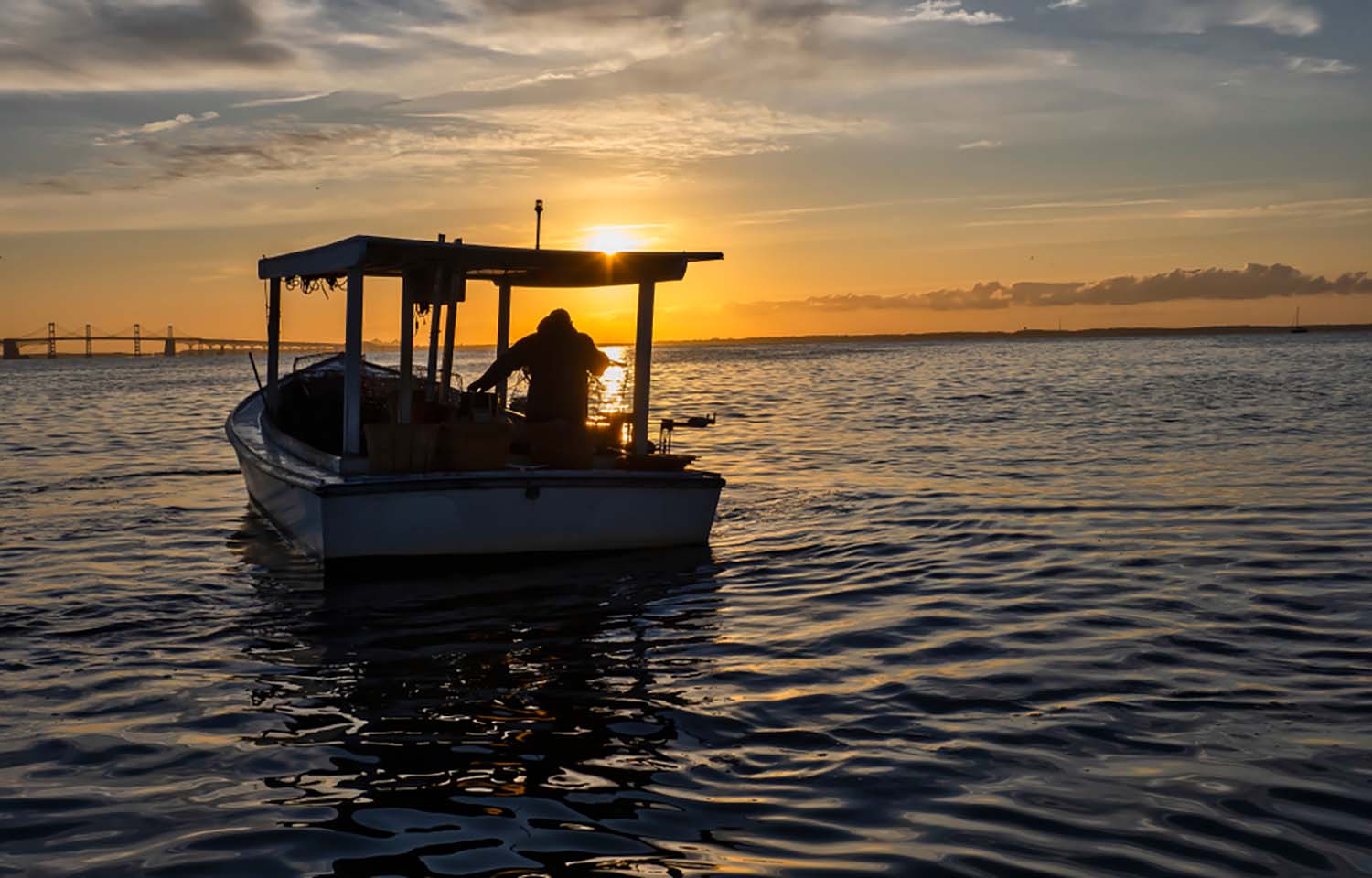
Maryland’s crab fishery has faced labor shortages and heavy competition from cheap imports for several years, but Bill Sieling, the executive vice president of the Chesapeake Bay Seafood Industries Association, is warning that the issues are now reaching a breaking point.
The Mid-Atlantic U.S. state’s crab fishery, like many seafood subsectors throughout the country, relies on seasonal workers to fill temporary positions. Many of those seasonal workers are from foreign countries, and to fill those positions the federal government allocates H-2B visas to employers through a lottery – meaning businesses have no guarantee on how many temporary workers they’re able to bring in every year.
Sieling told SeafoodSource that just under half of the companies he represents received visas under the U.S. Department of Labor’s lottery system last year, and although all but one received visas this year, the unpredictable nature of visa allotment has generated extreme uncertainty with no end in sight.
“It's the worst way in the world to try to run a business, where you don't have any idea from year to year whether you're going to have workers or not have workers,” Sieling said. “You have to go through all these protocols to even qualify, and you have to prove without a doubt that you cannot find a domestic worker willing to work for the standard pay that is authorized for these positions. Employers have absolutely no control over anything. There's really nothing we can do.”
In June, Republicans in the U.S. House of Representatives, including Maryland Representative Andy Harris, adopted an amendment that – if passed into law – would vastly increase the number of seasonal migrant workers allowed into the U.S. every year.
Past legislation has also put forth such strategies as allowing seafood companies to hire workers through the uncapped H-2A visa program, which would greatly increase the number of seasonal workers they could hire from other countries.
No such legislation has passed into law, though, so in the meantime, employers are left in the same worrying limbo they have been stuck in for years.
Complicating the matter, according to Sieling, has been the administration of U.S. President Donald Trump’s crackdown on illegal immigration.
Immigration and Customs Enforcement (ICE) officers have carried out raids on seafood companies in several states, including Texas, New Jersey, and Massachusetts. In the latter state, workers in the town of New Bedford, which is one of the busiest seafood-processing hubs in the country, have expressed fear about showing up to work.
"We leave home, and we don't know if we're going to come back," a former New Bedford processing employee, who spoke to SeafoodSource on the condition of anonymity, said earlier this year. “We want to go to work, we want to do the work for the hours that they have given us, we want to make the production quotas, and we want to be able to leave work in the same condition as we entered it.”
Sieling said workers employed by his member companies are all in possession of visas, so ICE has not targeted Maryland firms. However, a state of fear is prevalent across several industries in the U.S. that rely on foreign workers, regardless of workers’ legal status.
“[People] think [H-2Bs] are taking jobs away from Americans,” he said. “But in reality, of course, it's not.”
Further exacerbating the Maryland crab industry’s woes is heavy competition stemming from cheap imports, especially from Venezuela.
In recent years, state lawmakers in Maryland and neighboring Virginia have tried to persuade the federal government to investigate the impact of Venezuelan imports on domestic businesses.
“Domestic seafood producers in Maryland and Virginia have experienced significant strain due to the influx of imported Venezuelan crabmeat, some of which is mislabeled and contaminated,” legislators said in a joint 2024 letter. “In 2018, Venezuelan crabmeat mislabeled as originating from Maryland caused an outbreak of foodborne illnesses, resulting in multiple hospitalizations. Since then, the supply of imported crabmeat has increased, threatening the future livelihood of domestic industry and creating the conditions for a 62 percent decrease in the domestic supply.”
Those efforts have yielded no positive results for Maryland’s processors, according to Sieling, who said that the only meaningful action that could yield results would be meaningful tariffs.
To date, the Trump administration has levied a 15 percent tariff on Venezuelan imports, but Sieling said the increased rate is not high enough to boost the local crab industry.
As the issues pile up, the Maryland crab industry continues to decline.
The number of companies operating in the state has been halved in recent years, leaving only 10 active processors, Sieling said, adding that without long-lasting solutions to the issues, most companies will likely be forced to cease operations within a year.
“It's a brutal business we're in. It didn't used to be this way at all,” Sieling said.
