



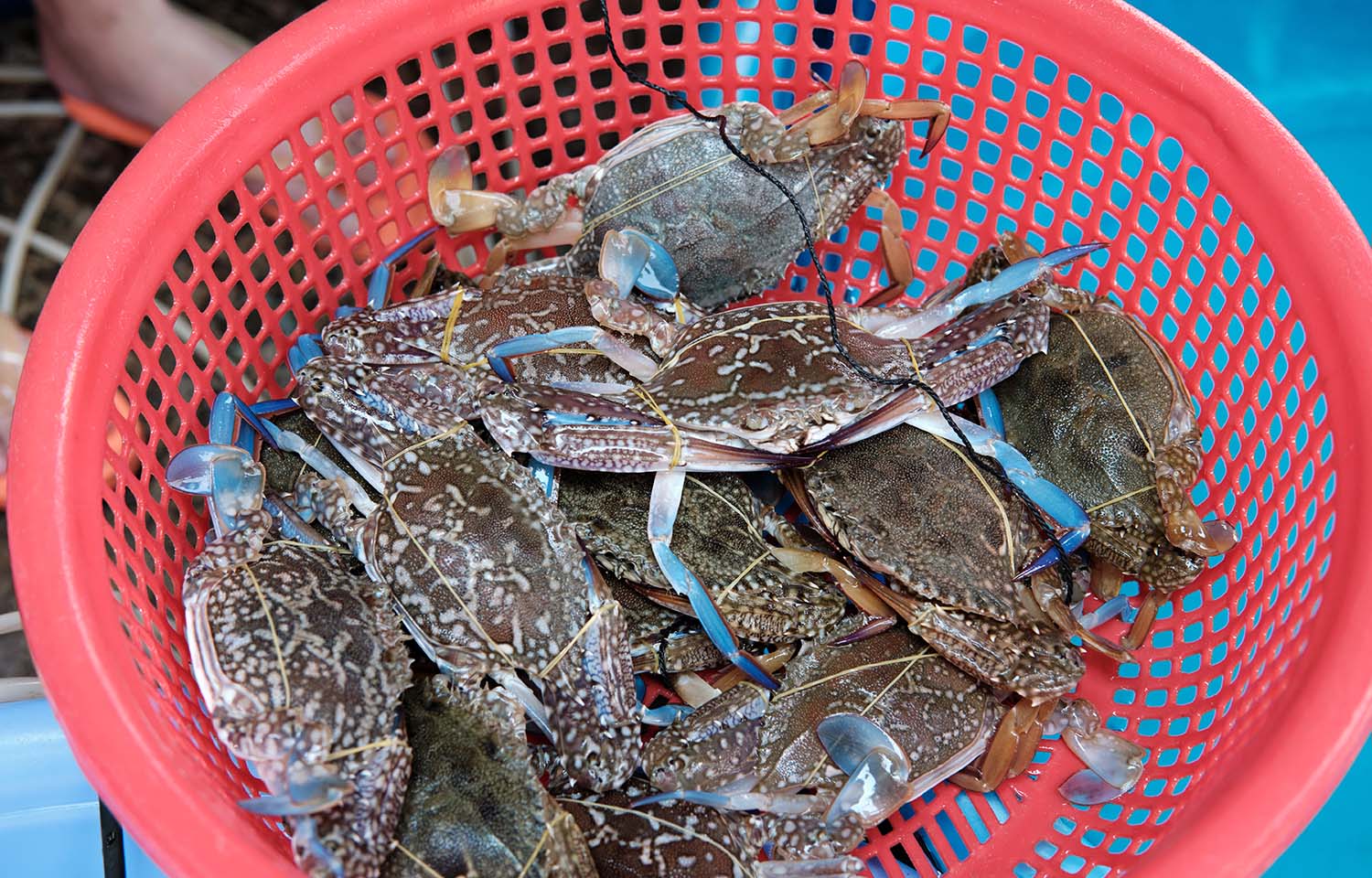
A National Marine Fisheries Service (NMFS) reconsideration of its Marine Mammal Protection Act (MMPA) comparability findings for swimming crab has determined it will ban imports of the product from the Philippines gillnet and pot/trap fisheries while greenlighting imports from Vietnam, Indonesia, and Sri Lanka.
NMFS first announced its MMPA comparability findings in August 2025, revealing 240 fisheries from multiple countries would no longer be allowed to export products to the U.S. after a review of 2,500 fisheries from 135 countries. Of those 240 fisheries, the swimming crab fisheries in Vietnam, Indonesia, Sri Lanka, and the Philippines were found to be deficient in their marine mammal protection standards, which would have instituted a complete ban on all products from those countries.
Under the MMPA, foreign fisheries must meet the same marine mammal protection standards as similar U.S. fisheries in order to export products to the U.S.
NMFS’ finding in 2025 meant the vast majority of pasteurized swimming crab imported by the U.S. each year would have suddenly been banned, with the National Fisheries Institute (NFI) estimating 89 percent of imports were going to be cut off all at once.
Soon after the decision, a group of seafood companies, NFI, and the Restaurant Law Center sued over the determinations, claiming they were made based on regulatory alignment rather than any actual harm to marine mammals.
That lawsuit was settled in November 2025 as NMFS agreed to take a second look at those findings and reexamine them with stakeholder input. Now, those findings are scheduled to be published to the Federal Register on 12 May 2026, and swimming crab exports from the Philippines will no longer be allowed in the U.S. 30 days after the publication – roughly in mid-June.
That ban will cut off over 2,000 metric tons (MT), or 4.4 million pounds, of blue swimming crab imports from the Philippines. Based on NOAA import data, the U.S. imported 2,417 MT of blue swimming crab from the Philippines in 2025.
By comparison, Indonesia exported 14,290 MT of crab to the U.S. in 2025, Vietnam exported 4,143 MT, and Sri Lanka sent 820 MT.
NMFS issued a second report for just the Philippines pot/trap and gillnet blue swimming crab fisheries, and according to that report, the country does not have a requirement to report marine mammal mortality and injury in its fisheries. The NMFS report acknowledged that the Philippines is implementing dockside monitoring at seven commercial fishing ports and 60 municipal landing centers and that the country stated its intent to establish a nationwide monitoring for marine mammal reporting but added that it isn’t currently enough to permit exports.
“Although the Philippines has taken the first steps toward implementing marine mammal bycatch reporting in its blue swimming crab fisheries, the Philippines has not provided sufficient information about the current pilot dockside monitoring program in Visayan Sea and Guimaras Strait or the future nationwide program,” NMFS stated. “It is unknown if the program design is robust enough to provide reliable data for determining marine mammal bycatch in the blue swimming crab fisheries. Thus, these future efforts have not been factored into NMFS’ comparability findings.”
According to the report, since the Philippines implemented a pilot marine mammal monitoring program for the Visayan Sea and Guimaras Strait in October 2024, it only documented one marine mammal incident in December 2025 “that included a pod of 15 striped dolphins that swam away after an interaction with a shrimp trawl fishing vessel.”
NMFS added that the Philippines has not demonstrated its bycatch mitigation measures are effective at preventing marine mammal bycatch or, “at the very least,” ensuring bycatch limits for the Irrawaddy dolphin – a species at high-risk of extinction that exist in parts of the Philippine waters.
NFI Chief Strategy Officer Gavin Gibbons told SeafoodSource that NFI is “reviewing the findings” and the potential impacts of NMFS’ decision, “both intended and unintended.”
“All of the crab fisheries that were reassessed worked extremely hard and have demonstrated a clear, ongoing commitment to marine mammal protection,” Gibbons said.
