






A coalition of seafood importers and industry groups such as the National Fisheries Institute (NFI) and the Restaurant Law Center have sued NOAA over its recent determinations on Marine Mammal Protection Act (MMPA) requirements.
NOAA recently determined 240 foreign fisheries do not comply with U.S. marine mammal regulations under the MMPA, finding they did not have sufficient protections in place for marine mammals. As a result of the ruling, those 240 fisheries from 46 different nations will be unable to export any products to the U.S. as of 1 January 2026, including 12 countries that lost access for every single one of its fisheries. Those countries included four which did not submit any applications – Benin, Haiti, Iran, and Venezuela – and eight which submitted applications but were denied – Grenada, Guinea, Namibia, New Caledonia, Russia, Saint Lucia, The Gambia, and Togo.
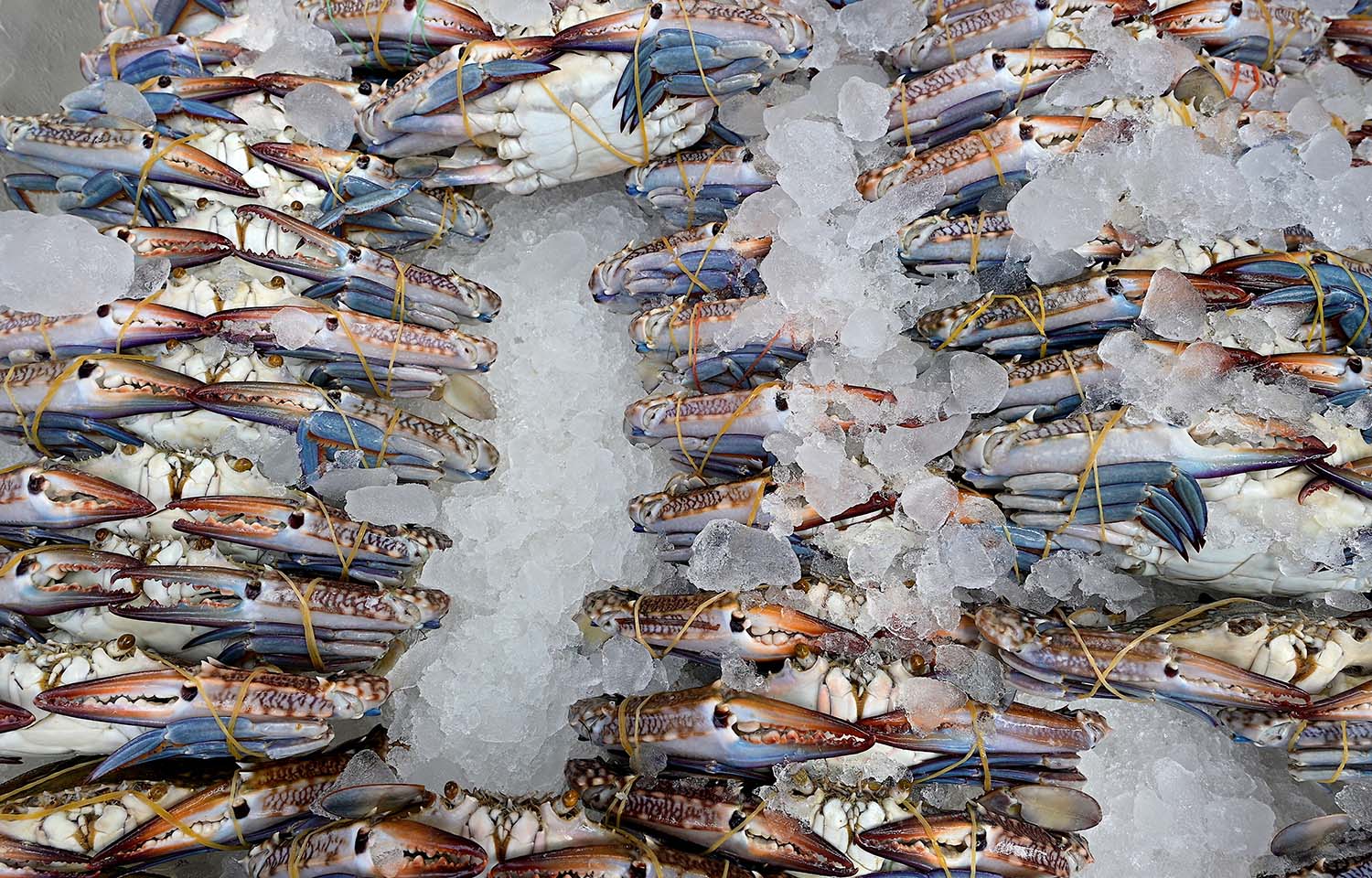
Among the countries denied access to the U.S. were multiple major exporters of crab, such as Indonesia, Vietnam, the Philippines, Venezuela, and India.
NFI Chief Strategy Officer Gavin Gibbons told SeafoodSource a ban on crab imports would have sweeping and devastating impacts on the U.S. supply of crab – particularly of pasteurized crab, which is widely used in products like crab cakes.
Gibbons said the domestic supply of crabmeat largely comes from blue crab fisheries on the East Coast of the U.S. from a fishery that’s well-managed and fished to maximum sustainable yield.
“In the domestic market, there are 29,000 pounds of pasteurized blue crab available,” Gibbons said.
In comparison, last year, the U.S. imported 62 million pounds of pasteurized blue swimming crab. NOAA’s MMPA ruling would mean 89 percent of those imports would be banned from the U.S., according to Gibbons.
“It’s devastating, and these are facts; this isn’t arguing opinions,” he said. “It would be totally, physically impossible to harvest that much crab from U.S. waters in order to make up the difference.”
Gibbons said if NOAA’s ban goes through, crab products will essentially disappear from the U.S.
“Crab cakes go away, that’s what happens,” he said. “And with it, U.S. jobs.”
Supreme Crab and Seafood CEO Troy Turkin told SeafoodSource the impact on his business would be significant. However, he denied to make any further comments as his company is one of the plaintiffs pursuing the lawsuit against NOAA and the U.S. government.
“I’m happy to be on record that we support the MMPA, just not how it was implemented,” Turkin said.
Gibbons said a key point of the complaint is its emphasis on the fact the import bans are not based on real harm or the effectiveness of the regulations of the foreign governments. Rather, it is based on specific regulatory components with no evaluation of whether marine mammals are being protected or not.
“There’s this idea that these fisheries would be banned because they’re actively harming marine mammals. In many cases, that is totally inaccurate,” Gibbons said. “The failures in these fisheries in terms of the MMPA often come from things like data deficiencies, lack of observers, gear types that NOAA doesn’t like, pieces of inadequate reporting, and bycatch mitigation differences. We’re not talking about documented marine mammal interactions.”
The complaint filed in court focuses on that issue. The National Marine Fisheries Service notice, it said, emphasized the laws and regulations and downplayed “evidence of low bycatch outcomes or equivalent protections.”
“For instance, denials for Philippine and Indonesian gillnet and pot/trap fisheries cite risks to species like Irrawaddy dolphins, as well as insufficient data, but fail to credit evidence of bycatch rates below potential biological removal levels or alternative measures achieving results comparable to U.S. fisheries,” the complaint states.
Gibbons said what the NFMS notice boils down to is a bureaucratic straw man fallacy that’s regulating foreign fisheries strictly based on comparable regulation, or “regulating for regulating’s sake.”
Counterintuitively, according to Gibbons, the NOAA decision could end up harming sustainability efforts in the banned fisheries given the seafood industry’s years of work.
“U.S. seafood interests have a long history, especially in crab, of using market forces to drive sustainability practices,” he said. “The [NFI] Crab Council has been doing this since 2009. If you ban these products, you simply give up all leverage that you have of doing the effective work that we’ve been doing for years.”
The NFI Crab Council has worked on a number of fishery improvement projects (FIPs) specifically related to the crab fisheries named in the NMFS notice.
“We have FIPs in Indonesia, the Philippines, Vietnam, Thailand, India, and Sri Lanka. We’re also working on some efforts – I would not call them FIPs – in Mexico and Tunisia,” Gibbons said. “In all of those cases, the collective has used sourcing policies to drive sustainability.”
If the U.S. is no longer a viable market for those species, any market leverage to drive those changes disappears, according to Gibbons, and crab fishers in those countries could turn to other less scrutable markets.
“There are markets that specifically seek out something called purple bellies, and purple bellies are female crabs who have their egg sack underneath,” Gibbons said. “It’s a delicacy in some countries, and buyers specifically seek out these crabs. That is a terrible sustainability practice. If those are the markets you’re going to start selling to, that’s a real concern.”
Gibbons also said NOAA and the NMFS spent a decade reviewing the regulations and considering its response but never once consulted any stakeholders in the industry of any country, including in the U.S.
“This all goes back to NOAA insisting that this is a government-to-government effort – a strictly regulatory effort – and they would not and did not interact with stakeholders over the course of a decade where they were assessing these fisheries,” he said. “Meanwhile, the stakeholders are the ones pushing forward with sustainability advancements.”
The lawsuit also states the decision-making was in violation of the Administrative Procedure Act, which requires any regulatory decisions to assess the real-world impacts on the business and market. In this case, the decision would devastate U.S. crab companies, the suit argues.
“How do you assess the impact when you don’t contact those who would be impacted?” Gibbons said. “The reality of that is American job loss. These are value-adders, these are distributors, these are foodservice, these are restaurant groups, that’s where those impacts are going to be felt here in the U.S., not in a fishery that’s 6,000 miles away.”
