


After a downturn at the start of 2024, Norway’s seafood export value returned to positive performance in the third quarter of 2024.
The Norwegian Seafood Council (NSC) announced Norway’s seafood exports reached NOK 44.1 billion (USD 4.1 billion, EUR 3.7 million) in Q3 2024, an increase of 5 percent, or NOK 2.2 billion (USD 206 million, EUR 188 million), over the same period of 2023. After a negative H1 2024, the increase was substantial enough to put Norway back into a net positive in value terms for the first three quarters of the year.
“Thanks to a historically high export value in September, we have [experienced] the best third quarter ever,” NSC CEO Christian Chramer said.
Chramer said that this time, the export value numbers are not influenced by any currency effects. Prior export value increases were largely thanks to a weaker Norwegian krone, which was causing some seafood export uncertainty in 2023 and was largely the reason the country’s seafood export value increased in the latter half of 2023. At the time, without the currency effects, exports were relatively flat year over year in value terms.
In July 2024, NSC predicted dark clouds on the horizon for the country’s seafood exports as the country’s years-long run of continued export value growth came to an end.
“We do not predict a crash landing because seafood from Norway is strong. But, there is no escaping the fact that there are some dark clouds on the horizon,” Chramer wrote at the time.
Part of those darkening clouds included a big reduction in Barents Sea cod quota, which was cut by 31 percent, along with cuts on quota for herring, mackerel, and king crab. Despite those reductions, value still increased.
“2024 has been characterized by quota reductions for herring, king crab, mackerel, and cod. This is an important and necessary measure to ensure continued sustainable fish stocks, but has naturally resulted in lower export volumes,” Chramer said. “The fact that the total value of seafood exports nevertheless increased in the third quarter is due to fish from aquaculture compensating for the fall in quotas.”
Salmon remained the top species by value in Norway’s exports, accounting for NOK 31.8 billion (USD 2.99 billion, EUR 2.72 billion) in Q3 2024, an increase of 3 percent over the same period last year and accounting for 70 percent of Norway’s export value. The country exported 372,442 metric tons (MT) of salmon, an increase in volume of 8 percent.
Germany provided a big boost to the export value, with its purchases of Norwegian seafood increasing by NOK 355 million (USD 33.4 million, EUR 30.4 million) – or 32 percent – compared to Q3 2023.
"Although some of the increased supply of Norwegian salmon to the German market is probably for further processing and export, most of the growth to Germany can be explained by increased domestic consumption," NSC Seafood Analyst Paul T. Aandahl said.
Chramer said that the strong Q3 2024 for salmon is a positive sign for the seafood industry, even though the dark clouds he mentioned earlier in the year have not fully cleared.
“Salmon is a product that is still very popular with consumers, but there is no doubt that 2024 has so far been a demanding year for many salmon producers,” he said. “Competition in the market is fierce, while at the same time, there has been galloping cost growth. In addition, higher sea temperatures this summer have led to increased biological challenges related to salmon lice."
The salmon industry in Norway has had to grapple with explosive growth in sea lice and other biological challenges, impacting production. However, falling food inflation has helped increase demand for the species, driving up prices.
“For example, Germany, the U.K., and China have never traded Norwegian seafood for such high values as in the last quarter," Chramer said.
Trout also saw gains in export value in Q3 2024. Norway exported 25,033 MT of trout worth NOK 2 billion (USD 187 million, EUR 171 million) in the quarter, marking an increase of 34 percent by volume and 23 percent by value. At one point in the quarter, fresh whole trout had a higher export price than fresh whole salmon for the first time in over a year.
“September is the first month with a higher average price for fresh whole trout than for fresh whole salmon since May 2023. The average price for fresh whole trout was NOK 75.11 [USD 7.05, EUR 6.42] per kilogram, while the average price for fresh whole salmon was NOK 74.04 [USD 6.95, EUR 6.33] per kilogram," Aandahl said.
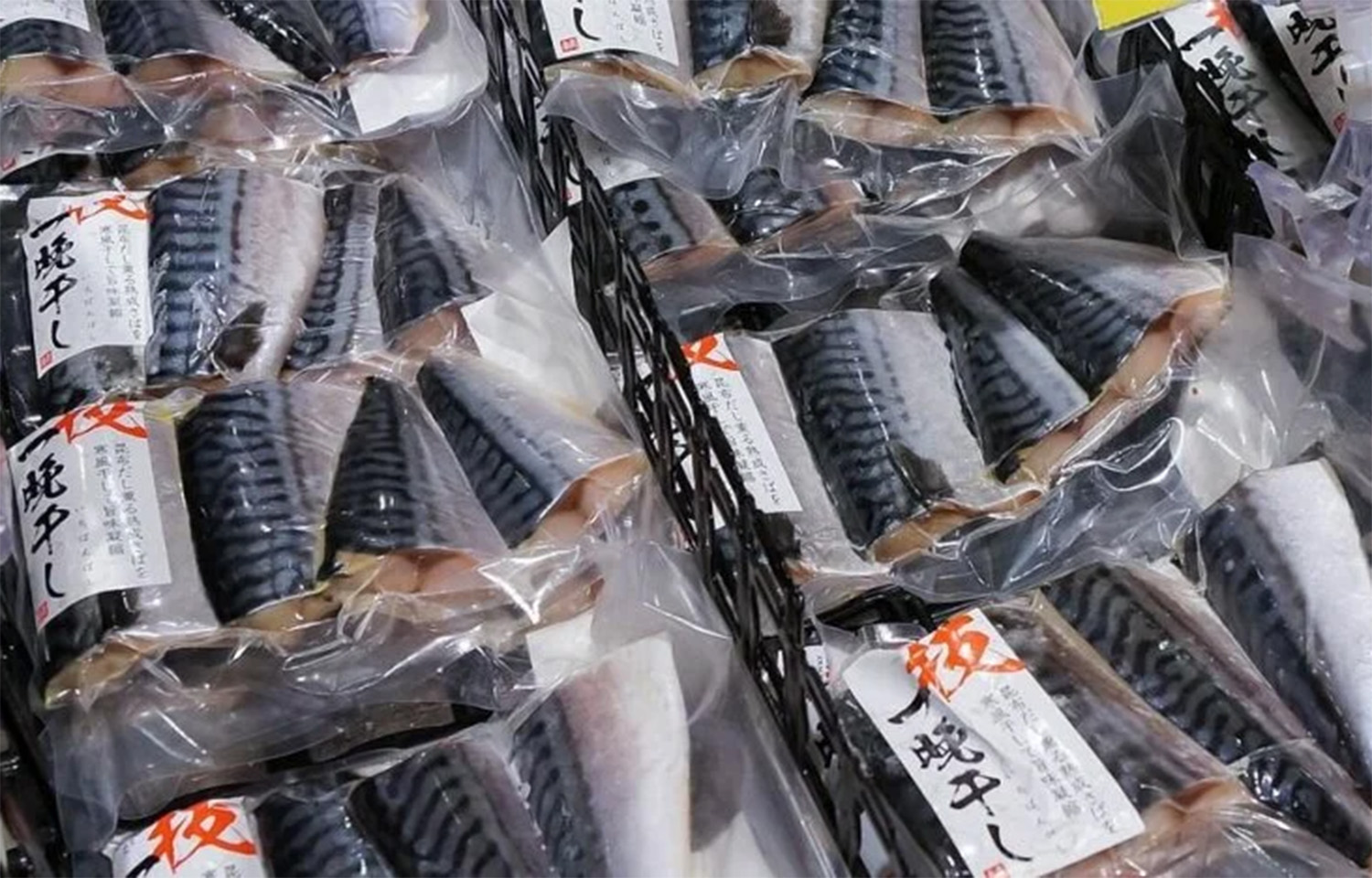
Norway’s mackerel exports also increased substantially in Q3 2024 compared to 2023. The country exported 90,038 MT of the species, an increase of 43 percent. That volume was worth NOK 2.3 billion (USD 216 million, EUR 196 million), an increase of 68 percent – or NOK 943 million (USD 88 million, EUR 80 million) – compared to Q3 2023.
"We are experiencing good demand in the most important Asian markets,” NSC Envoy to Japan and South Korea Johan Kvalheim said. "A decline in their own mackerel fisheries in both South Korea and Japan has meant that their processing industries are buying Norwegian mackerel to an even greater extent.”
The increased exports were buoyed by higher prices. The price of frozen whole mackerel reached a record high of NOK 26 (USD 2.44, EUR 2.22) per kilogram, the NSC said.
Norway’s prawn exports also had a strong quarter, with the country exporting 11,372 MT of the species in Q3 2024 – an increase of 130 percent by volume over Q3 2023. By value, exports reached NOK 474 million (USD 44.5 million, EUR 40.5 million), an increase of 54 percent, or NOK 167 million (USD 15.7 million, EUR 14.3 million).
“Prawn exports have had a historically strong quarter,” NSC Head of Shellfish Josefine Voraa said. “With the decline in cod quotas, activity in the prawn fishery in the Barents Sea has increased. Landings so far this year are 37 percent higher than they were at the same time last year."
While multiple species had volume and value increases in Q3 2024, cod continued its decline due to the quota cuts. Norway exported 6,156 MT of fresh cod worth NOK 374 million (USD 35 million, EUR 32 million), decreases of 9 percent and 1 percent, respectively.
Farmed cod made up 2,457 MT of the country’s fresh cod exports, an increase in volume of 119 percent compared to Q3 2023. In value terms, farmed cod was worth NOK 152 million (USD 14.3 million, EUR 13 million), an increase of 115 percent.
“This share [of farmed cod among total cod exports] has never been so high in a third quarter before,” NSC Seafood Analyst Thomas Jakobsen said. “The previous record was in the third quarter of 2010. At that time, farmed cod accounted for 38 percent of the total value of fresh cod exports."
September represented a tipping point for fresh cod exports in Norway, as the volume of farmed cod exceeded that of wild-caught cod during the month.
“In September, farmed cod accounted for 52 percent of total exports of fresh cod,” Jakobsen said. "This is the first time in recent times that farmed cod has accounted for more than half of the export volume for fresh cod."
Frozen cod saw declines in volume and value. Norway exported 7,026 MT of frozen cod worth NOK 490 million (USD 46 million, EUR 42 million), a drop of 30 percent and 16 percent, respectively. However, the processing market in China had high growth in frozen cod purchases in Q3 2024, increasing by NOK 82 million (USD 7.7 million, EUR 7 million), or 127 percent, compared to Q3 2023.
