



Ned Daly is the lead for Seafood2030, a project that highlights the intentional design and evaluation of global sustainable seafood systems, as well as the collective impact of sustainability efforts in seafood.
Trapped value develops in a system when risk or inefficiencies impede value delivery.
Such examples of releasing trapped value at a company level include when a business moves from a paper-based system to a digital system or from a spreadsheet to a cloud-based app for accounting tasks.
At a societal level, trapped value can be released, for instance, in the shift from libraries to the internet to answer questions, from physical maps to GPS for travel, and from landlines to cellular devices for communication.
When trapped value is released, it tends to have broad value distribution across a system.
Similarly, in small-scale fisheries across the globe, releasing trapped value can create healthy fisheries, healthy and stable fishing communities, responsible supply chains, and wide benefits for ocean ecosystems.
However, just as in any system, small-scale fisheries have system inefficiencies that trap value, most often arising from a lack of management, enforcement, or governance of fish stocks and related ocean resources. Weak governance in small-scale fisheries can include nonexistent or insufficient management plans, stock assessments, conflict resolution mechanisms, established rights for fishers, and effective responses to combat illegal fishing or overfishing.
Small-scale fishery interventions, like fishery improvement projects (FIPs), have become a driving force for releasing trapped value in small-scale fisheries, providing the industry with access to new, responsible sources of supply. Improvement efforts in domestic fisheries also help international supply chains by removing illegal elements from seafood trade, reducing negative environmental impacts, and establishing recognized fishing rights, which in turn creates local, invested advocates for responsible management.
The seafood industry has become proficient at recognizing industry-wide pain points – a lack of interoperable traceability, weak RFMO tuna management, a need for verifiable responsible aquaculture feed – and designing collaborative responses to tackle those issues.
Precompetitive collaborations like the National Fisheries Institute’s Crab Council or Sea Pact, supply chain collaboration in FIPs, and the development of sector councils are all designed to address industry pain points and headwinds.
The development of ocean clusters and 100 percent fish utilization, the efforts of GDST to release the trapped value in inefficient data exchange in supply chains, and the Sustainable Fisheries Partnership and their supplier roundtables are additional successful examples of the industry releasing trapped value in seafood supply chains.
More specifically targeted toward small-scale fisheries, there are dozens of companies like Blueyou and Netuno that are designing models for releasing trapped value.
Simultaneously, there are hundreds of small, medium, and large NGOs and civil society “social entrepreneurs” working to improve small-scale fisheries, communities, and supply chains. MDPI, Bluer Seas Philippines, Ocean Outcomes, FishWise, the Conservation Alliance for Seafood Solutions, and The FIP Community of Practice are all examples of driving improvements in responsible management and production while releasing trapped value for ocean ecosystems, fishers and communities, and supply chains.
The return value to the supply chain for releasing trapped value in small-scale fisheries can be a price premium, but longer-term value also includes market access, quality control, and improved marketing opportunities.
Seafood companies that see small-scale fishery improvement projects and similar improvement models as solely an environmental or community program are missing an opportunity to create value in their own supply chains while delivering a more responsible seafood product to global seafood supply chains.
While “collaboration around sustainability” may not sound like a capitalist rallying cry, when done effectively, it creates cyclical growth that improves the entire supply chain.
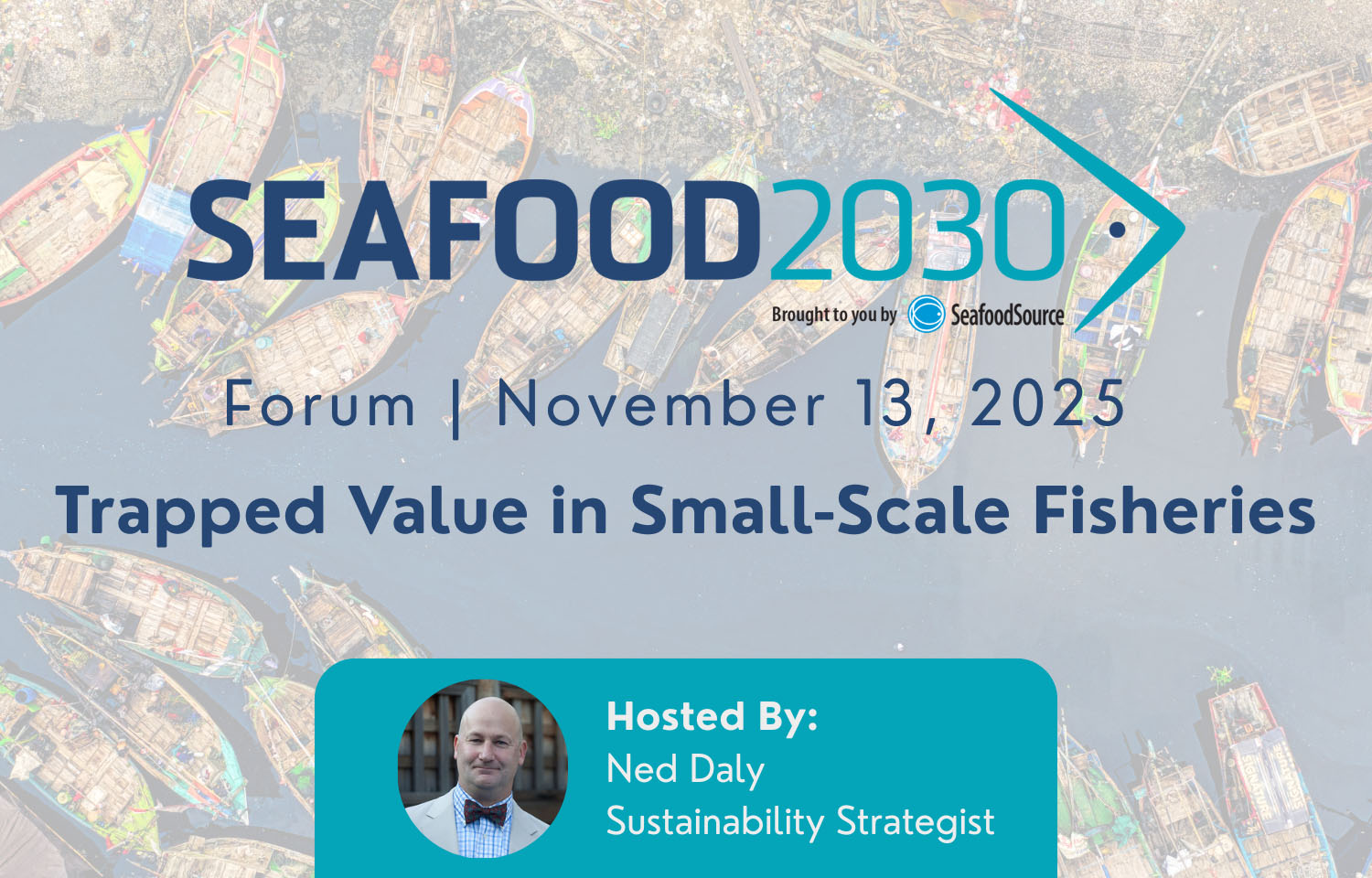
Seafood2030 is hosting a free online forum, “Seafood2030 Forum: Trapped Value in Small-Scale Fisheries,” discussing the topic in more detail on 13 November at 1 p.m. EST.
