




Officials in the U.S. state of Oregon have decided to delay the state's commercial Dungeness crab season by at least two weeks, despite preseason testing showing that the state’s crabs met the regulatory threshold for meat recovery.
In a 21 November announcement, the Oregon Department of Fish and Wildlife (ODFW) declared that it would be pushing back the season opening from 1 December to 16 December due to testing in Long Beach, Washington, the only site to show lower meat recovery levels.
“Oregon Dungeness crab met both meat and safe biotoxin level requirements; however, the season is delayed as Long Beach crabs have not yet met the meat fill requirement.” ODFW said in a release. “Most Dungeness crab advisory committee members support the delay as it is least disruptive to traditional fishing patterns and may improve market conditions.”
The decision was made in coordination with officials in the neighboring states of California and Washington.
The ODFW said that if crabs in Long Beach meet the threshold of 23 percent meat fill in subsequent testing, the commercial season will open 16 December. Last year’s season was also delayed multiple weeks as regulators waited for meat recovery testing to reach the required threshold.
At the same time, Oregon officials are demanding the U.S. Coast Guard return a rescue helicopter that commercial fishers depended on during emergencies.
State and federal lawmakers are demanding answers after the U.S. Coast Guard relocated a rescue helicopter from Newport, Oregon, that Dungeness crab fishers have relied on in emergencies.
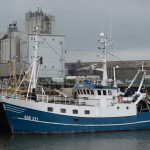
“After repeated attempts to get information and secure a meeting – none of which have been meaningfully answered – we are now writing to demand clear, immediate answers about the Coast Guard’s abrupt decision to relocate a rescue helicopter from Newport to North Bend,” Oregon’s congressional delegation said in a joint letter to the Coast Guard. “Dungeness crab season is about to begin, with more than 60 vessels – over 300 lives – heading out as early as 12 December to do one of the most dangerous jobs in the world. Those crews and their families need to know whether they can count on a timely Coast Guard response if something goes wrong.”
In their letter, the lawmakers demanded answers from the service on why it made the decision to remove the helicopter, how rescue response times will be impacted, and what the Coast Guard is doing to educate fishers and the community about the change.
“The impression is that maritime safety and the lives of our fishermen, visitors, and coastal residents are not a priority for the Coast Guard. If that is not the case, we need that said clearly and supported by action,” the lawmakers stated. “Given the unforgiving conditions on this coast, a delay of 30 to 45 minutes is the difference between a rescue and a body recovery. Lives quite literally depend on timely answers to these questions.”
Both Oregon Attorney General Dan Rayfield and nonprofit Newport Fishermen’s Wives have filed lawsuits to force the Coast Guard to return the helicopter to Newport.
“We are deeply concerned about the safety of our commercial fishing industry, especially with the opening of crab season scheduled for 16 December,” Newport Fishermen’s Wives President Becca Bostwick-Terry said in a release. “Commercial fishing is one of the nation’s most dangerous occupations, and Oregon’s cold waters make rapid helicopter response a matter of life and death.”
