






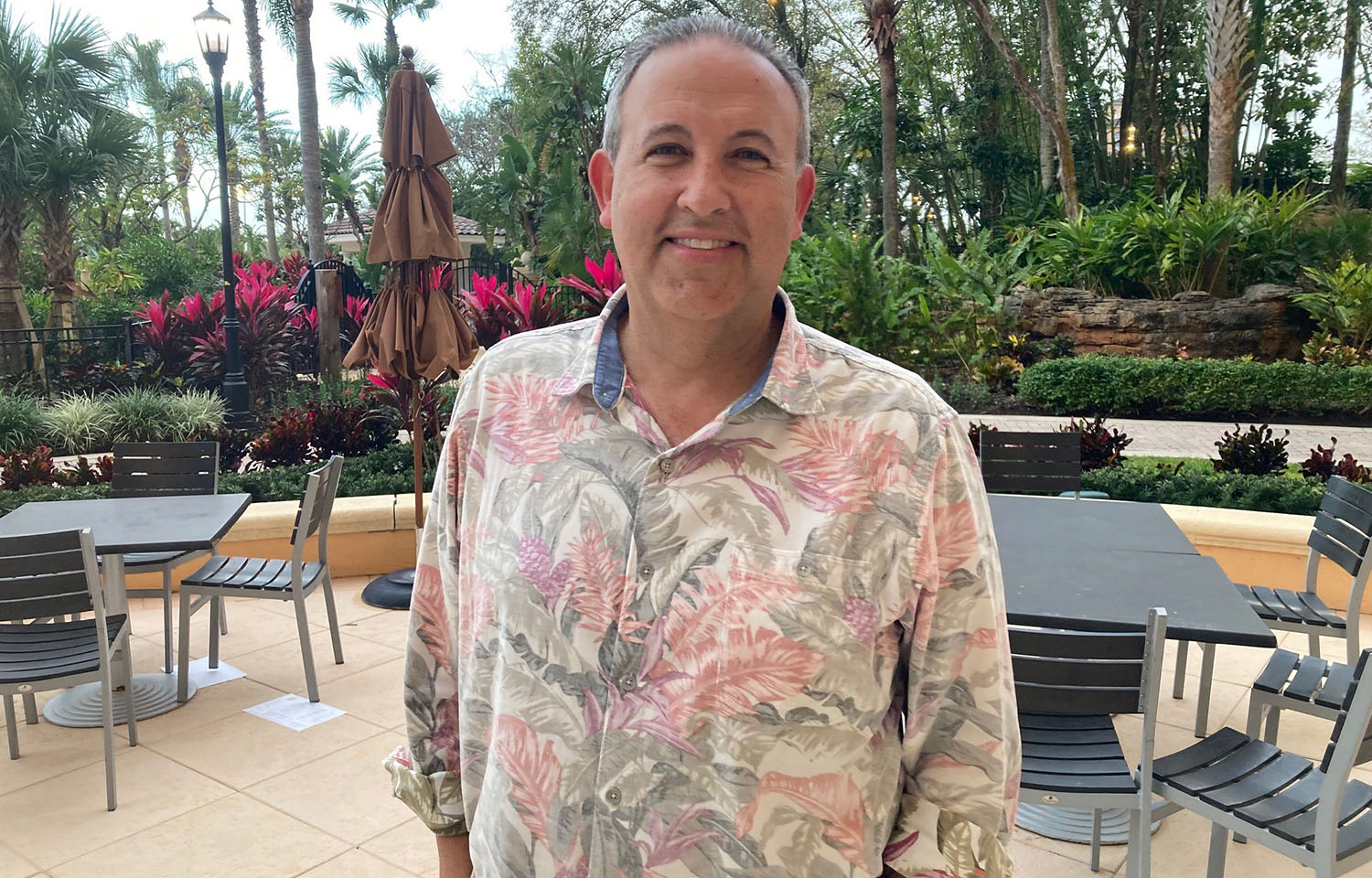
Seafood Exchange of Florida President and CEO Travis Larkin is 100 percent committed to Ecuadorian shrimp.
Larkin, who took over the Wake Forest, North Carolina, U.S.A.-based value-added shrimp purveyor in 2008, works nearly exclusively with a single shrimp-farming and -processing firm in Ecuador, and he doesn’t foresee making any changes to that setup.
“We've worked in other parts of the world through the years, but we've just really focused on Ecuador because we have a tight partnership there and a lot of control with what’s done there and how it’s done,” Larkin told SeafoodSource.
Larkin said the combination of price, quality, and convenience Ecuador offers for its shrimp is impossible for competitors to match.
“Ecuador has always had an advantage in the quality of its raw shrimp. Buyers have just always really liked Ecuadorian shrimp, though we've never really known exactly why. It could be the environment, and I think a lot of it is in handling. Ecuadorian shrimp companies didn't develop a lot of the questionable habits that emerged in other places through the years. Ecuador was even slow to come to the game of treating shrimp. It just wasn't part of what they did,” Larkin said.
Founded in 1979, Seafood Exchange of Florida is a niche supplier, solely offering high-quality value-added shrimp products, such as hand-breaded coconut shrimp, glazed and marinated shrimp, skewers, scampi, and stuffed shrimp. It claims to have been the first U.S. company to import hand-breaded shrimp. The company sells mostly to retail, including co-packing branded supermarket products, and it’s working to grow its foodservice business, according to Larkin.
“Our product is in a lot of packaging out there that no one would know that we're behind,” Larkin said. "
A Utah native, Larkin joined Shrimp Exchange of Florida in 1998 after two years working in seafood procurement at General Mills. At the time, it was a small company, and Larkin said he was drawn to the opportunity to conjure his own vision for how a business should be run into reality.
“The previous owner was of a certain age and had no kids or obvious successors and said he could use some help. The next thing we knew I decided to take the plunge,” Larkin told SeafoodSource at the 2024 Global Seafood Market Conference. “That first year was tough because when you go from procurement to the other side, you go from being pretty popular, with the biggest [purchase order] book in the business, to nothing. But, after I got through about a year, things started to click.”
The business took off as Larkin in 2008, after Larkin purchased it and began working closer with the company’s sole supplier in Ecuador on custom solutions for his customers.
“We are a niche business, and our advantage is that our niche is not covered by many suppliers,” Larkin said. “In the advanced value-added things that we do, it needs to be high quality, and we get that with our partner, who we have been working with since 1985. We have a lot of control over it, and Ecuador is close to the U.S., so we can get there frequently. That’s given us the ability to keep good, tight specs, good controls, and work on new products when the opportunity arises.”
Larkin said he’s been amazed by the emergence of Ecuador’s shrimp industry as a global powerhouse.
“It has been quite remarkable the amount they've grown that industry. And, they've done it in a way that they've kept their entire production system safe and growing. They're not dealing with the big disasters other countries have had,” he said. “They've been wise about it because they've taken it more slowly, and now, it's just massive.”
Larkin said he’s looked at diversifying his company’s supply by sourcing some products from Asia but that he hasn’t felt the need to pull the trigger on that move yet.
“We have done similar products in other parts of the world in the past, and we've kept those doors open,; those opportunities are always there. So, that's kind of a hedge,” Larkin said. “I’ve worked with good suppliers in Asia before, but they might also sell to 30 of your competitors. That doesn't give you the exclusivity. Sometimes, the costs in Latin America are a little bit higher than Asia just because of the nature of labor and other economics, but we're awfully close, and we can turn orders around pretty quickly. That ended up being a real lifesaver for some customers during Covid, when things really went south in Asia, but we were still turning things around pretty fast [in Ecuador].”
Seafood Exchange of Florida sources from two plants in Ecuador, so in the event one plant had a major disaster, “We wouldn't be just shut down overnight,” Larkin said.
The company steered clear of another potential pitfall when the U.S. Department of Commerce reduced its preliminary determinations on antidumping duties for Ecuadorian shrimp to 2.89 percent – from its original rate of 7.55 percent. While Seafood Exchange of Florida does not pay duties on braded shrimp, the higher rates affect its raw material costs.
“If we see higher duties, we’ll probably see a shift in the product around the globe. But, I feel like it'll be like the proverbial glass of water; you shake it up, and it looks really rough at first, but you give it a few moments and everything settles down,” Larkin said. “In the end, government is really no match for the free market. Things will be a little bit topsy turvy for a few months, and … six months later, everything will be rolling right along again.”
Ecuadorian exporters might typically look to China as an alternative to the U.S. market, but Ecuador’s exports to China are down 5 percent by volume and 18 percent by volume year over year in the January to April period due to weak consumer demand. But, at 297,626 metric tons in the period, Ecuadorian shrimp still represented 73 percent of all Chinese shrimp imports by volume.
“Ecuadorian firms know they should have a better mix, but I think it's hard to say no to the Chinese volumes; so, I think they'll continue to grow the volumes there,” Larkin said. “Chinese consumption just continues to grow like crazy. It feels like the one place on Earth where there really is no limit.”
Despite the distance between the two countries, Chinese importers love Ecuadorian shrimp because it comes head-on and is cheap and delivered reliably, Larkin said.
“That's great for the processors; it’s in one door and out the other in hours,” Larkin said. “A lot of U.S. companies just have not really dedicated themselves to the more advanced value-added resources in Ecuador. The reality is, most of the processors there have not either. They've enjoyed sticking with simple processing because it's allowed them to do a lot of volume. As things have shifted in recent years, a lot of the processors there have gotten back a little more into the peeled business for the U.S. But, even still, most of them have not wanted to do much beyond that, and they haven't really had to.”
Despite the challenging circumstances facing the global shrimp trade this year, Larkin said he remains “extremely optimistic” regarding the industry’s future. He cited the formation of the Global Shrimp Council as a watershed moment.
“I really think that shrimp has that opportunity if we can make it more top of mind for consumers,” Larkin said. “The industry’s problem right now is there's way too much shrimp and not enough consumer demand. I’m excited to see how the campaign goes; I think it will really help the industry turn the corner. For countries like Ecuador that are producing unimaginable volumes right now because they have become such good shrimp farmers, it's going to give them more places to send shrimp; it's tough sledding out there right now for a lot of shrimp companies.”
Larkin said he’s also excited to see initial industry backing for the Global Shrimp Council Initiative.
“I've felt for a while that that was the key to making this happen because they're really the ones that stand to gain or lose. So, I'm very encouraged by that,” he said. “I think if people will get behind it, it will be a gamechanger.”
As for his own firm, Larkin said Seafood Exchange of Florida continues to focus on slow and steady growth.
“I've always felt like one of the keys to success in the future is leveraging what you've done in the past. So, we want to take what we've done so far and use that bedrock as a solid basis to continue to expand – both in customers or products,” he said. “We've really been working hard in the last year at expanding some product lines – not because I think we're brilliant or any great visionaries, but as things have slowed down the last year, we said this is an opportunity to really try to do some different things. But, it's difficult in this industry. It really is slow going, and you work like crazy to take care of your current customers because they're the ones who give you the support to do something new. So, we'll work on that. We're always looking at new opportunities and trying not to get distracted or hung up on the wrong ones.”
