






The Global Shrimp Council (GSC) unveiled its board of directors, as well as its marketing campaign director, to its members at the 2024 Seafood Expo North America in Boston, Massachusetts, U.S.A.
The council was launched in September 2023, and the National Fisheries Institute, a trade group representing the U.S. seafood industry, agreed to house it in December 2023 as a precompetitive partnership designed to promote global shrimp consumption.
Glunashrimp Owner Gabriel Luna and
At the expo on 10 March, the council announced the appointment of its inaugural board of directors. It includes Grupo Almar President Jose Antonio Lince, Omarsa General Manager Sandro Coglitore, and Santa Priscila Commercial Director Diego Puente – all from Ecuador; Grupo Lamar Commercial Director Jose Rincon, representing Venezuela; Mer Seafood Sales Director Jessica Rodriguez from Honduras; Avanti Feeds Chairman and Managing Director Indra Kumar Alluri, Apex Frozen Foods Managing Director Choudary Karuturi, Devi Fisheries Director Mahendra Yarlagadda, each representing India; NAQUA CEO Diego Illingworth from Saudi Arabia; and Bumi Menara Internusa Director Aris Utama and eFishery Senior Vice President Kristin Veriga, representing Indonesia.
“The newly elected board members bring a wealth of expertise and experience from various shrimp-producing origins worldwide that, along with importers and industry-related members, will collaborate to promote shrimp consumption first in the U.S. and later in different geographies worldwide,” Luna and Castro, who will share a board seat, said in a joint statement. "We are thrilled to welcome such esteemed individuals to the inaugural board of directors of the Global Shrimp Council. Their diverse backgrounds and expertise will be instrumental in steering our collective efforts toward a prosperous future for the global shrimp industry."
NFI President and CEO Lisa Wallenda Picard framed the moment as historical.
“We are on the brink of history. I have absolutely no doubt this time next year that we’ll be looking back and saying, ‘Can you believe it?” she said. “What you all have done is phenomenal, and I’m so excited that we get to be partners with you. Thank you for including us in this journey.”
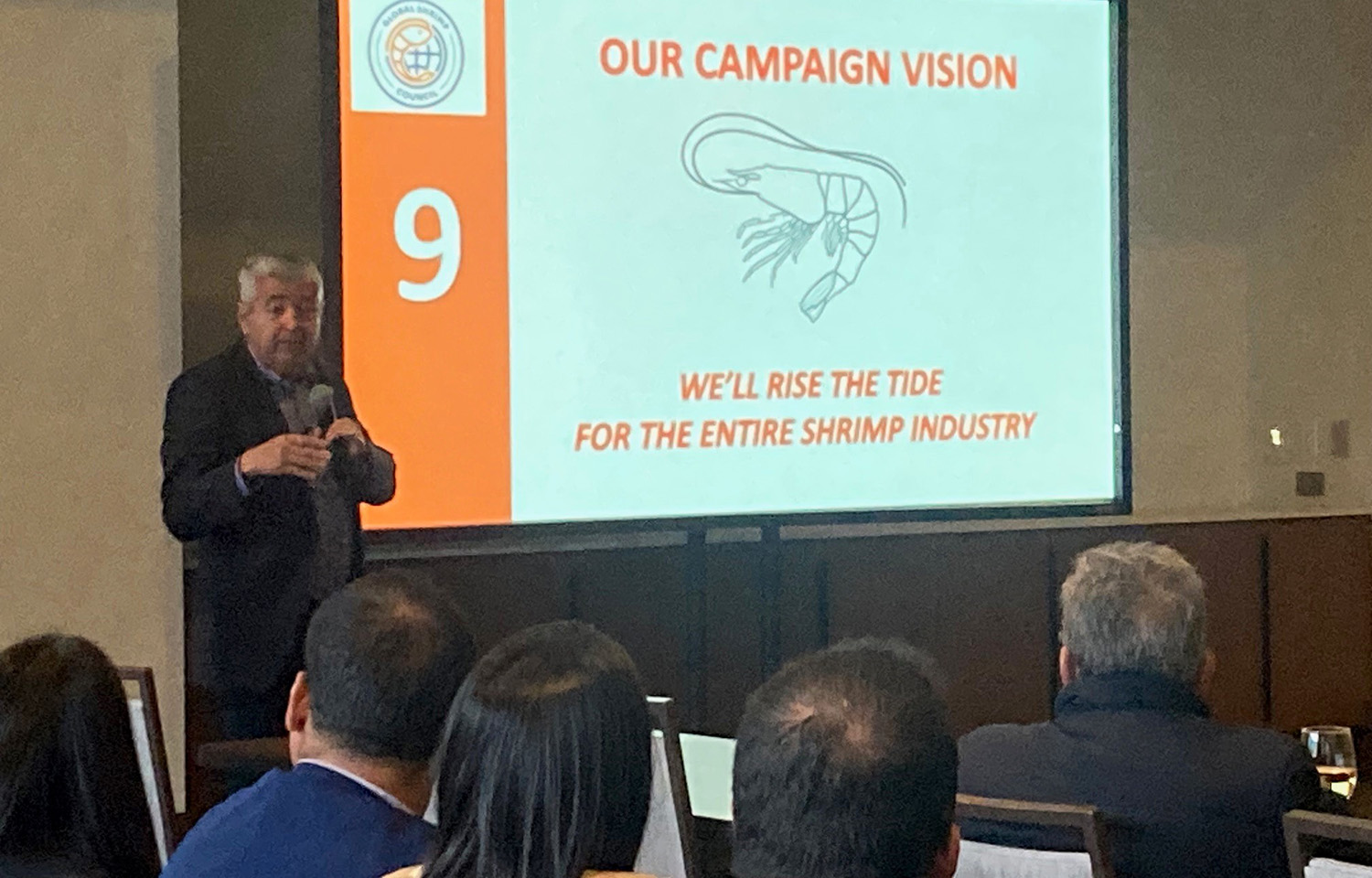
Miguel Barcenas, the creator of the highly successful “Avocados from Mexico” promotional campaign, provided an outline of his concept for the promotional campaign.
“We want to build a brand in a brandless category,” he told the board and around 100 others at the meeting. “You may say we already have a bunch of brands. Every one of you have your own brand. This concept is not fighting with your brands … the only thing we're going to do is group all the beauty of shrimp – same as we did with avocado – and talk about everything good about it under the umbrella of a seal that you guys can use as members on your products. Your brand will continue to be there, but this collective brand that you own now is going to be the base for people to [better] recognize [shrimp].”
The key, according to Barcenas, is differentiation.
“That's what I like to bring to the table,” he said. “And that's exactly what we’re going to do.”
Barcenas admitted he is not a shrimp expert but said nor was he an avocado expert before creating the popular campaign.
“You are the experts,” he told the board. “I'm going to represent the consumers for you. I'm giving you the opinion of a guy who doesn't know much about the industry. To me, whenever I go to Costco or Walmart, I find that I don’t buy shrimp because it’s shrimp. I don't buy your brand. At least, I don't recognize it, and that was the case for avocados, too.”
Barcenas said he started the “Avocados from Mexico” campaign five years ago with a budget of USD 2 million (EUR 1.8 million). Now, the budget is USD 60 million (EUR 55 million), and the campaign has taken avocados from 6 percent brand awareness to 45 percent among U.S. consumers, boosting the percentage of American consumers who recognized the brand and want to buy it from 20 percent to 51 percent over that time.
The campaign has been aided by running commercials during the Super Bowl each of the past eight years, resulting in more than 55 billion brand impressions. Most importantly, Barcenas said, is that sales volumes of avocados have doubled since 2001.
He laid out a 10-point plan for the marketing campaign to come on the shrimp front, featuring a dual narrative for retails and consumers, starting with prioritizing health.
“People have so many misconceptions about shrimp,” he said. “Shrimp is the best-kept health secret … the American Heart Association says it’s a food that can lower cholesterol and that it’s low in fat. People just don't know it, but consumers don’t want to have a Bible on everything about shrimp. People don’t want to learn so much. They want simple concepts and learn one thing per product.”
For avocados, it was the concept of “good fats,” according to Barcenas, which unlocked a permission structure that allowed consumers to eat them more frequently.
“We're going to do the same for shrimp. The mission is not only to encourage people to eat more shrimp; we want them to love it,” he said. “The challenge is how can I make the logo or the seal representing shrimp indispensable, beloved, and something that consumers retailers and distributors like and differentiate. That’s the task in front of us.”
Barcenas discussed the importance of collaborating with supermarkets to ensure the brand is actively and prominently featured, especially on special occasions or holidays when shrimp sales are typically higher. Barcenas also said collaborations with other brands can be a net positive, as “Avocados from Mexico” has done with Tabasco and Doritos.
“We collaborate with a lot of brands because they want to be close to products that are good for you. We will have people knocking on our door asking if we can do something together. That's a very good way to collaborate and make the budget stretch much longer,” Barcenas said.
Other collaborations will come with foodservice chains, according to Barcenas.
“Shrimp is already in many, many restaurants, but we can do more. We're going to talk to restaurants that are not currently using shrimp and convince them to buy shrimp ... do more specials and activations. We were thinking, 'Why don't we make a national all-you-can-eat shrimp day?'”
The campaign will also make shrimp “a culinary experience,” Barcenas said, so that consumers know how to handle and cook it for a number of dishes on a variety of occasions.
“That's my specialty,” Barcenas said. “We want people not only to know the functional benefits … we want the emotional part. Shrimp needs to be fun. It needs to be a celebration.”
Barcenas said another concept the GSC board needed to absorb was the fact that the campaign will be inclusive, not exclusive.
“There will be some free-riders. That's fine,” he said. “We elevate the tide for the entire industry. We want people who jump on the tide of the brand and make it bigger.”
Growing the industry bigger needs to be accompanied by growing it better, too, Barcenas said. The success of the “Avocados from Mexico” campaign in growing sales was accompanied by a push by the industry on corporate social responsibility and sustainability.
“The industry will get bigger, stronger, and more professional,” he said.
In closing, Barcenas offered a “reality check.”
“Hopefully, you will see shrimp in the Super Bowl, but I don’t promise to be there too fast because first, you need to educate consumers before you start having fun with the brand,” he said. “We need your support so we really can deliver on the expected return of investment.”
Luna closed by saying that with proper funding, he hopes to launch the campaign in the fall of 2024. He previously told SeafoodSource the council's initial fundraising is USD 10 million (EUR 9.6 million).
