






The United States government has again backed the Philippines in its dispute with China over fishing territory in the South China Sea after yet another vessel collision spurred a fresh round of accusations.
“We stand with our Philippine allies as they confront China’s dangerous actions which undermine regional stability. China’s sweeping territorial and maritime claims in the South China Sea and its increasingly coercive actions to advance them at the expense of its neighbors continue to undermine regional stability and fly in the face of its prior commitments to resolve disputes peacefully,” U.S. State Department Spokesperson Thomas Pigott said in a release.
The long-simmering dispute has largely centered on the Scarborough Shoal, which is referred to as Bajo de Masinloc by the Philippines and Huangyan Dao by China. However, the conflict has ranged across several fishing areas in the South China Sea. China has claimed the entire South China Sea as its own territory – a claim disputed by multiple coastal countries with competing claims – even going so far as to recently designate the shoal as a natural reserve. The Filipino government has continued to support its fishers operating in the disputed waters.
China has taken aggressive action to discourage Filipino fishing in the South China Sea, using water cannons and risky maneuvers in an effort to turn their vessels away. Those actions have led to multiple close calls and collisions, including in August and September.
The most recent collision happened on 12 October, and the Chinese government quickly accused Filipino government vessels of causing the incident.
“Philippine official vessels sailed dangerously more than once, and some of them intruded into the waters off Zhubi Jiao, which resulted in the collision between the vessels of the two sides,” Foreign Ministry Spokesperson Lin Jian said in a 13 October statement. “The Philippines’ moves severely violate China’s sovereignty and rights and interests, threaten the safety and security of Chinese vessels and personnel, and undermine peace and stability at sea. They are the provocateur responsible for the situation at sea. China’s measures to safeguard its own territorial sovereignty and maritime rights and interests are necessary, legitimate, lawful, and beyond reproach.”
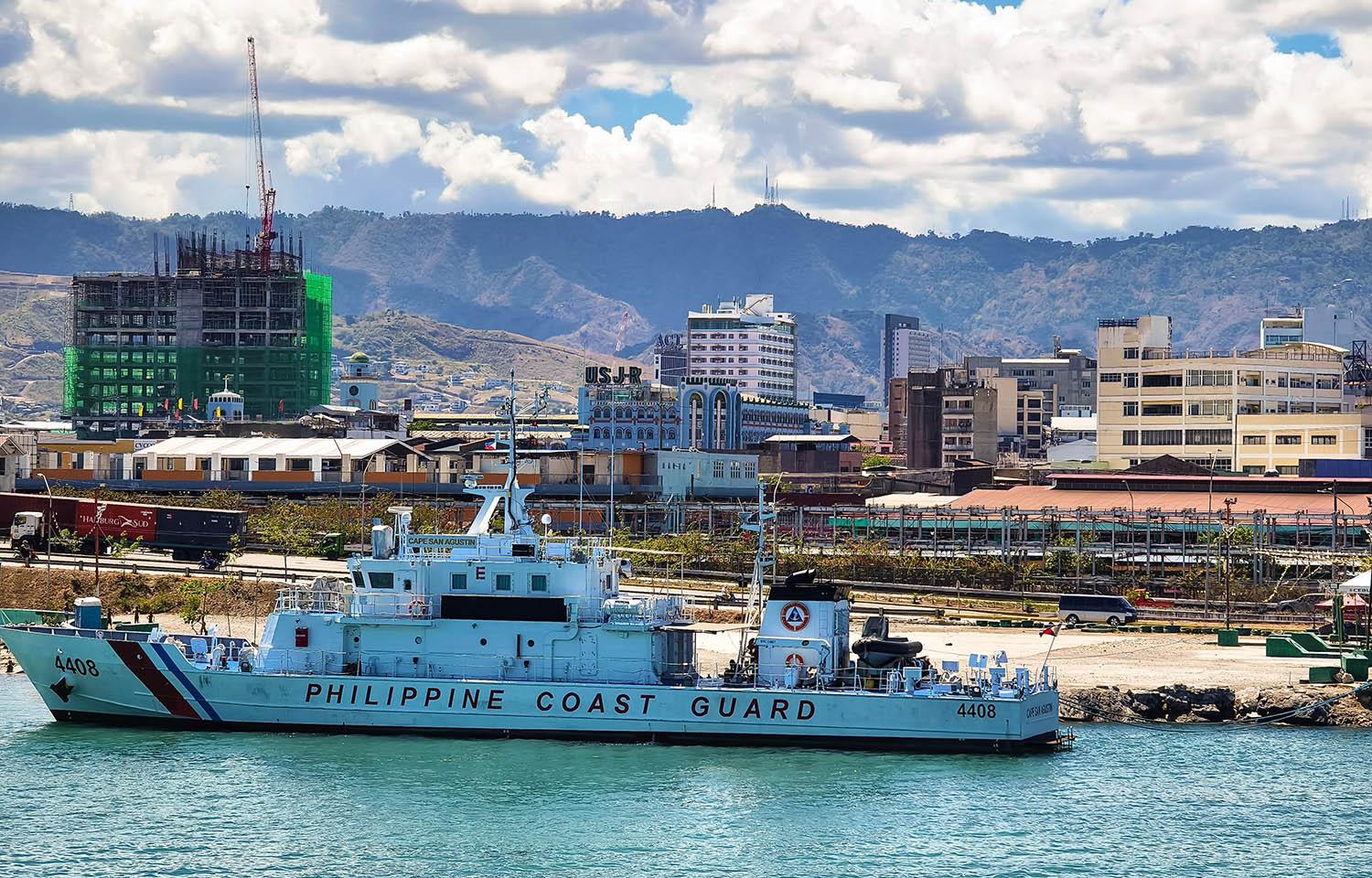
For its part, the Filipino government said its vessels were simply patrolling within the nation’s own exclusive economic zone (EEZ) when three of its Coast Guard vessels were harassed by five Chinese Coast Guard vessels and another 15 militia vessels, with one of those vessels intentionally ramming a Filipino vessel. No injuries or fatalities were reported.
“I don’t think ‘aggressive’ is the right term to describe our patrols. I think we are just more active in patrolling our own EEZ. It is not aggressive. Basically, it is our mandate to patrol all these areas, and I don’t think this is something new,” Philippine Coast Guard Spokesperson Commodore Jay Tarriela said in a release.
Despite the increased level of confrontation in the South China Sea, the Philippines claims even more of its fishers are operating in the disputed waters thanks to government support.
Earlier this year, the government launched the Kadiwa ng Bagong Bayaning Mangingisda (KBBM) program, which provides fuel support to distant fishers and purchases their catch at sea, allowing them to continue fishing instead of making the long journey back to port to land their catch. The Filipino government has also purchased 20 fish aggregating devices (FAD) for the fleet to use to increase its catch.
