





China and the Philippines have again accused each other of acting dangerously in the South China Sea, where the two nations continue to dispute important fishing grounds.
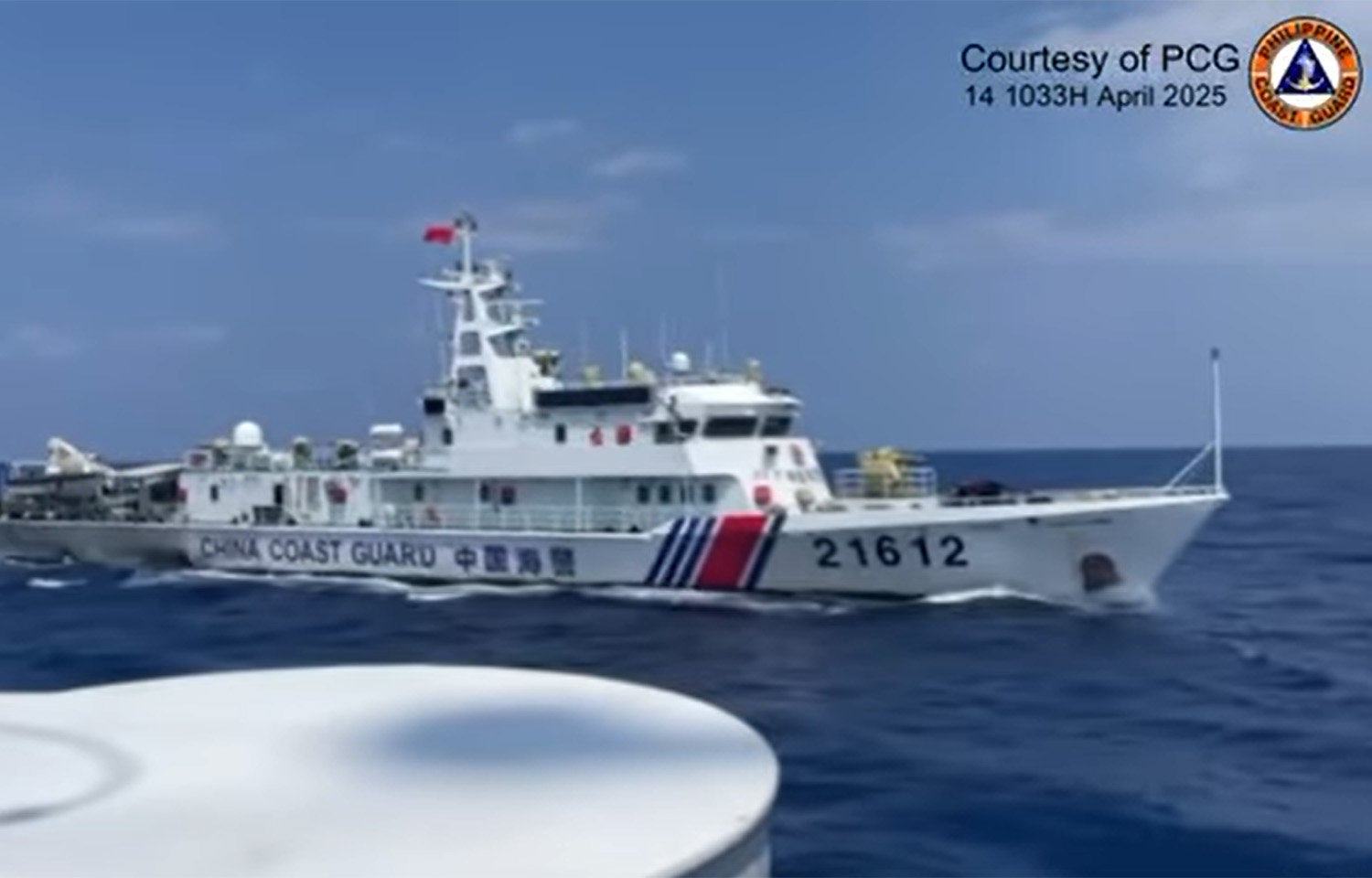
On 14 April, a Chinese Coast Guard (CCG) vessel sped up to cut off Philippines Coast Guard vessel BRP Cabra, which was patrolling near the disputed Scarborough Shoal in waters within the Philippines’ own exclusive economic zone. According to the Philippine government, China’s coast guard has been conducting illegal patrols in those waters to discourage Filipino fishers.
“This incident highlights the CCG's non-compliance with the International Regulations for Preventing Collisions at Sea (COLREGS) and reflects a blatant disregard for safety at sea,” the Philippines government said in a statement.
A week earlier, two CCG vessels attempted to ram the BRP Cabra, according to the Philippines.
Then, on 20 April, the Chinese Navy confronted the Philippine Navy frigate BRP Apolinario Mabini as it patrolled near the Scarborough Shoal. According to the Chinese military, the Filipino frigate illegally entered China’s territorial waters, but Chinese vessels were able to drive it off.
"We solemnly warn the Philippine side to immediately cease infringement and provocation. Otherwise, all consequences arising therefrom will be borne by the Philippine side,” Senior Captain Zhao Zhiwei, spokesperson for the Chinese PLA Southern Theater Command, said in a statement. "The troops of the Chinese PLA Southern Theater Command will remain on high alert to resolutely defend China's national sovereignty and security and resolutely maintain peace and stability in the South China Sea region."
Philippines officials have disputed China’s claims, calling its narrative “malign information” in a statement to the Philippine News Agency.
Interactions between Chinese military vessels and aircraft and Philippines government vessels have grown increasingly dangerous as tensions have risen.
The latest incidents occurred just prior to the start of a joint military exercise between U.S. and Filipino forces dubbed Balikatan 2025, which began 21 April and will continue through 9 May. In a press conference, Chinese Foreign Ministry Spokesperson Guo Jiakun denounced the exercises.
“With the world being hit by unilateralism, protectionism, and bullying, countries in this region have been calling for greater solidarity, coordination, and joint efforts to keep the region stable and respond to challenges,” Jiakun said. “Against this backdrop, the Philippines chose to conduct the large-scale military drills with this country outside the region and brought in strategic and tactical weapons to the detriment of regional strategic stability and regional economic prospects, which puts them on the opposite side of regional countries. This act has been detested and opposed by regional countries.”
Although China claims the entirety of the area as its own sovereign territory, multiple nations lay claim to part of the South China Sea.
“The South China Sea covers over 3.36 million square kilometers of water, stretching from Taiwan to the Straits of Malacca. The seascape is characterized by issues of territorial integrity, fishing and energy access rights, and declining fish stocks. Tensions also exist around the political and economic sensitivities related to artisanal and small-scale fisheries,” policy nonprofit The Stimson Center said. “The governments of Indonesia, Malaysia, Philippines, and Vietnam have all experienced contentious interactions with the People’s Republic of China over access to fishing grounds.”
China’s broad claims to the South China Sea, as well as disputed territorial claims made by other regional powers, may be contributing to illegal, unreported, and unregulated (IUU) fishing in the area, according to a new IUU fishing risk profile for the South China Sea published by the Stimson Center.
“The Philippines is experiencing increased pressure to exploit nearshore stocks due to the PRC’s occupation of traditional Filipino fishing grounds near Scarborough Shoal and the PRC’s island-building activities in the Spratly Islands [that are destroying] traditional spawning grounds,” the Stimson Center claimed in its report. “Overall, IUU fishing in the South China Sea region is the result of neighboring countries encroaching on another countries fishing grounds and not reporting the fish catch to authorities. Complicating this dynamic is a lack of clarity among nations on their country’s maritime boundaries, which has caused disputes ranging from threats, the sinking of vessels, legal actions, and the militarization of fishing vessels and coastguards.”
