






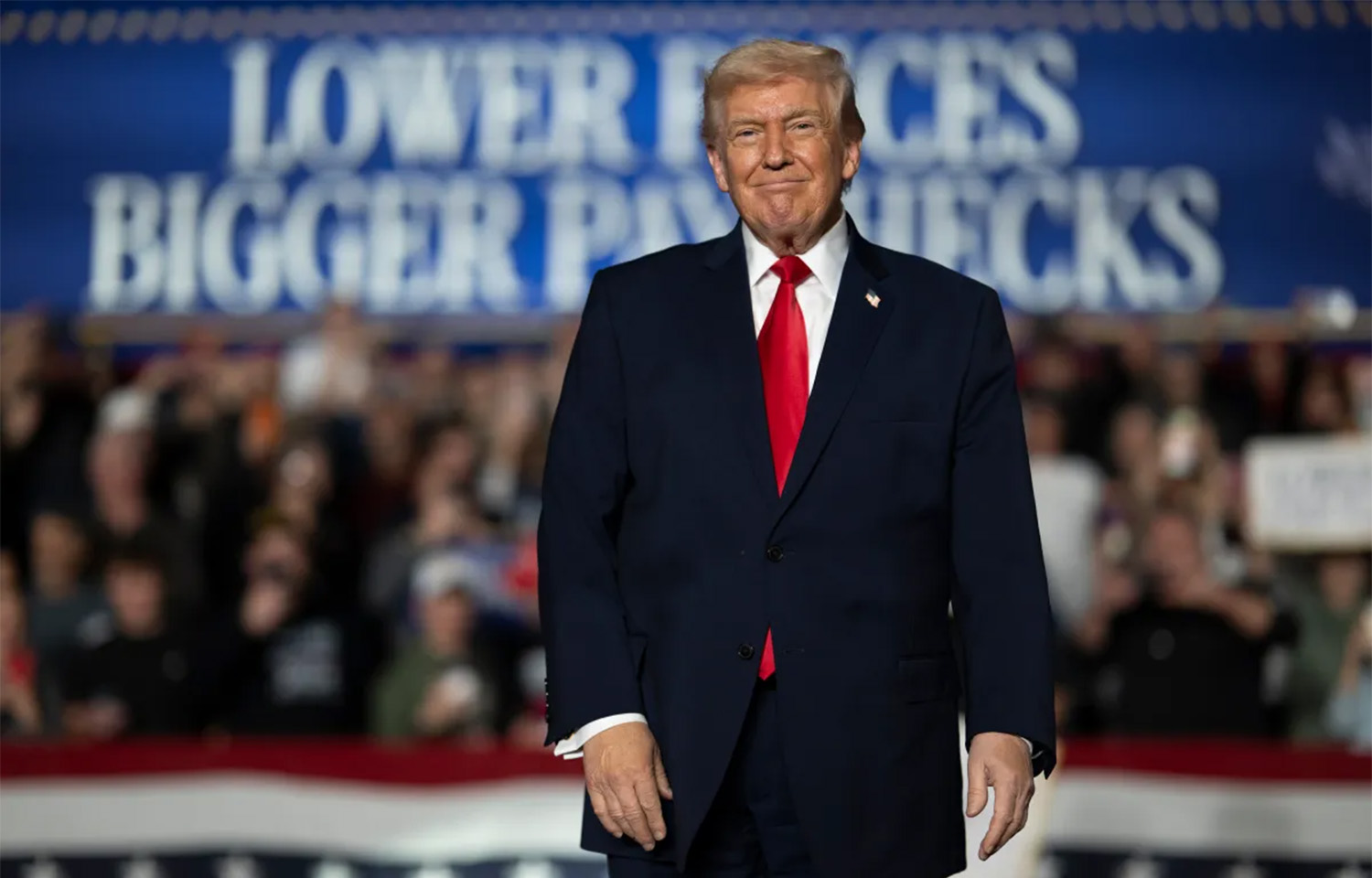
The U.S. House of Representatives has voted to block President Donald Trump’s tariffs on Canada, setting the bill up for a vote in the Senate.
Trump has continuously threatened Canada with tariffs since taking office in January 2025, and recently threatened a 100 percent tariff on the country’s goods over its trade deal with China. The country currently faces a 35 percent “fentanyl” tariff on all goods from the country, with the caveat that any goods entered under the United States-Mexico-Canada Agreement (USMCA) – which is virtually all seafood goods – are not required to pay the tariff.
Politico reported the resolution to disapprove of the national emergency Trump used under the International Emergency Economic Powers Act (IEEPA) to declare the raised tariffs passed 219-211, and could pass in the senate as it has also approved similar resolutions.
Prior to the vote, Trump threatened members of the Republican party with “consequences” during elections if they voted in favor of the bill.
“TARIFFS have given us Economic and National Security, and no Republican should be responsible for destroying this privilege,” Trump wrote on his social media site Truth Social.
Trump also said Canada “has taken advantage of the United States on Trade for many years.”
“TARIFFS make a WIN for us, EASY,” Trump said. “Republicans must keep it that way!”
The vote came soon after “We Pay the Tariffs,” a coalition of hundreds of small businesses, continued its push to eliminate the tariffs on Canada.
“Over the last year, Americans have paid hundreds of billions of dollars in extra tariffs without a single vote in the House of Representatives,” We Pay the Tariffs Executive Director Dan Anthony said in a release. “These aren’t tariffs paid by Canada – they’re taxes paid by American businesses and ultimately American consumers.”
The organization estimated U.S. businesses and consumers paid USD 2.2 billion (EUR ) in tariffs on Canadian imports from March to November 2025.
As the vote makes its way through U.S. Congress, the U.S. Supreme Court is still working on a case against Trump’s use of the IEEPA, the legal mechanism he used to implement tariffs on Canada and a range of other countries.
Multiple seafood companies have already begun to file lawsuits against the U.S. government over the use of the IEEPA and tariffs, as a means of recuperating the funds spent on the additional duties.
