




Lawmakers in Congress are debating the impact of the Trump administration’s ever-fluctuating tariffs on the seafood sector, with a handful of Republicans crossing the aisle in favor of curtailing the president’s authority to implement tariffs without review.
U.S. President Donald Trump has moved swiftly in the first few months of his second administration to improve the nation’s trade deficit by implementing wide-ranging tariffs on foreign goods – though he’s walked many of the tariffs back just as quickly.
On 9 April, Trump announced a 90-day pause on tariffs for most countries, while simultaneously raising tariffs on Chinese goods to 125 percent.
Throughout the uncertainty over Trump’s escalating trade war, U.S. lawmakers have debated how the tariffs will impact the U.S. seafood industry. While some domestic fishers believe they stand to benefit from tariffs on their foreign competition, some lawmakers argue tariffs will harm domestic producers and processors.
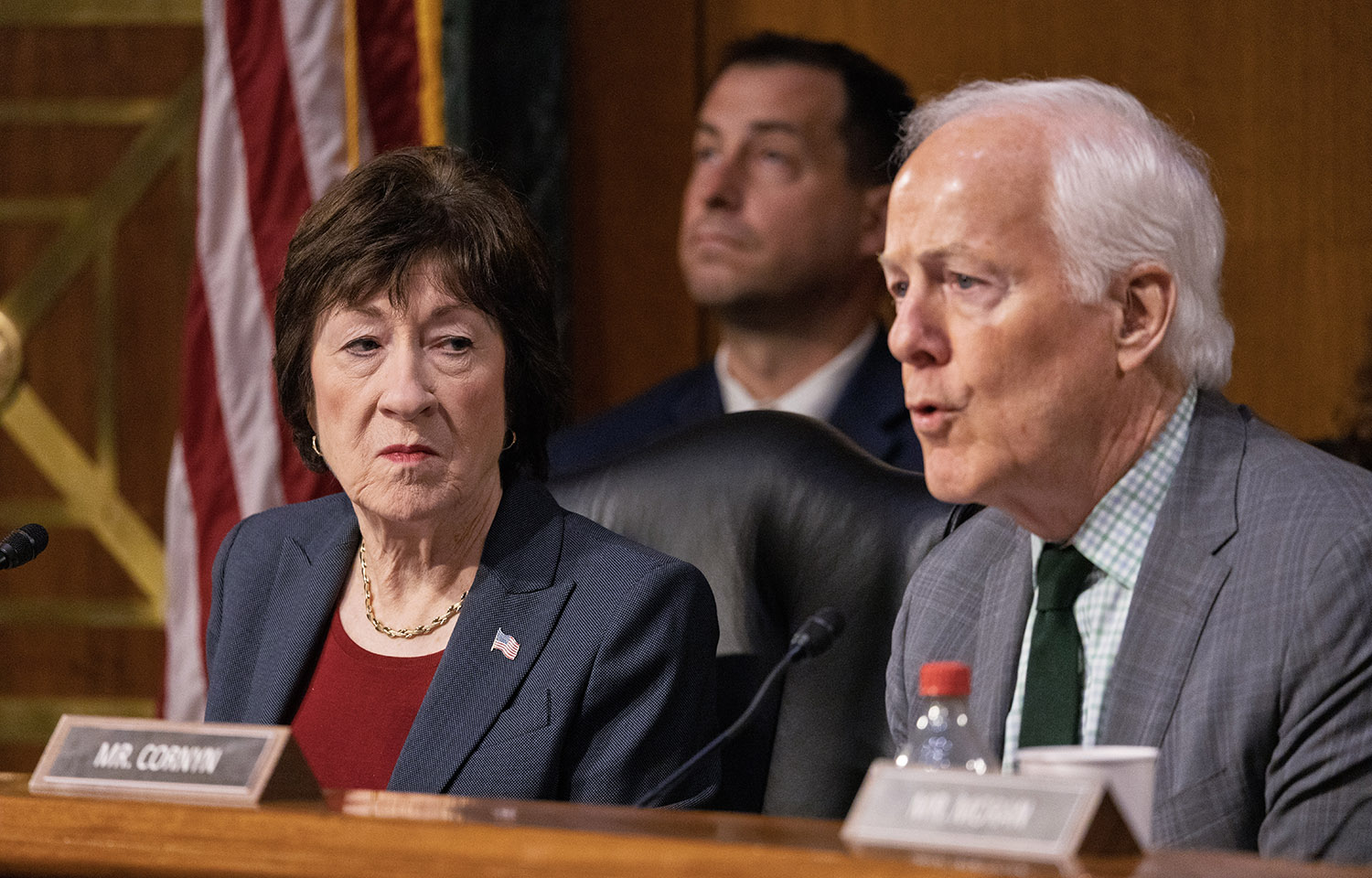
“I share the President's goal of getting more of that manufacturing done in the state of Maine, done in the United States, but the fact is that if we impose these tariffs on Canadian processing, it is going to be our Maine lobstermen who will bear the cost; it is going to be consumers who bear the cost,” Collins said on the Senate floor in support of a resolution opposing Trump’s tariffs on Canada.
According to Collins, the tariffs on Canada will actually hurt American lobstermen, who rely on Canadian processing capacity to get their products to market. There are currently only 15 lobster processing plants in the United States compared to 240 in Canada. Maine sends between USD 200 million and USD 400 million (EUR 179-358 million) worth of lobster to Canada for processing every year.
Collins also pointed to aquaculture as a sector that will likely be harmed by tariffs on Canada.
“In Washington County in far eastern Maine, Cooke Aquaculture is one of the largest employers, with more than 200 direct jobs throughout the State. While they have a processing plant in Machias, Maine, the first step of their salmon processing occurs in Canada before reentering the United States for finishing,” Collins said. “At a time when the Maine aquaculture industry is growing, these tariffs on Canada would jeopardize current jobs and also block future ones.”
Other lawmakers maintain that tariffs are necessary to protect domestic producers from seafood imports.
“President Trump's views on tariffs – they aren't complicated,” U.S. Senator Tommy Tuberville (R-Alabama) said on the Senate floor. “He believes, as I do, that America has been ripped off by unfair trade deals for decades and simply wants a level playing field. We have to change directions. What we are doing is not working.”
“U.S. catfish and shrimp producers have faced some of the worst blows, for example,” Tuberville added. “Vietnam is dumping billions – I repeat, billions – of pounds of catfish, and India is dumping billions of pounds of shrimp every year into U.S. markets, flooding the markets and reducing the price for our quality domestic products. It is devastating.”
The domestic shrimp sector has been vocal in praising the administration’s new tariffs and actions on trade, calling them a “crucial lifeline” to American shrimpers.
“For shrimpers, tariffs respond to an urgent need to offset unfair trade,” Southern Shrimp Alliance Executive Director John Williams said in a statement. “After decades of U.S.-supported investment in foreign shrimp aquaculture, it’s time to support our well-regulated, healthful, sustainable domestic shrimp industry instead. Failing to act immediately risks outsourcing America’s most consumed seafood to industries that engage in horrible practices and losing our commercial domestic shrimp industry.”
While the Senate narrowly passed a resolution to terminate Trump’s national emergency declaration used to implement tariffs on Canada in a 51-48 vote, the legislation has not been taken up by the Republican-controlled House of Representatives.
A separate proposal, which again received support from a handful of Senate Republicans, would curtail Trump’s ability to implement tariffs unilaterally, allowing Congress to review tariff actions. The legislation would allow Congress to vote to eliminate any tariffs, while any tariffs that aren’t explicitly approved by Congress would expire after 60 days.
Trump has threatened to veto that legislation, with the White House arguing that it would “severely constrain” the president’s power.
In a 9 April Hearing before the House Ways and Means Committee, U.S. Trade Representative Ambassador Jamieson Greer defended the president’s tariffs, arguing they are necessary to combat trade imbalances.
“This lack of reciprocity is an important driver of our global trade deficit and with particular countries,” Greer testified to lawmakers. “It is just common sense that the President target trade deficits to get at the non-reciprocal conditions underlying this national emergency. For example, the European Union can sell us all the shellfish they want. But the E.U. bans shellfish from 48 states. The result is a huge trade deficit in shellfish with the E.U.”
Partway through the hearing, Trump announced he was pausing most of the tariffs announced 2 April for 90 days, although massive tariffs remain in place on all goods from China.
In response to questioning from U.S. Rep. Nathaniel Moran (R-Texas), Greer said those tariffs on China will help reduce the amount of illegal, unreported, and unregulated (IUU) seafood entering the U.S.
“China is involved in worldwide illegal and unregulated fishing around the world,” Moran asked Greer. “Is the president’s team in the administration looking at helping to stop the illegal and unregulated fishing that’s occurring across the globe by China?”
“I have an office at USTR that deals with environmental-type issues, and they are very focused on this particular issue of fishing. It’s something we’re looking at,” Greer answered, adding that U.S. senators had also expressed concern on the issue. “We currently have, now, tariffs on China, so that at least creates a deterrent from having that in our market, but it’s a broader issue that we should deal with.”
The Biden administration previously argued that free trade has contributed to labor issues in China affiliated with IUU fishing. Biden’s former-USTR Ambassador Katherine Tai noted in January 2025 that the United States’ approach to free trade helped enable forced labor, incentivizing Chinese fishers and producers to lower their standards.
“For decades, the traditional approach to trade, which prioritized aggressive liberalization and tariff elimination, did generate wealth,” Tai wrote in the office’s first-ever strategy to combat forced labor. “At the same time, the approach came with significant costs and side effects. Prosperity without inclusiveness contributed to rising inequality and wealth concentration. The system incentivized countries to compete by maintaining or lowering standards, as companies sought to minimize costs in pursuit of efficiency.”
