






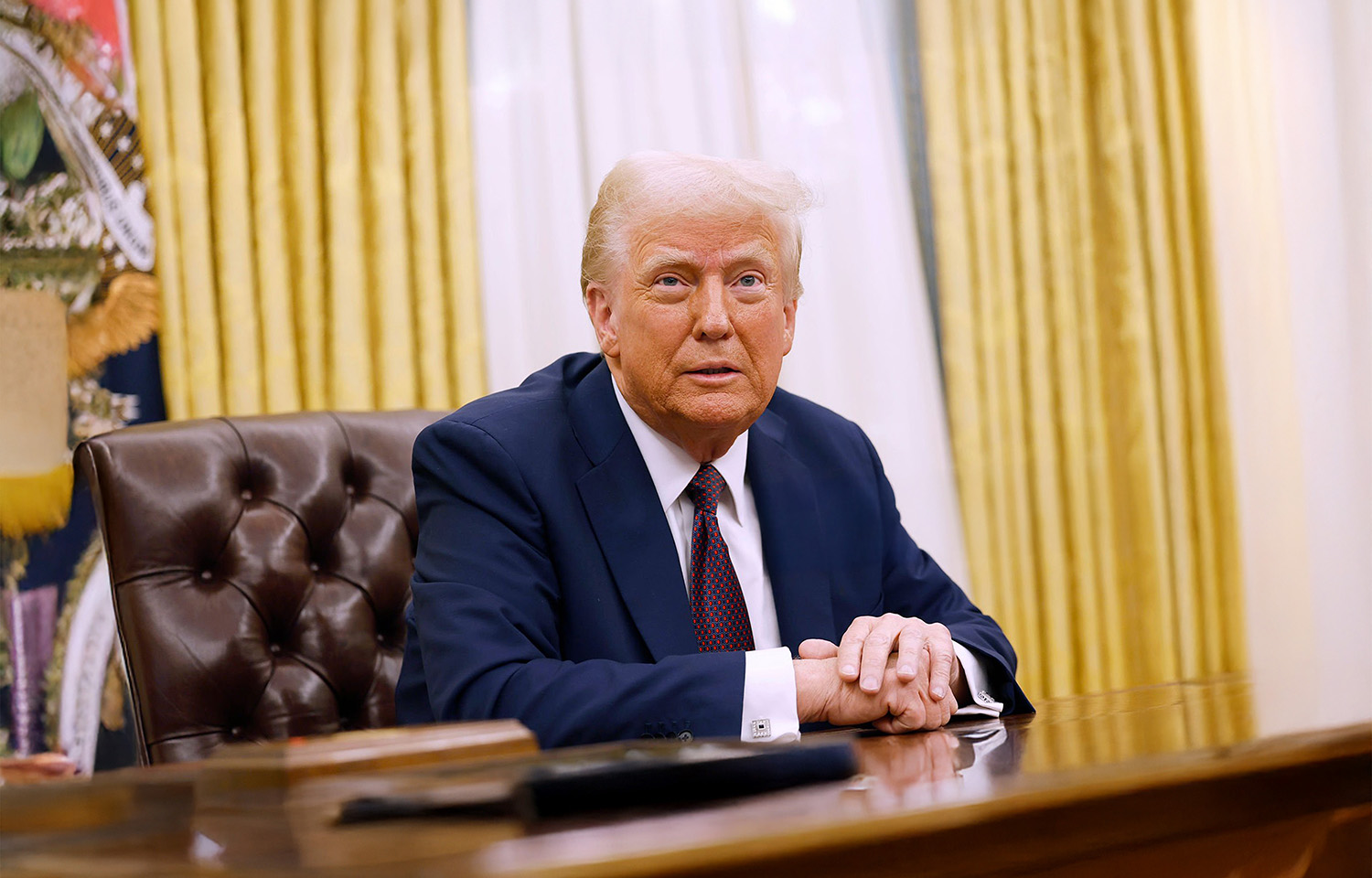
The United States Court of Appeals for the Federal Circuit has ruled a large swath of U.S. President Donald Trump’s tariffs are illegal, but the tariffs will stay in place as the case awaits appeal.
The court ruled that the sweeping tariffs on almost every country in the world Trump announced in April were an overreach of his authority to impose tariffs under federal economic emergency laws. Trump had issued the “reciprocal” tariffs under the International Emergency Economic Powers Act (IEEPA), but the appeals court ruling said that the IEEPA does not have a mechanism to impose tariffs.
“The statute bestows significant authority on the President to undertake a number of actions in response to a declared national emergency, but none of these actions explicitly include the power to impose tariffs, duties, or the like or the power to tax,” the ruling states. “The Government locates that authority within the term ‘regulate … importation,’ but it is far from plain that ‘regulate … importation’ in this context includes the power to impose the tariffs at issue in this case.”
The ruling said that in drafting the IEEPA, Congress never mentioned tariffs or any synonyms in the text of the statute, as compared to other statutes which do give the U.S. president that authority such as the Tariff Act of 1930 or Section 201 of the Trade Act.
“Taken together, these other statutes indicate that whenever Congress intends to delegate to the President the authority to impose tariffs, it does so explicitly, either by using unequivocal terms like tariff and duty or via an overall structure which makes clear that Congress is referring to tariffs,” the ruling states.
While the appeals court ruled that the tariffs are illegal, it also removed an injunction on applying the tariffs and allowed them to continue as the U.S. government will likely appeal the case to the U.S. Supreme Court.
Trump, on his social media site Truth Social, immediately promised that the government would appeal the ruling.
“Today, a Highly Partisan Appeals Court incorrectly said that our Tariffs should be removed, but they know the United States of America will win in the end,” he wrote.
Trump also claimed the tariffs have already brought in trillions of dollars for the U.S.
“Without Tariffs, and all of the TRILLIONS OF DOLLARS we have already taken in, our Country would be completely destroyed and our military power would be instantly obliterated,” Trump wrote.
According to the U.S. Treasury Department, total tariff collections so far in 2025 have amounted to USD 142 billion (EUR 121 billion).
Even if the tariffs are ultimately struck down by the U.S. Supreme Court, the appeals court pointed out there are a number of other avenues that Trump could use to implement tariffs.
Peter Quinter, a U.S. customs and international trade attorney at Florida-based law firm Gunster, told SeafoodSource there’s little stopping him from declaring a different emergency to push through tariffs.
“That’s exactly what I predict he will do,” Quinter said.
Some of those laws require either the U.S. Trade Representative to issue a report on the matter before any tariffs are put in place, and those agencies are all headed by Trump appointees.
However, if the U.S. Supreme Court takes up the case and also rules the tariffs are illegal, the impact will be widespread on a governmental level as the U.S. government would then need to refund the tariffs that it levied against thousands of businesses.
“In the event that the U.S. Supreme Court determines the tariffs unconstitutional and issues a decision authorizing a refund, [Customs and Border Protection] will create a procedure for U.S. importers (companies and individuals) to submit electronically documentation to establish the amounts to be refunded,” Quinter said.
Quinter argued at the start of the tariff saga that Trump’s self-imposed delays to the tariff implementation proved that there wasn’t a national emergency and the ruling backs up that earlier prediction.
“The alleged fentanyl crisis is not an emergency, and the lower courts determined there was not a logical reason for President Trump to impose different duty rates on different countries,” Quinter said. “That is even more obvious recently with the 50 percent duty rates imposed by President Trump on Brazil and India which have nothing to do with international trade balances or the production or distribution of fentanyl.”
As the legality of the tariffs continues to wind its way through the U.S. court system, the impacts are ongoing for seafood companies. Arctic Fisheries President Michael Kotok told SeafoodSource his company has begun passing on tariffs to its customers.
“I recently looked at what we paid for tariffs, and it’s a big number, no doubt. We’re passing it along,” he said.
Kotok said keeping track of what is happening in terms of trade barriers and tariffs has become a complicated part of the job that doesn’t appear to be letting up.
“I think it’s going to be something that’s going to constantly change. I don’t know what I can say that’s definitive because things change every day,” he said. “Most of us in this business would love to see consistency, and right now, our greatest inconsistency seems to be caused by tariffs.”
Kotok said the tariffs are having a clear impact on how Arctic Fisheries’ customers purchase seafood, with some buying less and some pulling their purchases forward.
“It’s a barrier to entry for consumers; it makes a high-quality protein much more expensive, and it’s a tax on the consumer,” Kotok said. “I don’t think we’re making America great again by asking people to pay [USD] 10.00 [EUR 8.58] for cod that they were paying USD 3.00 [EUR 2.57] for.”
