






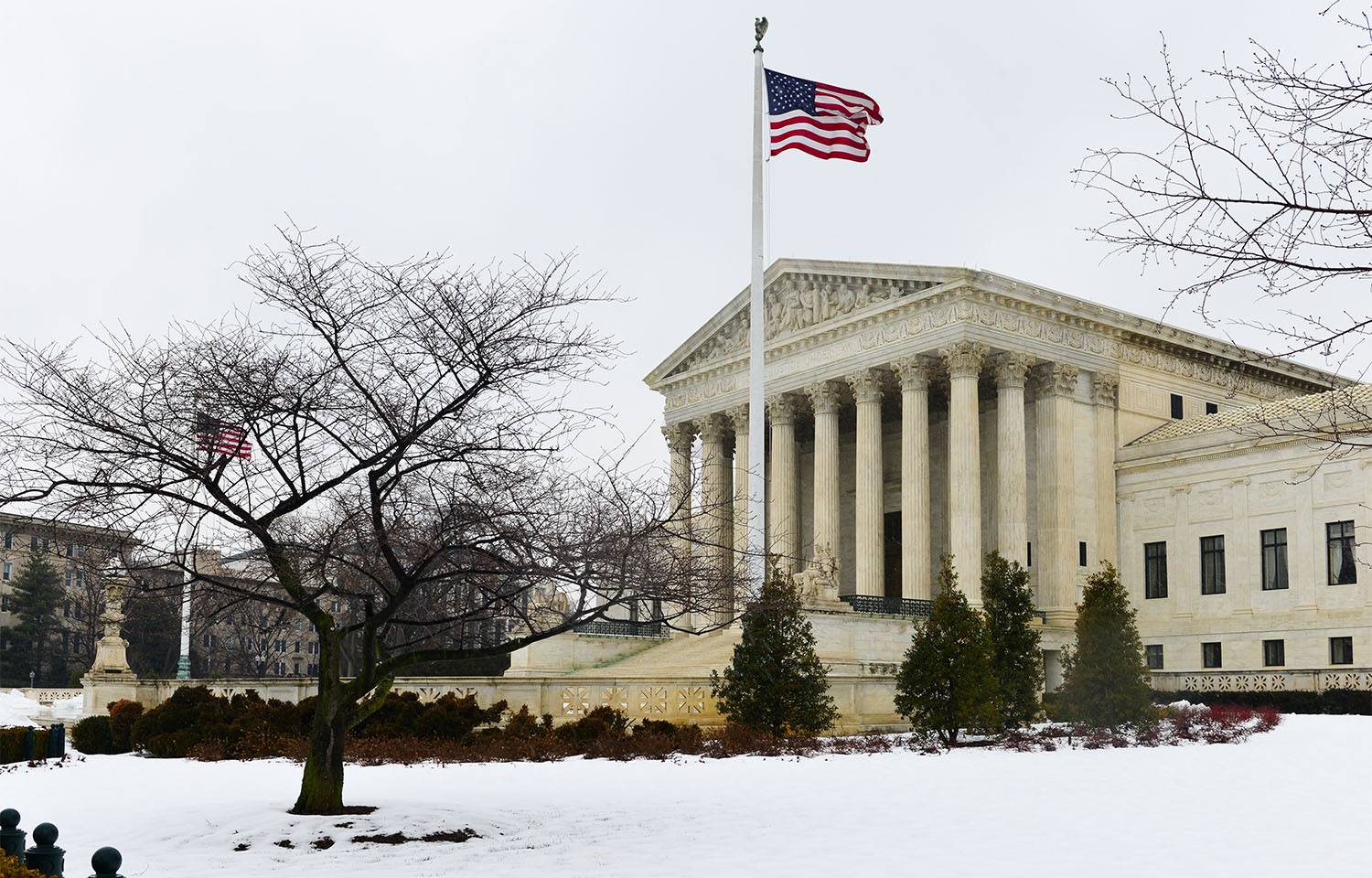
The U.S. Supreme Court has found U.S. President Donald Trump’s use of the International Emergency Economic Powers Act (IEEPA) to justify his tariff program was illegal, invalidating a huge swath of tariffs.
But, how businesses will get a refund for those tariffs is still unclear.
In a 6-3 ruling, the court found the IEEPA does not authorize the president to impose tariffs, largely agreeing with earlier rulings by the U.S. Court of International Trade and the United States Court of Appeals for the Federal Circuit. With the ruling, a large swath of tariffs enacted by Trump in his second term have been invalidated, and the U.S. government may be required to refund those tariffs with interest.
Those tariffs include the sweeping “reciprocal” tariffs that Trump announced on his “liberation day,” which impacted almost every country in the world.
Included among those many tariffs were most top sources of seafood for the U.S., including Chile, India, Indonesia, and Vietnam which collectively sent billions of dollars worth of seafood to the U.S. in 2024. Those tariffs have impacted global seafood trade patterns, as countries like India pivoted to find new markets and others like Norway began to question its investment in U.S. marketing in light of continued tariff threats.
A range of seafood companies including Mark Foods, Netuno USA, and Bumble Bee sued the government over Trump’s implementation of the tariffs, anticipating the Supreme Court’s decision. Vinicius Adam, an attorney with VAdam Law in Fort Lauderdale, Florida, which filed the complaint for Netuno USA said the lawsuits were a necessary step in those companies potentially gaining refunds on the money that they could now be owed by the government for tariffs paid since their implementation in August 2025.
Adam said that post the ruling, his phone was busy “but I am happy for it.”
“Today's decision brings clarity at a time when markets need it and, hopefully, some stability,” he told SeafoodSource. “The Supreme Court's analysis and conclusions are what I had hoped for: simply that the power to tax lies with Congress and that IEEPA does not authorize the president to impose tariffs. There is always business risk, but a volatile tariff regime makes planning, pricing, and investing unnecessarily difficult.”
Adam said the decision should hopefully result in more stability for the seafood market, as the court has effectively ruled that Trump can no longer use the IEEPA as a broad tool to implement tariffs without any outside approval from U.S. Congress.
“We Pay the Tariffs,” a coalition of more than 800 small businesses, called on the U.S. government to swiftly refund the tariffs paid by businesses in the country and called the ruling a victory for small businesses.
“Our coalition members, who through hard work, late nights, and sweat equity built local businesses, have paid billions in tariffs that never should have been imposed,” We Pay the Tariffs Executive Director Dan Anthony said in a release. “They've taken out loans just to keep their doors open. They've frozen hiring, canceled expansion plans, and watched their life savings drain away to pay tariff bills that weren't in any budget or business plan. Today, the Supreme Court has validated what we've been saying all along: These tariffs were unlawful from the start.”
Anthony said that victory is “meaningless” if the money already spent by businesses is not refunded and urged the government to create a process quickly.
“Small businesses cannot afford to wait months or years while bureaucratic delays play out nor can they afford expensive litigation just to recover money that was unlawfully collected from them in the first place. These businesses need their money back now,” he said.
How the tariffs that have been collected so far will be refunded is still unclear. Per recent U.S. Customs and Border Protection estimates, roughly USD 142 billion (EUR 120.6 billion) has been collected so far in relation to the IEEPA tariffs.
The majority ruling, led by Supreme Court Chief Justice John Roberts, did not explicitly mention the refunds but also did not rule out allowing importers to reclaim refunds. Supreme Court Justice Brett Kavanaugh wrote in his dissent of the ruling that the effects of the ruling will be “substantial” in terms of both refunds and trade.
“The United States may be required to refund billions of dollars to importers who paid the IEEPA tariffs, even though some importers may have already passed on costs to consumers or others,” Kavanaugh wrote. “As was acknowledged at oral argument, the refund process is likely to be a ‘mess.’”
Added on to that, Kavanaugh wrote the tariffs were the mechanism that helped facilitate trade deals with several countries, including with China, Japan, Philippines, Indonesia, and more.
“The court’s decision could generate uncertainty regarding those trade arrangements,” Kavanaugh wrote.
Other organizations speculate that Trump will use a separate mechanism to implement a different set of tariffs, putting companies back in the same position.
“The administration has made clear it sees alternative pathways to impose tariffs, including sections 232 and 301,” Emarketer Principal Analyst Zak Stambor said. “Those authorities come with stricter constraints and could face further legal challenges, but they reinforce that trade policy uncertainty isn’t going away anytime soon.”
National Restaurant Association President and CEO Michelle Korsmo urged the Trump administration to leave food and beverage products out of any potential future tariffs, in the event the government tries a different route.
“Restaurant operators need consistency in the global food supply chain to plan menus and maintain pricing. We support the president’s efforts to balance trade deficits, but the food and beverage products we depend on are not major contributors to these imbalances,” Korsmo said.
Adam said that even if the government works to reinstitute a tariff regime using Section 301 or Section 232, the IEEPA tariffs are still invalidated and would still need to be refunded. He also said the new tariffs wouldn’t have the same impact as the IEEPA.
“The patchwork of other statutes will not result in the same sweeping tariffs as IEEPA because they have built-in limitations: timing, oversight by Congress, limited purpose and applicability, and even caps on amounts that can be imposed,” Adam said. “[U.S. Treasury Secretary] Scott Bessent has threatened that the administration will ‘recreate’ the IEEPA tariff regime, but I think it is unlikely.”
