





The Virginia General Assembly has approved its two-year budget with an additional USD 2 million (EUR 1.7 million) earmarked for menhaden research in the Chesapeake Bay thanks to an amendment by Virginia Governor Abigail Spanberger.
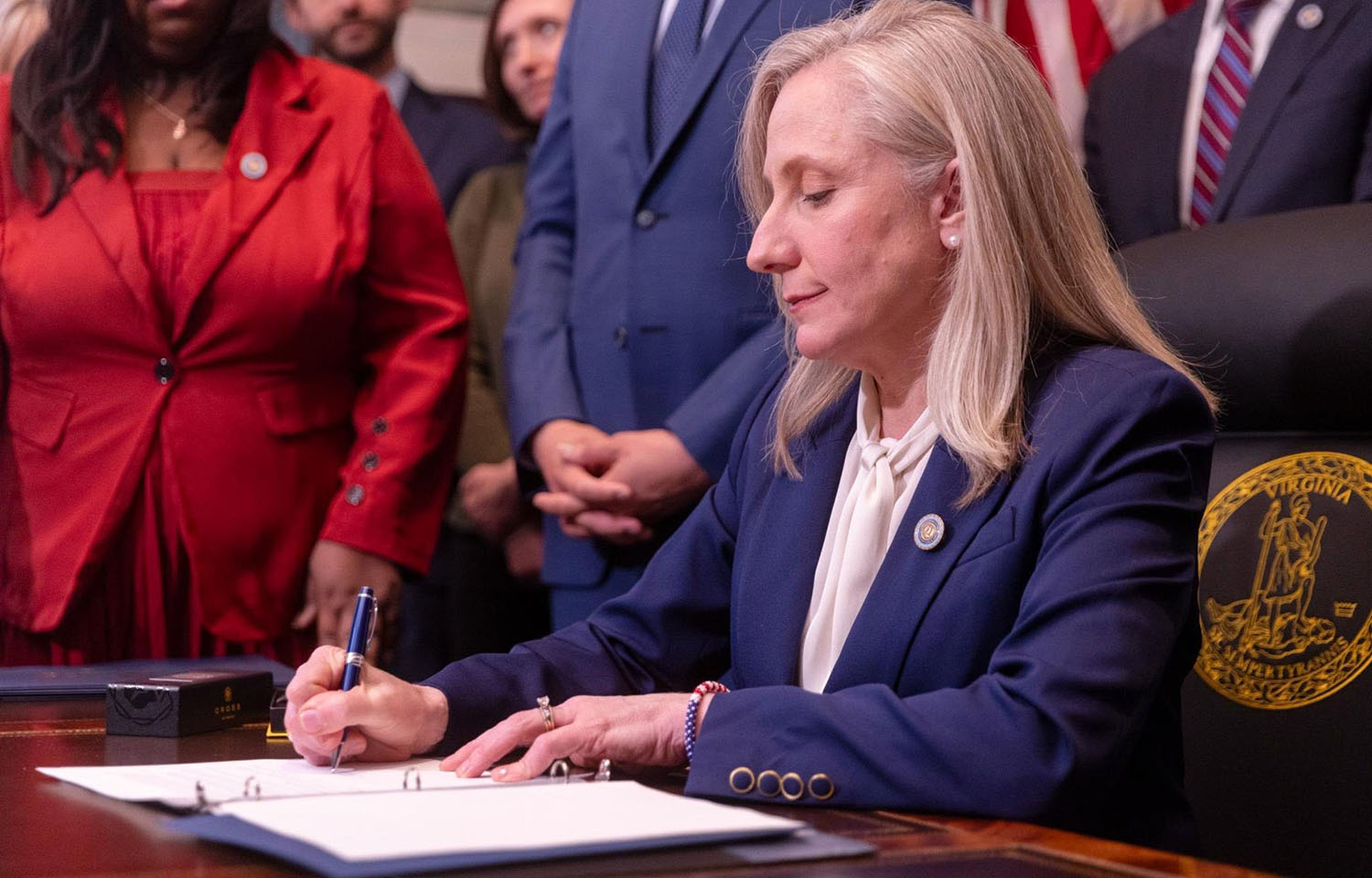
The original USD 205 billion (EUR 180 billion) Virginia budget didn’t include any funding for menhaden research, despite continued pushes for it at the state level from environmental groups like the Chesapeake Bay Foundation (CBF) and major menhaden fishing company Ocean Harvesters. Spanberger submitted several amendments on 26 June, one of which included funding for Atlantic menhaden research.
“Governor Spanberger has shown important leadership in the face of persistent and likely worsening menhaden problems in the Chesapeake Bay. This is a solid down payment on urgently needed research,” CBF Forage Campaign Manager Will Poston said in a release.
The earlier lack of funding for menhaden research in Virginia’s budget led to a back-and-forth exchange between CBF and Ocean Harvesters, with the former accusing the latter of pressuring and using “delay tactics” to “kill the funding.”
Ocean Harvesters and Omega Protein – the largest menhaden harvesting and processing companies, respectively – pushed back on those claims and said it widely supported funding for research and agreed that better data is needed on the status of menhaden in the Chesapeake Bay.
Following Spanberger’s amendment, both CBF and Ocean Harvesters celebrated the additional funding as a win for the environment and the industry.
"We are extremely pleased that Gov. Abigail Spanberger has announced her intention to send budget language to the General Assembly that includes a study of menhaden in the Chesapeake Bay,” Ocean Harvesters CEO Monty Deihl said. “We look forward to continuing to work with the Virginia Institute of Marine Science (VIMS) in collaboration with the Virginia Marine Resources Commission (VMRC) to develop a scientific study of the Bay’s Atlantic menhaden population.”
Deihl said that the company is especially pleased that ongoing work by the Science Center for Marine Fisheries (SCEMFIS) will be available to support the study. SCEMFIS funded a project to create a detailed roadmap for managing the menhaden fishery more effectively, which features researchers and scientists from Chesapeake Biological Laboratory, the University of Maryland Center for Environmental Science, Virginia Institute of Marine Science, and NOAA.
CBF celebrated the funding as a means of understanding the menhaden’s importance to the Chesapeake Bay and continued to claim the bay is facing a crisis caused by menhaden fishing. It claims watermen, recreational anglers, birdwatchers, and residents “have reported seeing fewer menhaden schools and struggling osprey colonies.”
A research paper recently published in the Frontiers in Marine Science linked a decline in osprey to a decline in access to menhaden in the region. CBF and the menhaden industry, however, have conflicting opinions on the source of the issue.
“Unfortunately, many questions remain about the health of the Bay’s menhaden population and the iconic species such as osprey that depend upon it. This is precisely why independent science on menhaden in the Bay is so important,” Poston said.
Deihl said the new research should provide additional scientific guidance to identify science-based harvest caps for the menhaden fishing industry, something the industry has been calling for.
“Future changes to the Bay cap should be informed not by politics but by credible science and a clear understanding of ecological, economic, and workforce impacts,” Ocean Harvesters said.
