


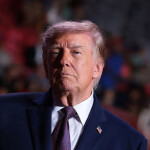


U.S. President Donald Trump has stated his willingness to impose tariffs on all imported Chinese goods, which last year measured around USD 500 billion (EUR 427 billion).
“We’re down a tremendous amount,” the president told CNBC on Friday, 20 July. “I'm ready to go to 500.”
The Trump administration announced tariffs on USD 200 billion (EUR 170 billion) of Chinese goods on Wednesday, 11 July. That followed a previous tit-for-tat in June during which the U.S. and China announced 25 percent tariffs on up to USD 50 billion (EUR 42.7 billion) worth of goods, though so far, the U.S. has implemented tariffs on less than that total – approximately USD 34 billion (EUR 29 billion) of Chinese imports.
Since Trump’s statement, the official response from China has been muted. After similar announcements from Trump, China has responded quickly, including an announcement expressing shock and vowing the country would adopt “quantitative and qualitative” countermeasures to the USD 200 billion tariff figure announced on July 11. However, there has been no statement or public comment from either the Chinese Commerce Ministry or the Foreign Ministry since Trump’s latest threat.
The silence in Beijing is unusual, and comes after Chinese media were told not to “over-report” the trade war “to avoid spreading panic,” according to the South China Morning Post.
Beijing is taking a softer approach compared with its previous tactic of making public attacks and launching boycotts, which it has used against Japan, South Korea and the Philippines in the past. It could represent a change in tactics, or it could be a realization from China that, because it only imported approximately USD 130 billion (EUR 111 billion) in goods from the U.S. last year, that it cannot match the U.S. tariffs dollar for dollar.
China also wants to publicly portray itself as a defender of free trade, with the goal of gaining support from countries to jointly push back against Trump’s unilateralism, according to the Morning Post.
“It’s important now to let Chinese businesses and citizens to know that only by opening up, can we achieve high-quality growth, former Deputy Commerce Minister Wei Jianguo told the newspaper.
In the meantime, China may also pursue a quieter strategy of upping inspections, delaying licensing, and issuing penalties to U.S. businesses.
There have also been accusations, including from Trump, that China is once again manipulating its currency after the yuan hit its lowest level in a year. However, the devaluation could be related to China’s central bank easing of liquidity in order to lift the economy, or a result of the wave of money leaving developing markets to take a bet on rising U.S. interest rates.
Joseph Stiglitz, a Nobel Prize-winning economist and professor at Columbia University, as well as a former adviser to U.S. President Bill Clinton, said the exchange rate is one of many instruments China could use to counter U.S. tariffs, but that it will be hard to know for sure.
“They would make a big effort to say what they are doing is not motivated by that,” Stiglitz told Bloomburg. “We won’t be able to clearly tell. We don’t usually know the extent of intervention.”
Jens Nordvig, the founder of Exante Data LLC, told Bloomberg whether the People’s Bank of China attempts to anchor the dollar-yuan exchange rate near 6.80 to avoid further escalation is key, according to Nordvig.
“The real risk is that we have broad-based unravelling of global trade and currency cooperation, and that is not going to be pretty,” Nordvig said. Trump’s recent rhetoric “is certainly shifting this from a trade war to a currency war.”
Photo courtesy of CNBC
