


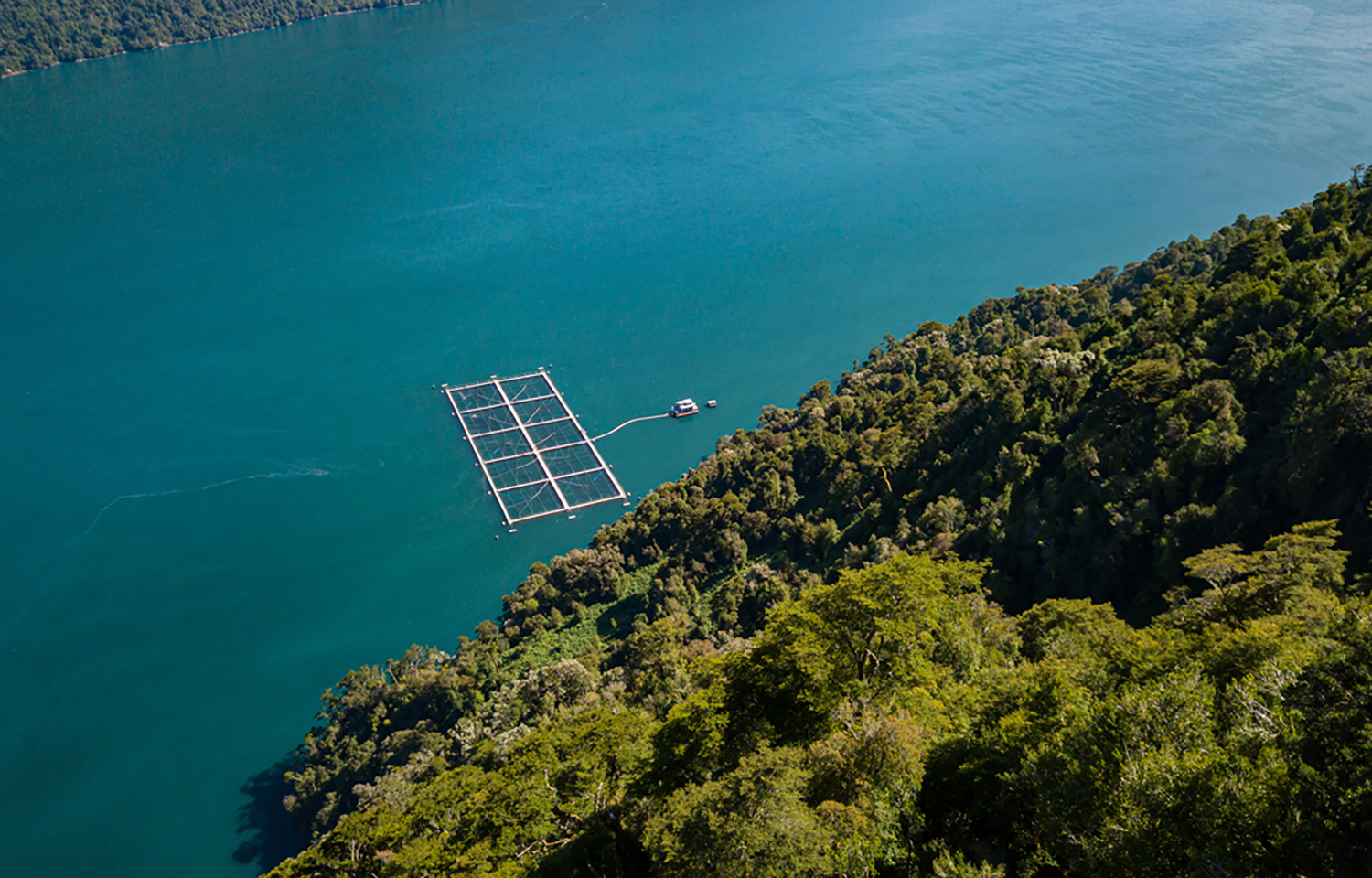
A United Nations special rapporteur has recommended that Chile halt further salmon aquaculture expansion pending an independent scientific review of the industry’s adverse environmental impacts.
Human Rights Council Special Rapporteur David Boyd visited Chile from 3 to 12 May 2023 to examine whether Chile has ensured its citizens a right to a clean, healthy, and sustainable environment, to identify best practices, and to investigate the environmental challenges that the country faces.
U.N. special rapporteurs conduct fact-finding missions to countries to investigate allegations of human rights violations. They can only visit countries that have agreed to invite them. Boyd was invited by Chile President Gabriel Boric, a leftist who has pushed to reform Chile's salmon-farming sector, which has faced increased regulatory pressure after a series of scandals that included the undereporting of environmental damage and salmon mortalities.
“Salmon farming is one of the main environmental threats facing Patagonia, especially the Kawésqar National Park, which is important for the conservation of diverse species and ecosystems, including 32 species of cetaceans,” Boyd's report, issued via the U.N. Human Rights Council, said.
During his visit, Boyd toured the salmon aquaculture hub of Puerto Montt and farming sites in Reloncaví Sound in the Los Lagos region.
“The salmon industry has contributed to an increase in industrial waste on beaches, in the water, and on the seabed,” his report said.
The report credited Chile for its 2022 climate change law and leadership in closing coal-fired power plants, generating solar electricity, and protecting a large proportion of its marine territory. However, it named Chile's primary environmental challenges as air pollution, ensuring access to clean water, fully adapting to the climate crisis, and effectively implementing its existing environmental laws and policies.
“Several major industries in Chile, including industrial fishing, salmon aquaculture, forestry, and mining, threaten biodiversity,” the report said.
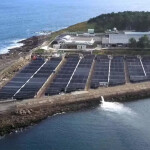
The salmon industry has increased production and its marine footprint “dramatically” during recent decades in Chile, growing, on average, at 117 percent per year over the last 30 years to become the world’s second-largest salmon producer, according to the report. The government has granted more than 1,200 aquaculture concessions in Chile's Los Lagos, Aysén, and Magallanes regions, “inflicting ecological damage on ecosystems often located in Indigenous territories," the report said. During his visit, Boyd was informed of recent installation of a new salmon farming site in Hualaihué that could jeopardize a nearby wetland.
“Chile endorsed the Kunming-Montreal Global Biodiversity Framework in December 2022, committing to take a human rights-based approach to conserving and restoring biodiversity, as well as to protect at least 30 percent of all terrestrial, freshwater, and marine ecosystems by 2030. Indigenous Peoples have a key role to play in conserving biodiversity in Chile,” the report said. “Wetlands in all regions urgently require greater protection from industry and urban development.”
Though Chile has protected 21 percent of its land and 42 percent of its marine territory by designating them national parks or otherwise protected areas, the report said protections of these areas can be improved.
“The majority of protected areas lack management plans, and resources for conservation action are limited. In a positive step, the newly created Biodiversity and Protected Areas Service [SBAP] established a national protected areas system, integrating all the existing protected areas in Chile – marine and terrestrial – that are currently managed by several different ministries,” it said.
The SBAP law, enacted in mid-2023, had originally proposed barring the introduction of exotic hydrobiological species – such as salmon – from protected areas. However, a joint committee in Chile’s congress rejected that proposed modification to the country’s general fisheries law before the SBAP law was passed. Environmental groups and conservation advocates, including the music group Pearl Jam, pushed for the article's approval.
Boyd submitted 13 main recommendations, each with several sub-recommendations, for Chile to meet its environmental objectives, fulfill its human rights commitments, alleviate inequality, and accelerate progress toward sustainable development goals.
The recommendation to establish a moratorium on the issuance of further salmon-farming permits, expanding on a proposal from Boric in 2022 that was defeated in 2023, was one of the sub-recommendations to advance the production of healthy and sustainably produced food. Other recommendations in this category include prohibiting the import, manufacture, sale, or use of all highly hazardous pesticides; promoting the transition away from industrial monocultures toward agroecology, organic, regenerative, and other ecologically sustainable food systems; and promoting a shift toward crops that require less water to grow.
Magallanes Salmon Farmers Association President Carlos Odebret criticized the report for not taking time to analyze the salmon sector thoroughly enough.
“This is a report written after the rapporteur's visit to Chile for a limited period of 10 days, during which he interviewed several dozen people and interest groups. According to his report, in that period, he analyzed a multiplicity of issues that have been of great complexity for the country … it is a qualitative evaluation that does not seem to attempt to delve much into the complexity of each of these issues” Odebret told SeafoodSource. “It is a document that, in 22 pages, attempts to simplify years of debate on public policies; hundreds of scientific investigations; various resolutions, decrees, and laws; hundreds of studies and environmental impact statements for each project; citizen and Indigenous participation processes; and other issues associated with the reality of each of the sectors that constitute the economic and social base of the country.”
Chilean trade bodies SalmonChile and the Chilean Salmon Council did not respond to requests for comment on Boyd's visit when contacted by SeafoodSource.
The Nomads of the Sea Family Group, which represents part of the Kawésqar Indigenous community, together with ecological NGO Centro Ecoceanos and more than 100 citizen organizations, said it would demand the Chilean government implement the recommendation of the U.N. report against “the onslaught of salmon interests.”
