



A new fisheries law was recently submitted to Chilean Congress to reassign industrial fishing quotas, but advances on establishing a dedicated aquaculture law in the country have slowed, cooling momentum built up over the past few years.
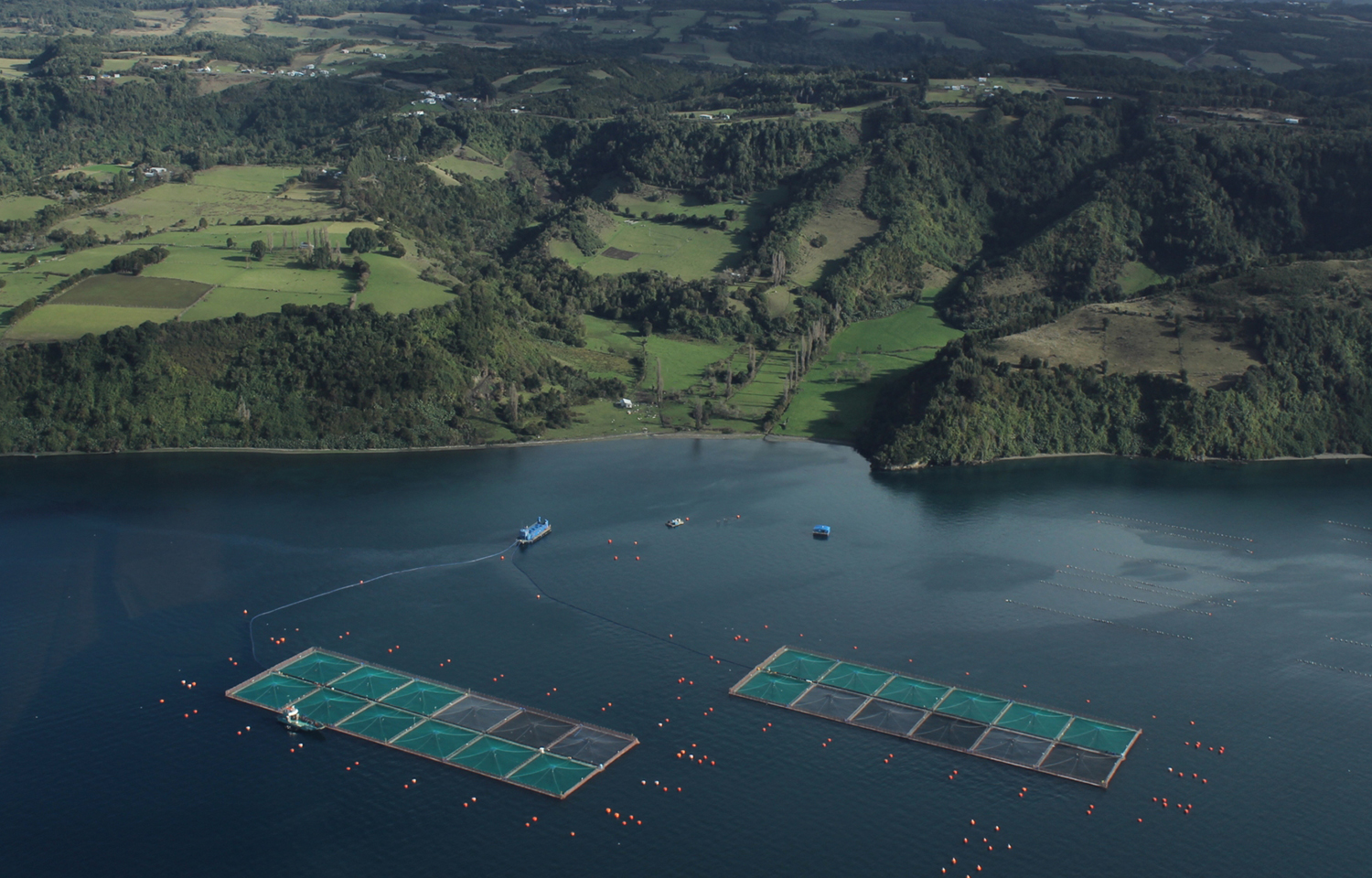
Currently, aquaculture activity in Chile is regulated under the nation’s general fishing law, but due to the size of the Chilean aquaculture industry and its significant differences with the fishing sector, many industry stakeholders have said aquaculture merits separate regulation.
In response to that feedback, the Chilean government launched a public participation process in late 2023 to discuss establishing a new law, with the aim of submitting a bill to Congress in 2025. Online proposals were accepted, and Chile’s Undersecretary of Fisheries and Aquaculture (Subpesca) collaborated with academic partners to hold a series of workshops, mostly in the south of Chile, where the vast majority of Chilean aquaculture operations are located. More than 750 stakeholders were engaged between December 2023 and January 2025.
“There is a commitment from this government to work on a general aquaculture law that is the result of an open and transparent debate, that addresses and responds to sector challenges for the coming decades, and that continues to contribute sustainably to national and global food security,” Subpesca told SeafoodSource in October last year.
The idea behind this initiative was to group the collection of proposals gathered for the law under eight pillars: access, territorial planning, environment, animal health and welfare, research for decision-making, supervision and sanctioning, production and sales chains, and governance.
The proposals varied, but there was a majority consensus on the need to establish a nationwide roadmap with specific goals that could ensure Chile established sustainable, diverse, and efficient aquaculture.
“In this sense, it was considered essential, prior to the discussion of a general aquaculture law, to establish a new national aquaculture policy … which provides direction, purpose, and stability for the development of the sector,” Subpesca said. “This framework must comprehensively address the development of aquaculture activity, including the definition of priority species, health, animal welfare, and productive diversification mechanisms that allow international competitiveness to be maintained.”
As a result, the focus began to shift away from establishing a dedicated general aquaculture law, and instead, the country’s National Aquaculture Commission unanimously agreed to channel efforts of the participatory process into two more focused bills that Subpesca still expects to present this year. The first is focused on modernizing and democratizing aquaculture governance to develop a new National Aquaculture Policy, while the second has to do with the simplification of procedures for fish-farming concessions, especially those aimed at relocation outside protected areas.
In the meantime, Subpesca published the “Summary of the Participatory Process of the Aquaculture Law” to facilitate advances on aquaculture policies.
“This policy must reflect a vision of the state, not subject to the changes of the governments in power,” it said.
To that point, governmental change is coming soon, as presidential elections in Chile will be held on 16 November, with a new government coming into power in March 2026. Candidates for the top office laid out preliminary plans for the salmon-farming sector during this year’s Chilean Salmon Summit which took place in July.
While stakeholders are aiming to develop more focused policies, there is still some industry consensus that, eventually, the aquaculture sector merits special consideration in the country in the form of a dedicated general law.
“[Salmonids are] Chile's second-most exported product and deserve to have a specific legal framework that addresses the different social, environmental, and economic dimensions,” Chilean Salmon Council Corporate Director Rodrigo Pinto told SeafoodSource. “The council has always been willing and available to work with this government and will do so with any future government to advance the sector.”
The industry is particularly interested in codifying guidance around two issues, according to Pinto: relocations of concessions and the implementation of a pro-growth policy for Chilean salmon.
“Relocation” has two subsets: moving concessions to other bodies of water and away from areas adjacent to designated areas like national parks and what is known as “micro-relocation,” or physically moving infrastructure by just a few meters to take advantage of better conditions.
Regarding pro-growth policies, Pinto said that other top aquaculture countries have growth plans dedicated to fish farming and Chile is lagging behind as a result.
“Norway and Scotland have plans and a strategy to double salmon production,” Pinto said. “Chile lacks this. It puts us in a situation of vulnerability, and that is why we believe in the urgent need for proper policy.”
In its summary document highlighting the government’s “firm commitment to the development and future of aquaculture in Chile,” Subpesca said it is “fully convinced” of the need to update aquaculture legislation and committed to analyzing the proposals submitted to advance the best legislative alternative – be that general legislation or different laws to address specific priorities.
