






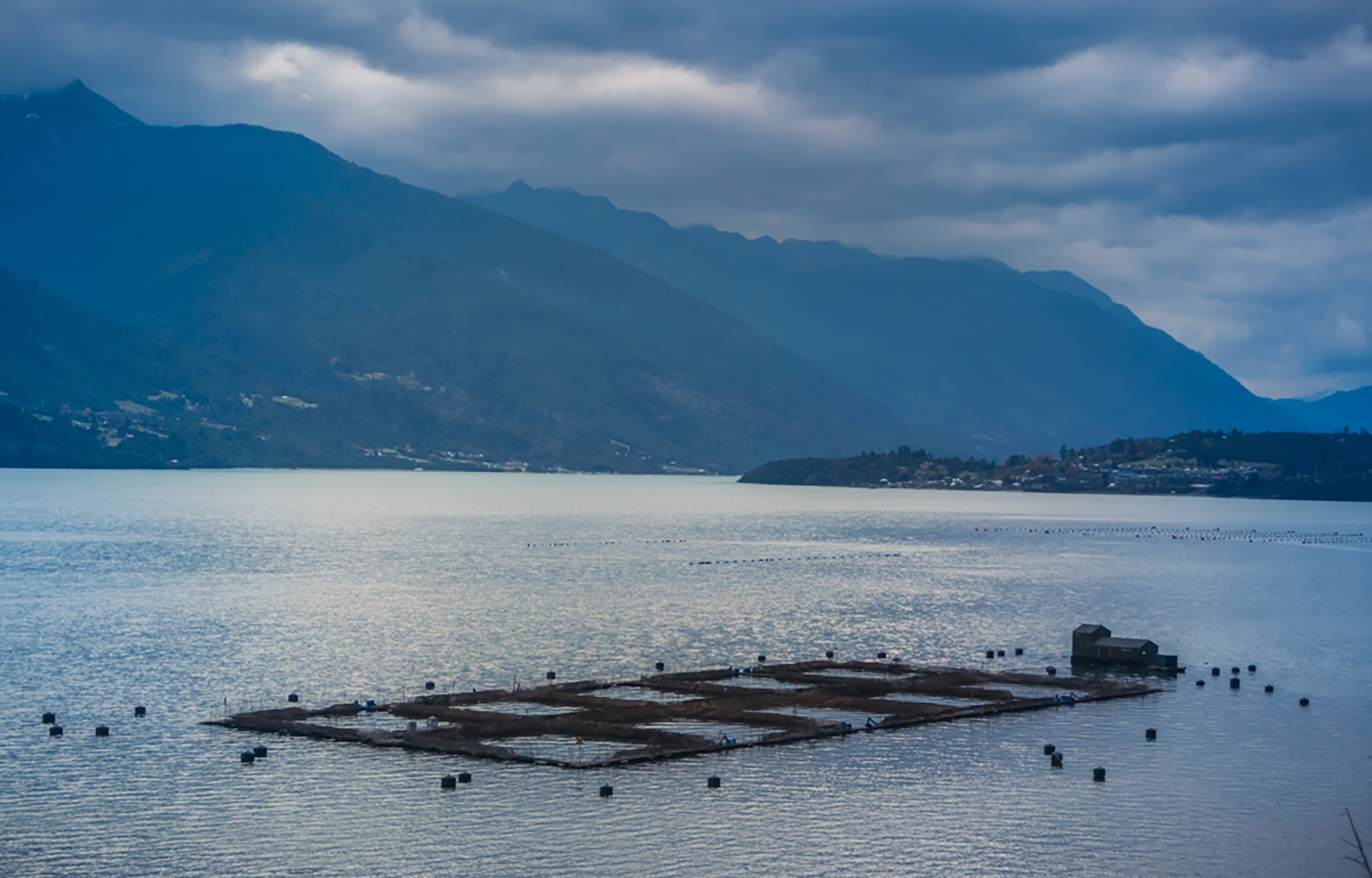
The Chilean Regional Commission for the Use of Coastal Areas (CRUBC) overwhelmingly rejected a request from Indigenous communities seeking to take control of an area that contains several aquaculture operations.
The area requested comprises 56,000 hectares of land that hosts 221 aquaculture concessions, as well as coastal houses, artisanal fishing areas, and related infrastructure in southern Chile’s Los Lagos region.
The petitioners – seven Indigenous communities grouped under the Ngulam Ñuke Lafken Marine Coastal Space of Indigenous Peoples – sought recognition of rights to use and manage the coastline under the Original Peoples’ Maritime Coastal Spaces (ECMPO) Law, also known as the Lafkenche Law, which was enacted in 2008 to recognize the territorial rights of Indigenous peoples in Chile.
The recent petition, which generated widespread concern among the region’s seafood industry, as well as local authorities, had been under discussion for six years. The CRUBC voted it down with 41 votes against and only five abstentions.
The CRUBC ruling marked the second time a petition for a sizable piece of land was made under the Lafkenche Law but was rejected.
In February 2024, the CRUBC denied a request from two Indigenous groups requesting control of an area covering more than 620,000 hectares and that’s home to more than 300 aquaculture concessions in southern Chile’s Aysén region.
In reaction to both the 2024 case and the more recent one, salmon-farming stakeholders underlined the need for the Lafkenche Law to be adjusted.
The word “lafkenche” means “people of the sea” in Mapuzungun – the language spoken by the Indigenous Mapuche people. When it was first established, the law was widely recognized as vindication of the territorial rights of Indigenous peoples in Chile, rooted in their ancestral use of marine resources that underpin their social structure and cultural practices. However, aquaculture industry leaders have maintained that certain activist groups have exploited the law for other motives, undermining its original intent.
“Today's result is a clear sign of institutional responsibility. It is not the vote that is at issue here but in understanding what it [the vote] reveals: that there is a transversal consensus on the need to review a law that, having a legitimate spirit, has ended up generating conflicts and territorial tensions, which Chile cannot and should not have,” Chilean Salmon Council Executive President Loreto Seguel said in a statement sent to SeafoodSource about the recent ruling. “The Lafkenche Law was born to recognize the ancestral uses of the sea, but its current application – without proportional criteria or sufficient technical evidence – has produced effects contrary to its purpose: uncertainty, paralysis of projects, and division in the communities.”
The Salmon Council called for the Lafkenche Law to be reviewed “to return it to its original spirit and ensure a fair coexistence between coastal areas and the development so necessary for Chile.”
Salmon-farming representatives and other stakeholders are not the only officials calling for the law to be reviewed.
“The law has to be modified,” Los Lagos Regional Governor Alejandro Santana said in a release. “There are more than 1.9 million hectares requested [under the Lafkenche Law throughout the country] that affect not only private productive development but also public investment. This majority vote reflects the need to move toward legal certainties and sustainable development where the well-being of all society, including Indigenous peoples, prevails.”
To drive sustainable development, earlier this year, salmon-farming stakeholders in Chile began working on a 50-year plan to help drive sector development.
The Salmon Plan’s General Council was composed of the mayors of Puerto Montt, Punta Arenas, and Calbuco; the regional governors of Los Lagos and Aysén; representatives of salmon industry groups SalmonChile, Salmoneros de Magallanes, the Aquaculture Innovation Club, and the Salmon Council; representatives of the universities of Los Lagos, Austral, San Sebastián and Santo Tomás; the local representative of the Economy Ministry; and workers union leaders.
