



As nearshore and land-based aquaculture operations face more stringent regulations, the Chinese aquaculture sector continues to look offshore for growth opportunities.
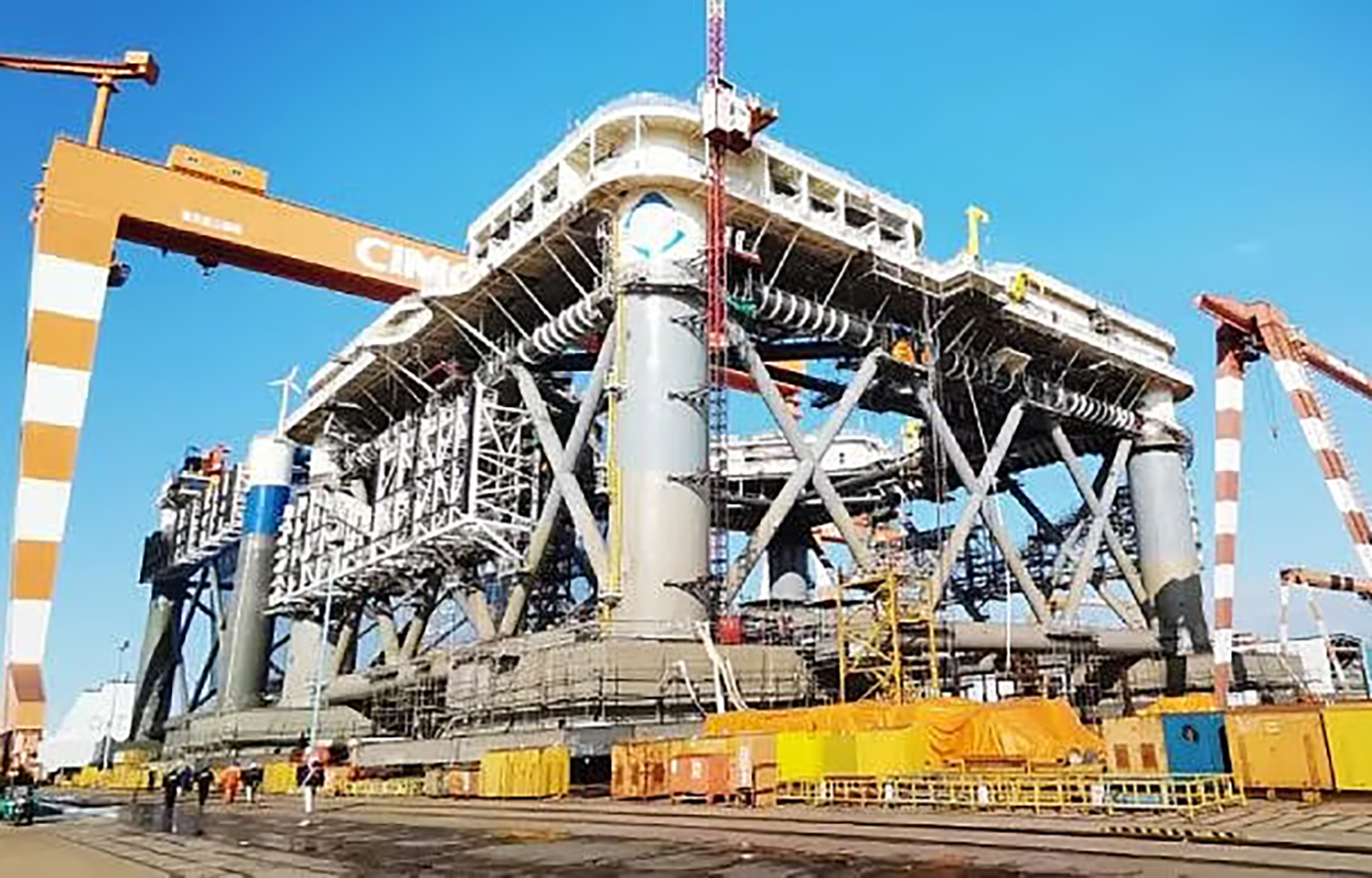
According to presenters at the 2026 Deep-Sea Aquaculture Equipment Conference, held in March in Nanjing, China, the nation has exceeded 100 offshore aquaculture platforms and ships in operation.
“The shift offshore is accelerating,” Xuefei Shi, an affiliated researcher at Bergen, Norway-based Chr. Michelsen Institute, told SeafoodSource. “Constraints on nearshore aquaculture have pushed the industry to deeper waters and more resilient infrastructure.”
Those constraints include revisions China recently made to its nationwide fisheries law.
Among the changes made to the law include efforts to place more stringent regulations on the nation’s aquaculture sector, aiming to broaden and strengthen more targeted attempts China has made in the past to eliminate pollution and other harmful effects of fish farming on the environment.
A recent report in the Fengkou financial news outlet said that revisions made to the law are likely to benefit companies that have made an offshore push, such as mariculture operations carried out by the Guoxin Development Group.
“The core orientation of the new law is to promote the transformation of aquaculture from extensive and resource-intensive to intensive and environmentally friendly,” the report said. “This aligns perfectly with the Guoxin Group’s development path of moving offshore, industrial intensification, controllable standards, and land-sea integration.”
Shi said that in its push offshore, China originally took inspiration from Norway, but it has since become the undisputed global leader in such technology.
“If Norway was the one that made a breakthrough from zero to one in this industry, China is the one now making it from one to many,” he said.
According to Rabobank Senior Analyst Gorjan Nikolik, Europe has been left behind in the offshore push due to several reasons.
“Capex has been very high offshore, while the expected excellent performance did not materialize at least not consistently,” he said. “There were instances of major lice outbreaks, which were not supposed to happen offshore; mortality due to algae; and escapes due to hardware breakages.”
Nikolik said he still thinks there will be a future for offshore in Europe “but it will take some time.”
Meanwhile, China has made a concerted government-led push to make offshore aquaculture a strategic priority.
Guo Fuyuan, the general manager of Yantai Jinghai Fisheries, said at the Deep-Sea Aquaculture Equipment Conference that the latest edition of the Chinese government’s annual document that sets national agriculture and fisheries priorities singled out deep-sea aquaculture as a “strategic growth area.”
Fuyuan called for the nation to reform insurance legislation to allow coverage of offshore platforms, which he said would encourage more investors into the sector.
Besides government approval, China’s engineering prowess is also aiding in the rapid push offshore, according to Shi.
“Engineering is becoming central to aquaculture,” he said. “Platforms, mooring systems, offshore cages, and specialized vessels are redefining what marine farming looks like. AI-assisted monitoring, machine vision, and sensor systems are also increasingly discussed as essential layers for managing feeding, fish health, and environmental conditions offshore.”
With over 100 offshore aquaculture facilities now in place, future growth in the space may depend on the emergence of meaningful research, according to Xiamen University Professor Ling Cao.
“There are only a few studies comparing the ecological and economic performance of offshore aquaculture systems in China with conventional systems,” Cao told SeafoodSource. “From what I have seen, the evidence base is still quite limited, especially for rigorous comparisons of productivity and profitability of China’s newer offshore/deep-sea platforms versus conventional coastal cages, ponds, or raft systems. Most of the published work so far focuses more on technology, development status, policy, and engineering challenges than on farm-level comparative performance.”
