


At its 2024 Capital Markets Day on 26 September, Mowi announced it is looking to gradually raise its annual farmed Atlantic salmon harvest by an additional 100,000 metric tons (MT) over the next five years.
The Bergen, Norway-headquartered firm's plan for the next half-decade also include increasing its revenues by EUR 3 billion (USD 3.3 billion) and reducing costs by up to EUR 400 million (USD 445.5 million), according to CEO Ivan Vindheim.
With the expectation that Mowi’s Farming division will achieve a “milestone” harvest of 500,000 MT this year, the company is shooting for better utilization of its license capacity while also improving productivity and biological performance of its existing production through post-smolt investments.
“By releasing more smolt and increasing our use of post-smolt, we will be able to harvest 600,000 MT of salmon [by] 2029, thereby reinforcing our position as the world’s top producer of Atlantic salmon,” Vindheim said.
Mowi is not the only Norwegian firm prioritizing post-smolt investments, as several firms in the country are aiming to attain greater biological control over their production processes.
Grieg announced earlier this year that it was investing more heavily in such a strategy after its 2023 harvest totals fell below expectations. And Andfjord Salmon said it has plans to use spare pool capacity as part of a post-smolt production strategy for supplying ocean-based farming operations around the country.
AKVA group, meanwhile, recently said it believes an effective post-smolt strategy is key for firms to have as the industry progresses.
“If we are to grow more … we need to do something on top of [traditional coastal production],” AKVA CEO Knut Nesse said. “We still believe that post-smolt is the most likely growth opportunity. If we are to drive growth in the next five to 10 years, we believe that post-smolt is the best investment and ticket to provide some growth.”
Next year, 25 percent of Mowi’s smolt will be post-smolt, and in relevant regions in Norway, as much as 50 percent of the smolt released will be post-smolt, rising to 75 percent by 2029, according to Vindheim.
“All indications are that releasing larger and more robust smolt to sea can increase survival rates by up to 50 percent and reduce the number of lice treatments in certain areas by 40 percent,” he said.
With post-smolt as a focal point, Mowi plans to reduce costs by 2029 through continuous innovation within its cost-improvement program. Since its launch in 2018, the company said it has saved over EUR 300 million (USD 335 million) through 1,700 different initiatives.
The company said it is also hoping the expected continued growth in Mowi’s farming operations will, in turn, lead to growth in its two other divisions: Consumer Products and Feed.
“The rest of the supply chain will grow in line with farming going forward. To produce more salmon, we need more feed, and more salmon means more raw material for our 20 secondary processing plants around the world,” Vindheim said.
Anticipated growth across the company’s operations has led the firm to estimate revenue growth of 7 to 8 percent per year over the next five years, resulting in estimated revenue of EUR 8.5 billion (USD 9.5 billion) in 2029, compared with EUR 5.5 billion (USD 6.1 billion) earned in 2023.
The focus for Mowi will largely stay on sea-based farming techniques, but the firm said it is also keeping its eye on emerging technologies and will invest in them if, and when, it sees fit.
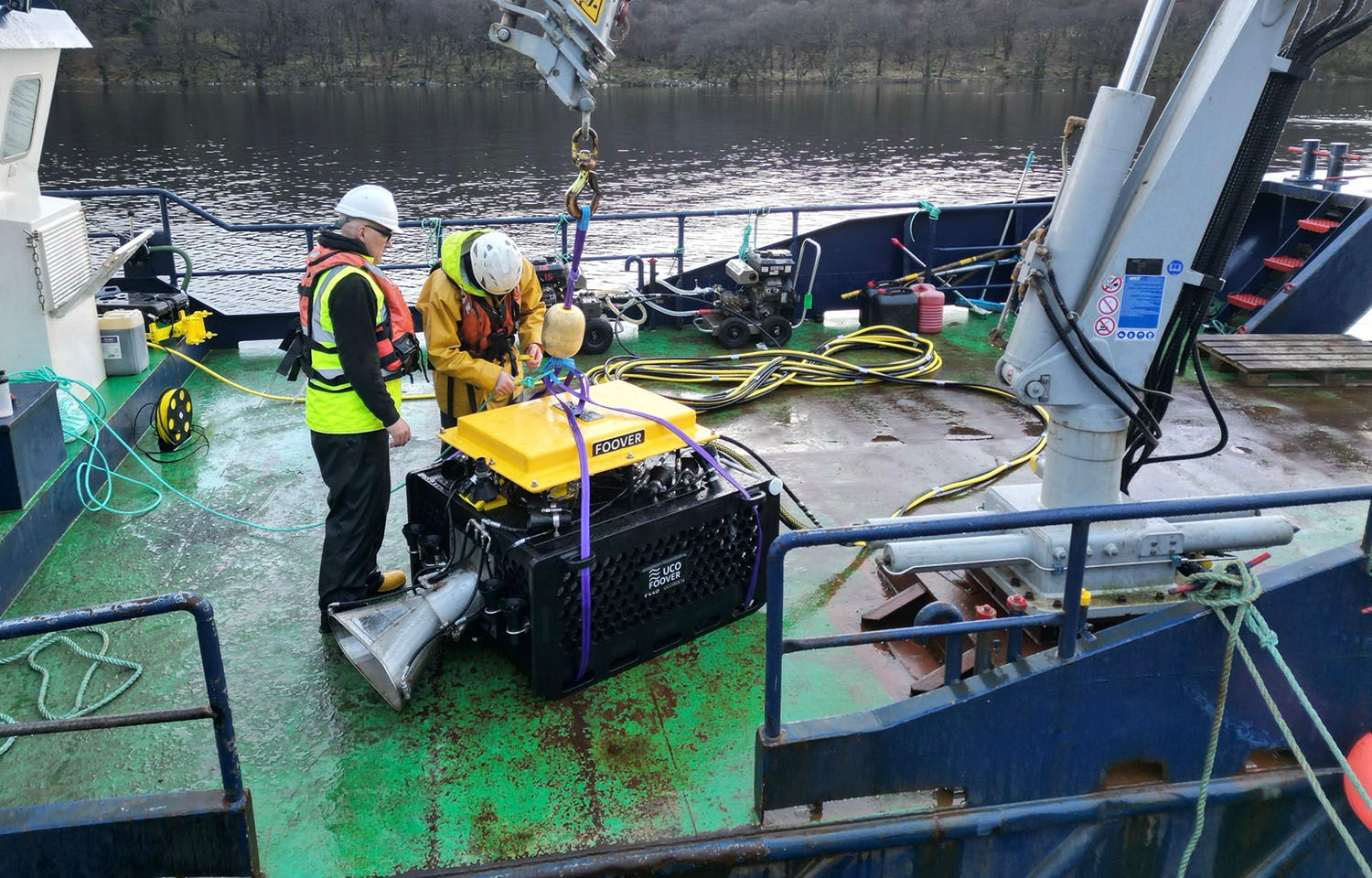
To that end, Underwater Contracting (UCO) and Mowi have announced an expansion in their partnership, originally established in 2018, focusing on the integration of remotely operated vehicle (ROV) technology in salmon farming.
This collaboration will see a 40 percent expansion in the number of ROVs taken by Mowi for use on its sites.
“UCO is proud to provide solutions that solve subsurface challenges not only in aquaculture but also across industries such as renewable energy, oil and gas, and environmental surveying,” UCO Managing Director Michael Bower said in a release. “Our research and development efforts, all based in Scotland, are key to delivering practical, usable solutions that enhance our customers’ operations.”
The ROVs are meant to help with fish welfare issues, such as jellyfish and algae blooms, that Norwegian operations have continued to face by allowing farmers to better monitor their operations from within the tanks. Particularly, UCO's Foover machine removes mortalities from pens efficiently and selectively.
"Fish welfare is one of the most important concerns in modern aquaculture. By combining our expertise with Mowi’s industry-leading practices, we believe we can develop solutions that set new benchmarks for fish welfare,” UCO Business Development Manager Jamie Smith said.
