






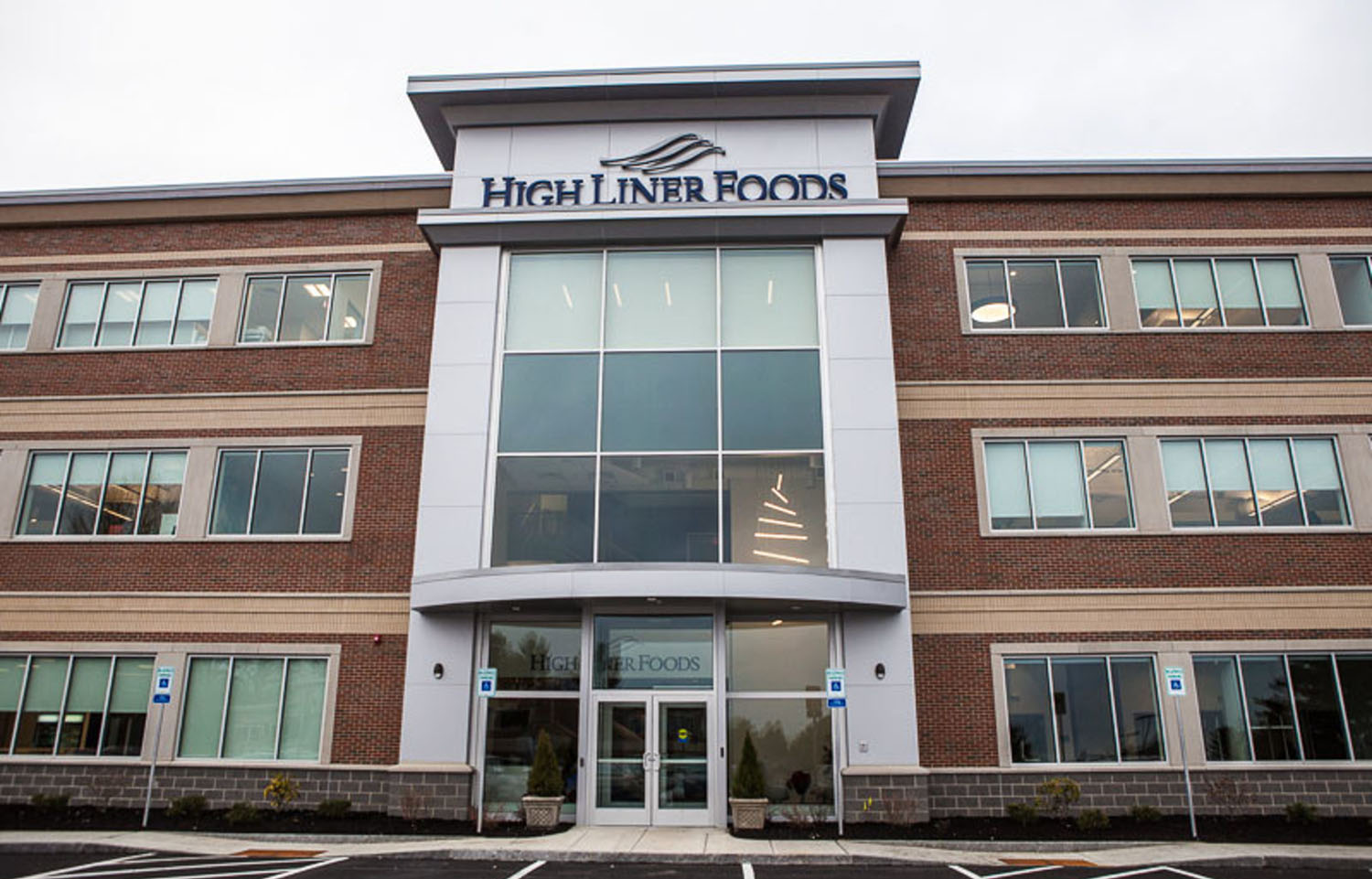
High Liner Foods saw an increase in sales volume but a drop in gross profit and adjusted earnings before interest, taxes, depreciation, and amortization (EBITDA) in 2023 as challenging market conditions and a supply glut early in the year shrank margins.
The company reported in its FY 2023 results that its sales volume reached 257 million pounds, marking a 2.4 percent, or 6.1-million-pound, increase over the 250.9 million pounds it sold in the same period of 2022. Total sales value in FY 2023 reached USD 1.08 billion (EUR 998 million), which was an increase of USD 10.6 million (EUR 9.8 million), or 1 percent, year over year.
For Q4, or the 13 weeks ending 30 December 2023, the company’s sales volumes increased by 1.2 million pounds, or 2.1 percent, to 59.6 million pounds – up from the 58.4 million pounds it posted in the same period of 2022. Sales value, however, decreased by USD 13.2 million (EUR 12.2 million), or 5.3 percent, to USD 237.1 million (EUR 219.2 million), compared to USD 250.3 million (EUR 231.4 million) it posted in the year-ago period.
"While our Q4 results were below the potential of our business due to the ongoing challenges posed by the macroeconomic environment, we are confident that the underlying fundamentals of our business, and our strategy, remain sound,” High Liner President and CEO Paul Jewer said.
For FY 2023, the company posted gross profits of USD 218.7 million (EUR 202.2 million), compared to USD 229.9 million (EUR 212.6 million) in FY 2022 – a drop of USD 11.2 million (EUR 10.3 million), or 4.9 percent. Gross profit as a percentage of sales, meanwhile, dropped to 20.2 percent, compared to 21.5 percent. Adjusted EBITDA also dropped, decreasing USD 8.8 million (EUR 8.1 million), or 8.5 percent, to USD 95.1 million (EUR 87.9 million) from the USD 103.9 million (EUR 96.1 million) posted in 2022. Adjusted EBITDA as a percentage of sales also shrank, decreasing to 8.8 percent compared to 9.7 percent.
On a 22 February earnings call, Jewer said supply and demand dynamics in the market shifted in early 2023, which resulted in higher costs related to storing excess product as consumers pulled back slightly in the retail market. The additional costs shrank margins, as did a shift in consumer spending behavior toward more private-label products and value-focused retailers as inflation dampened seafood spending.
“As a result, our track record of year-over-year and quarterly EBITDA growth stalled last year,” Jewer said.
To fully contextualize 2023, Jewer said, the complicated environments of 2021 and 2022 need to be included. Intense supply chain challenges and the unprecedented Covid-19 pandemic both heavily impacted the supply chain, but High Liner managed to maintain its trajectory.
“The positive effect of having a reliable and consistent seafood supply when most did not cannot be understated,” Jewer said.
In Q4 2023, High Liner’s gross profit decreased by USD 6.1 million, or 11.1 percent, to USD 48.7 million (EUR 45 million) – compared to USD 54.8 million (EUR 50.7 million) in the same period of 2022. Gross profit as a percentage of sales dropped to 20.5 percent compared to 21.9 percent.
Adjusted EBITDA also dropped in Q4 2023, decreasing by USD 3.5 million (EUR 3.2 million), or 13.8 percent, to USD 21.9 million (EUR 20.3 million) from the USD 25.4 million (EUR 23.5 million) posted in the same period of 2022. Adjusted EBITDA as a percentage of sales for the period decreased to 9.2 percent from 10.1 percent.
High Liner Foods Chief Commercial Officer Anthony Rasetta described current operating conditions as “very challenging” for the company in the same earnings call but pointed to some signs of recent growth. For example, the company made market share gains in the Canadian retail market in Q4, as private label growth began to slow.
“We anticipate that consumers will gradually return to branded offerings through the course of the year,” he said.
The company has also made big inroads into foodservice categories, which has helped provide a solid foundation for the company, Rasetta said.
“Foodservice has been the driver of our volume growth consistently,” he said. “Our focus on non-commercial – schools, long-term care facilities, recreation, and our portfolio within that – has continued to drive volume growth.”
Rasetta said the company plans to continue leveraging its foodservice and non-commercial markets as they have more inflationary resilience than retail.
Both Rasetta and Jewer added that the inventory challenges that hit the company in early 2023 are “largely behind” High Liner.
“We feel, certainly compared to where we’ve been if you think of through Covid and the real significant supply chain disruptions, we feel like we have the supply that we need in order to execute on ... growth opportunities for us and our customers,” Jewer said.
Jewer also hinted that the company is continuing to consider potential mergers and acquisitions as its net debt to EBITDA ratio has shrunk 2.6 times over compared to 3.7 times at the end of FY 2022. However, the company “will remain extremely disciplined in this regard” in 2024, and the company will only act on any potential merger or acquisition activity if it positions the company for growth.
Looking forward, Jewer said the company is in a good position to return to its earlier growth trajectory.
“All internal and external signs indicate that while market conditions remain challenging, we’re well positioned to return to EBITDA growth,” he said. “We are taking proactive steps to make sure we capitalize on the category rebound when consumer behavior normalizes.”
