




As of 1 March, Japan-based seafood company Maruha Nichiro Corporation has taken on its new name: Umios.
The name is derived from the Japanese word “Umi” for ocean; “one” for the company’s commitment with stakeholders, society, and the planet; and “solutions” for the company’s focus on its rebirth as a “Solution Company.”
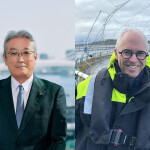
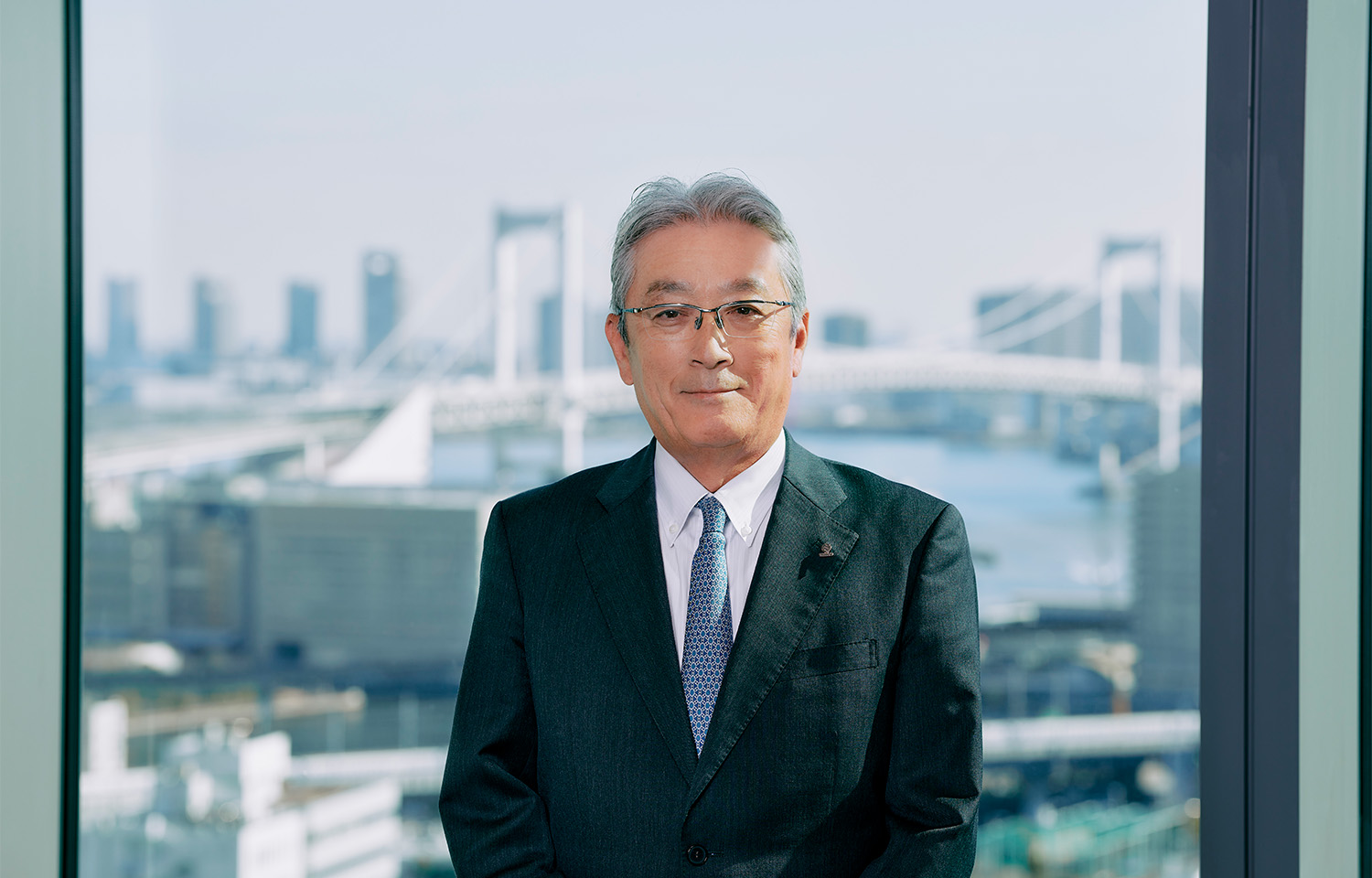
Umios CEO Masaru Ikemi told SeafoodSource all of those components are a part of the next phase of its growth.
“While our company has a 146-year history, we are transforming ourselves as part of our corporate identity (CI) change, which is one element of our corporate transformation initiatives,” Ikemi said. “This transformation aims to further connect our 146 years of history and position us as a company that challenges itself toward the next 100 years, reborn as a ‘Solution Company.’”
Ikemi became the CEO of Umios in 2020 after a long history with the company. He joined Taiyo Fishery Co. – the predecessor of Maruha Nichiro – in 1981 and has spent that time working in multiple locations including the Solomon Islands and Bangkok, Thailand, for the company. He said during his tenure, the company has undergone “significant transformation,” from what was primarily a fishing company in his early days to a much more expansive corporation today.
“We evolved from a company that catches its own fish to a seafood enterprise that imports and sells fish,” Ikemi said. “In recent years, we have become a comprehensive food company, conducting our business under our group mission: ‘Umios Group’s cherished responsibility is to contribute to the happiness and well-being of all, starting with authentic, safe, and healthy food.’”
That evolution is continuing with its recent rebrand, as well as through its long-term and medium-term plans. Looking ahead 10 years, Ikemi said Umios is working to transform into a company that offers solutions focused on the “Providing Sustainable Protein” and “Creating Health Value”.
“Specifically, we will leverage three strengths cultivated over our 146-year history,” he said. “First, our ‘Resource Procurement Capabilities’ to source from around the world; second, our ‘Processing Technology’ through advanced food processing techniques; and third, our ‘Food Product Supply Capabilities’ that responds to diverse needs. Our vision is to connect these strengths to sustainable value creation through a consumer-oriented value cycle.”
Ikemi said that value creation will be done on a “glocal” (global and local) basis, with the more specific goal of achieving an overseas ordinary profit ratio of 70 percent or more, returns on invested capital (ROIC) of 7 percent or more, and a push to rank in the top 10 of market capitalization among global meat and seafood protein providers.
In the medium term, Umios is promoting three different pillars that will help it realize its new longer-term vision: building a value cycle, establishing a glocal strategy, and fostering a corporate culture of “challenge” and “co-creation,” Ikemi said. Through that, financially, the company is working to hit an operating profit of JPY 40 billion (USD EUR) by the fiscal year ending March 2028, with an ROIC of 5 percent, growth investment of JPY 140 billion (USD EUR) or more, a dividend payout ratio of 30 percent or more, and a price-to-book ratio of 1.0 or more.
“Regarding our glocal strategy, we will establish regional headquarters in four priority areas: Europe/Africa, North America, Asia/Oceania, and China, promoting collaboration within areas and accelerating decision-making,” Ikemi said. “Our plan is to establish a structure where the headquarters in Japan serves as the global head office with cross-functional oversight.”
Umios is working to do more than just increase its dividends, Ikemi said. It’s also working to solve social issues through food, including topics like climate change, ecosystem balance, food safety and security, and sustainable business viability. Some of those goals will be achieved by the use of new technology, he said.
“Current ongoing projects include expanding the use of DHA extracted from microalgae and selling nursing care foods for the [elderly] society,” Ikemi said. “In land-based aquaculture, we are working on Atlantic salmon land-based aquaculture in Japan. For cell-cultured foods, we are working to establish a next-generation fish protein supply system using cell culture technology.”
Ikemi said the company is also working to use technology to enhance its fishing business and that the company is shifting from “catching fisheries” to “farming fisheries.”
“We are working to reduce environmental and human burden by utilizing technologies such as cultivating farmed fish that are less susceptible to global warming effects, AI-based fish counting management, short-term tuna farming, and the introduction of submersible fish cages,” he said. “Additionally, even in traditional ‘catching fisheries,’ we emphasize sustainable fishing by increasing our handling of Marine Stewardship Council-certified seafood products.”
Ikemi said sustainability regularly factors into the company’s decisions and is a core tenant of its new role as a “solution company.”
“Sustainability is embedded in the very reason for our company's existence and is considered at every stage of decision-making, including specific KPI-setting and progress management, reflection in investment decision criteria, and review of business portfolios,” he said.
Another part of Umios’ medium-term strategy is corporate acquisitions. The company recently acquired the remainder of Urk, Netherlands-based Seafood Connection Holding (Scheduled to change its trade name to Umios Europe Holding B.V. as of April 1, 2026), and Ikemi said the company has plans for more.
“While I cannot discuss details, we have stated in our medium-term management plan for fiscal years 2025-2027 that we will make approximately JPY 180 billion [USD 1.2 billion, EUR 977 million] in regular and growth investments,” he said. “The overseas ratio in our overall investment will be 47 percent, an increase of 9 percentage points from the previous medium-term plan.”
While he could not disclose any details, Ikemi did say that North America is an important investment destination.
“North America is one of our important investment destinations, and we plan to continue active investment there,” he said.
