



A new investigative film released by the Environmental Justice Foundation (EJF) alleges widespread illegal driftnet fishing in the Mediterranean.
EJF’s film, “Walls of death: illegal driftnetting in the Mediterranean,” documents vessels deploying miles of near-invisible driftnets in the biologically important Alboran Sea between Europe and North Africa, despite a Mediterranean-wide ban on the gear that has been in place for more than two decades. The organization said that the nets, in addition to well as being responsible for indiscriminately entangling dolphins, turtles, sharks, and other non-target species, could also be responsible for prohibited catches that are entering the European seafood supply chain.
“The evidence is now clearer than ever,” EJF Founder and CEO Steve Trent said. “Driftnets were banned for a good reason: they devastate marine ecosystems and wipe out marine life on a vast scale. Governments have a legal obligation and a responsibility to protect this shared sea.”
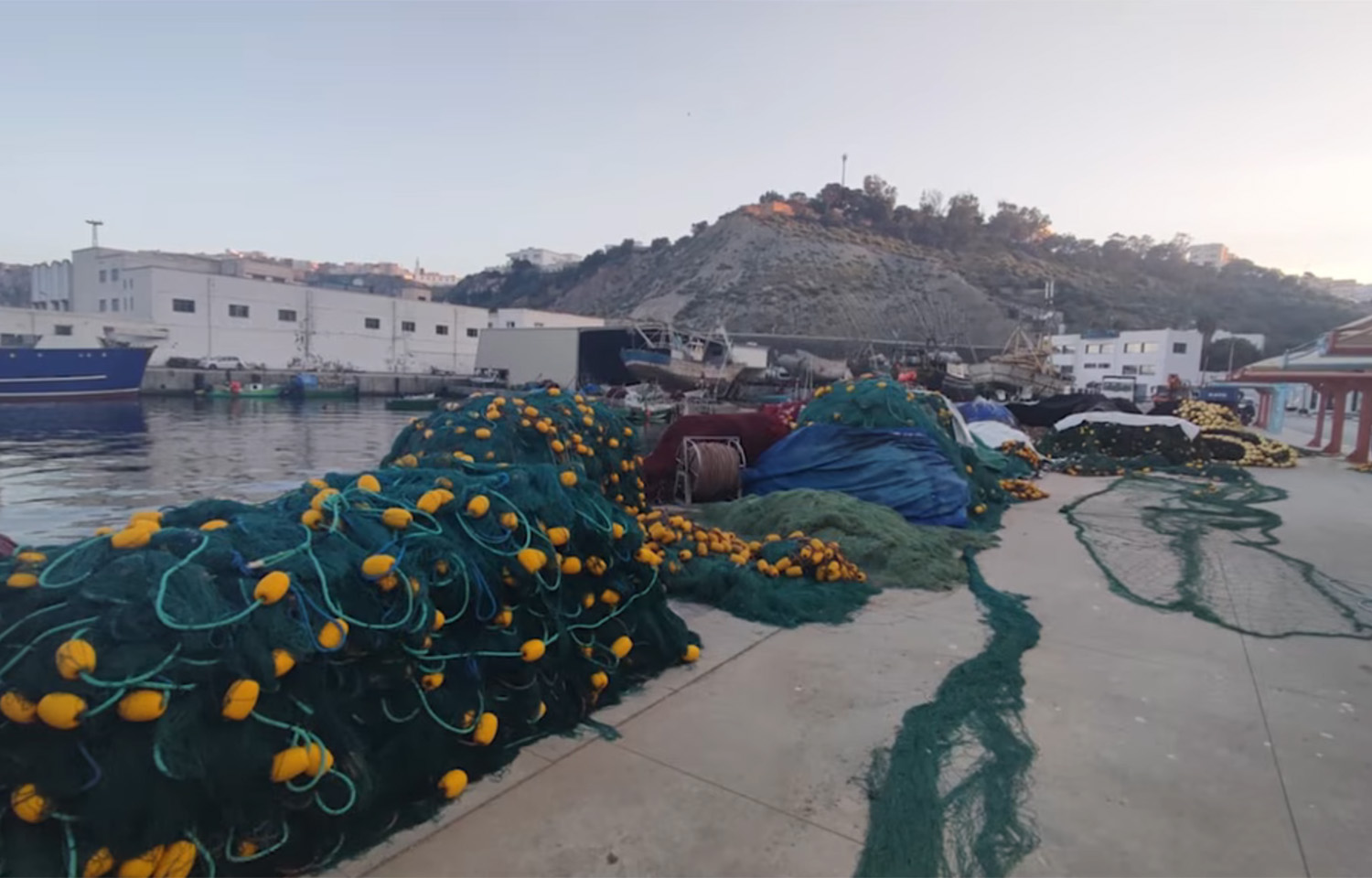
Investigators observed and documented eight vessels actively deploying banned driftnets during several days at sea, while separate port research identified at least 843 vessels linked to driftnet activity across five Moroccan ports.
EJF argues the Alboran Sea is now under severe ecological pressure, exacerbated by ghost fishing from abandoned nets. The organization is therefore calling for urgent reforms to fisheries governance and traceability.
Speaking to SeafoodSource, Trent said the number of Moroccan vessels found to be linked to illegal driftnetting “points to a striking level of entrenchment.”
“What our investigation reveals is a practice that appears to have become deeply normalized,” he said. “The activity appears to have expanded over time. Illegal driftnet use was observed in major ports and also in smaller artisanal harbors, suggesting the practice is spreading geographically and becoming further embedded rather than diminishing.”
Trent said investigators found little attempt to hide the activity, with driftnets being openly stored on vessels and in ports with little to no effort to conceal them.
“This makes it difficult to conclude that authorities are unaware,” he said. “The more urgent question is why enforcement has failed to stop practices that are illegal under international commitments and devastating for marine ecosystems?”
He also pointed to possible regulatory loopholes, with some operators allegedly shifting to smaller mesh sizes that could exploit inconsistencies between Moroccan regulations and broader international bans.
“Whatever the legal ambiguities, the ecological consequences remain the same,” he said.
Trent and EJF said the investigation raises questions for European seafood buyers and importers, particularly because Morocco exports the vast majority of its swordfish production to the European Union, primarily through Spain.
EJF stopped short of directly claiming specific illegal catches had definitively entered E.U. markets, but Trent said the organization believes the risks are substantial.
“Our investigation stops short of concluding definitively that any specific swordfish product is an illegally caught one that has entered E.U. markets,” he said. “What it does show is that the conditions allowing this to happen are deeply embedded within the supply chain, and the chance of it not happening consistently is zero.”
According to Trent, the biggest vulnerability lies at the point of capture and landing, where illegally-caught fish can allegedly be declared as legally harvested before entering export chains.
“By the time seafood enters European markets, the original illegality may no longer be visible,” he said. “European buyers cannot assume they are not exposed. Sustained demand without sufficient scrutiny risks rewarding practices that are illegal, environmentally destructive or both.”
EJF argues that stronger transparency standards are needed throughout global seafood supply chains, including public vessel registries, beneficial ownership disclosure, and improved monitoring systems under the Global Charter for Fisheries Transparency.
Alongside stronger enforcement, EJF is also calling for a “just transition” for fishing communities currently reliant on driftnets.
The NGO acknowledged that many small-scale fishers face growing economic pressures, including rising fuel costs and post-pandemic hardship, limiting their access to alternative fishing methods.
“Illegal fishing does not emerge in a vacuum,” Trent said. “If governments focus solely on policing without creating viable pathways forward, there is a risk of pushing already vulnerable communities further into poverty or instability.”
Legal alternatives such as longlining already exist within Morocco’s swordfish sector, although EJF argues that transitions will require financial support from multiple stakeholders, including Morocco, the E.U. and international seafood markets benefiting from the trade.
“The larger point is that healthy seas and prosperous fishing communities are not competing priorities,” Trent said.
The report also raises the prospect of future E.U. intervention under illegal, unreported, and unregulated (IUU) fishing rules, including the possibility of formal “carding” procedures similar to those previously imposed on countries such as Thailand.
Trent said that while Morocco’s strategic relationship with the E.U. could complicate enforcement decisions, the issues identified warrant serious attention.
“The E.U. has significant leverage through its IUU Regulation,” he said. “Our investigation raises serious questions that warrant attention. Effective engagement should support reform, strengthen governance and improve transparency, helping ensure fisheries remain viable in the long-term.”
He added that previous international pressure on Thailand’s seafood sector demonstrated that meaningful reforms are possible when market access becomes tied to transparency and accountability.
“Transparency is the foundation,” Trent said. “Without it, illegal fishing continues to erode marine ecosystems, disadvantage responsible fishers and undermine confidence in global seafood supply chains.”
