




A leading Chinese scholar claims the country’s annual fishing moratorium has been effective in restoring fish stocks, but is being ignored and misrepresented by foreign countries.
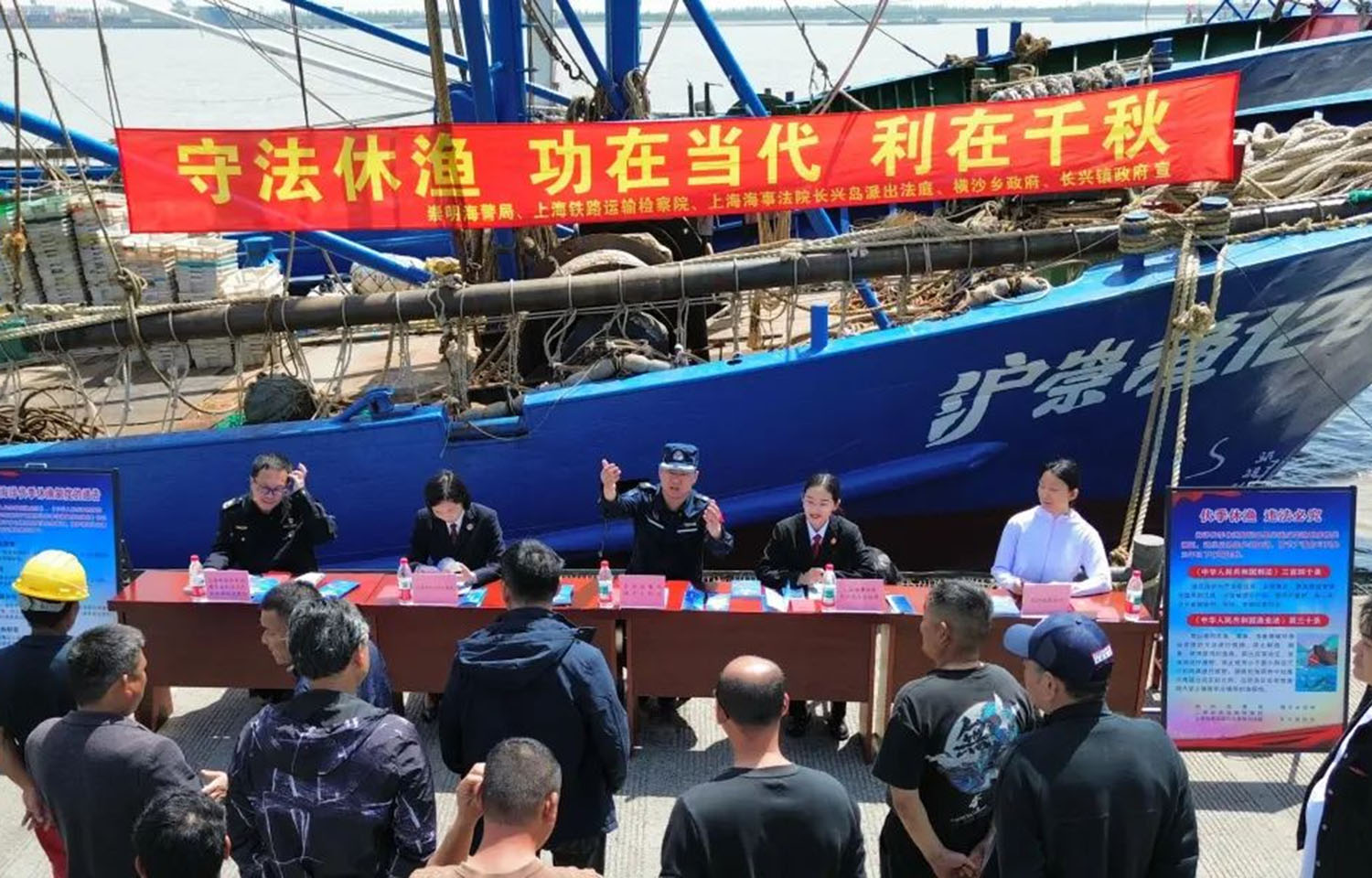
Wang Tengfei, an assistant research fellow at the Institute of Maritime Law and Policy, National Institute of South China Sea Studies, said the annual fishing ban in the South China Sea and most of the East China Sea has shown proven benefits. China has imposed an annual fishing ban during the summer months since 1995, with this year’s ban running from May until 16 August.
“China’s summer fishing moratorium system primarily aims to protect the marine ecosystem and fishery resources. Its measures are implemented solely within China’s actual jurisdictional waters and do not extend to disputed areas in the Yellow Sea, East China Sea, or South China Sea,” Wang said in an article published by the South China Sea Probing Initiative (SCSPI), a research network of Chinese scholars.
China has been criticized by other countries nearby, which claim that China’s ban is actually a tool to push its influence. Wang claims that China is being smeared by other countries which are deliberately misrepresenting the country’s moratorium as a territorial grab instead of an environmental effort.
“The policy is unrelated to maritime claims, and its specific scope does not fully align with China’s maritime assertions in these seas. For a long time, this fact has been deliberately distorted by some countries,” Wang said.
Wang claims that in contrast to the criticisms voiced by “certain South China Sea coastal states such as Vietnam and the Philippines,” South Korea and Japan have not explicitly opposed or criticized China’s fishing moratorium in the Yellow Sea and East China Sea.
“On the contrary, they have generally acknowledged the policy’s positive role in alleviating fishery resource depletion and promoting sustainable fisheries development,” Wang said.
The annual moratorium has worked, according to Wang, stating that "certain economically important fish populations in the regulated sea areas have shown signs of recovery and growth."
The diversity of catch species has increased and unit yields have risen significantly, he said. To support his claim Wang pointed to a 2024 article summarizing data from China’s agriculture ministry focused on hairtail and mackerel.
The ministry’s data shows in the South China Sea, the average daily catch of single-trawler vessels has increased significantly since the fishing moratorium began, with a 9.4-fold increase in shellfish, a 3.7-fold increase in crabs, and a 2.3-fold increase in cephalopods.
In the article, Wang singles out Vietnam as a source of fishing fleets China claims are illegally entering its waters.
He is also critical of the U.S. and claims it has used fishing in the region as a “diplomatic tool” to advance its interests in the area.
“More significantly, it serves as a critical lever and pretext to suppress and contain China and to interfere in South China Sea affairs,” Wang wrote.
The criticism comes even as nearby Southeast Asian countries have repeatedly accused Chinese vessels of targeting its fishing vessels. The Philippines recently accused China of harassing and sideswiping its fisheries vessels, and two Chinese military vessels recently collided amid a conflict over Filipino fishers operating near the disputed Scarborough Shoal.
SCSPI is an influential body to the Chinese government. Its director, Hu Bo, is research professor and director of the Center for Maritime Strategy Studies at Peking University, one of China’s elite academies and a key source of research and advice for the central government.
