






Lawmakers in U.S. Congress will consider several fisheries provisions in the U.S. Department of the Interior budget bill, with each legislative body proposing different levels of funding for the National Fish Hatchery System, fish conservation, and stopping the spread of invasive species.
Though currently on vacation, both the U.S. House and the U.S. Senate are in the midst of the fiscal year 2026 budget process, which involves passing several massive appropriations that offer varying levels of policy guidance to the federal government.
Recently, both the House Committee on Appropriations and the Senate Committee on Appropriations revealed and approved separate versions of an appropriations bill funding the Department of the Interior, which contained several fisheries provisions, mostly focused on the nation’s fish conservation and recovery efforts. Though both bills reject the steepest cuts proposed by U.S. President Donald Trump’s administration, the Senate bill includes more funding for aquatic programs and fish conservation than the House bill.
The Senate version includes USD 220.3 million (EUR 190.1 million) for fish and aquatic conservation, while the House version includes USD 191 million (EUR 164.8 million) – roughly 13 percent less. Both were substantially higher than the Trump administration’s request for USD 152 million (EUR 131.2 million), which would mark a 33 percent cut from the USD 226.8 million (EUR 195.7 million) Congress enacted for fiscal year 2024.
The Senate and House also differ on funding for National Fish Hatchery System operations, with the former providing USD 73.6 million (EUR 63.5 million) and the latter providing USD 60 million (EUR 51.8 million). The Senate provides USD 126.6 million (EUR 109.3 million) for aquatic habitat and species conservation; the House provides USD 106.6 million (EUR 92 million).
The two bodies are closer on spending to stop the spread of aquatic invasive species. The Senate includes USD 52.1 million (EUR 45 million) to tackle aquatic invasive species, such as quagga mussels, zebra mussels, golden mussels, and Great Lakes sea Lamprey, and the House includes USD 48.6 million (EUR 41.9 million).
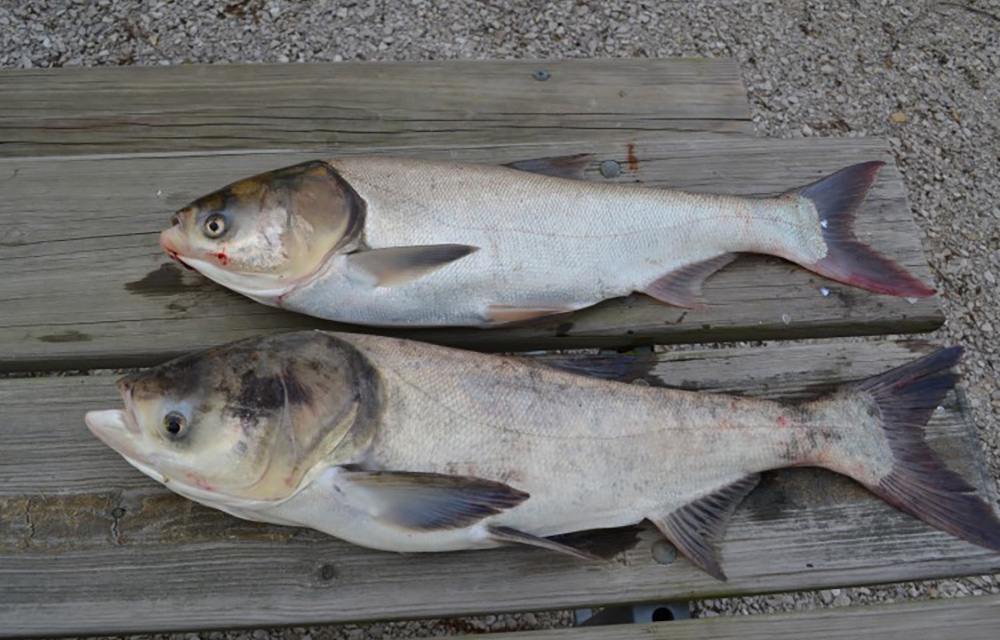
Both bills also include extensive provisions to tackle invasive Asian carp and prevent them from reaching the Great Lakes – an issue that recently gained the attention of U.S. President Donald Trump.
Originally introduced to the U.S. as a form of aquaculture pest control, the species escaped into the nation’s waterways, where it spread rapidly and outcompeted local fish. Worried that Asian carp would be damaging to Great Lakes ecosystems, the state and federal governments have worked to block the fish’s northern expansion. After meeting with state officials, Trump directed federal agencies to expedite efforts to stop the invasive species, and the state of Illinois purchased land necessary to complete the project.
The Senate committee recommended USD 28 million (EUR 24.2 million) for the provision, while the House committee recommended USD 22 million (EUR 19 million)
“Invasive carp pose a grave risk to the lasting health of our Great Lakes,” the Office of U.S. Senator Gary Peters explained in a summary of the Interior appropriations bill. “That’s why this bill provides funding for the Fish and Wildlife Service’s Aquatic Invasive Species program, which supports Great Lakes Basin-wide efforts to combat aquatic invasive species, including invasive carp. This work helps assess the threats posed by invasive carp to the Great Lakes and supports efforts to detect and respond to new invasive species. The bill also provides funding for the U.S. Geological Survey’s Biological Threats and Invasive Species Research Program which produces essential research, detection methods, and tools to help keep invasive carp out of the Great Lakes. Finally, the bill also provides funding for efforts to monitor, detect, and respond to aquatic nuisance species within the Great Lakes and Lake Champlain Systems.”
The House version of the bill also includes legislative language that would block the Secretary of the Interior from enacting a rule granting Environmental Species Act (ESA) restrictions on aquaculture operations where fish are held separate from endangered wild populations. The provision seems to align with the Sturgeon Conservation and Sustainability Act, a bill introduced by legislators from Florida looking to shield sturgeon farmers from restrictions designed to protect wild populations.
The House and Senate will need to reconcile differences between the two appropriations bills – as well as several other pieces of budget legislation – before sending a final draft to the president to be signed into law.
