


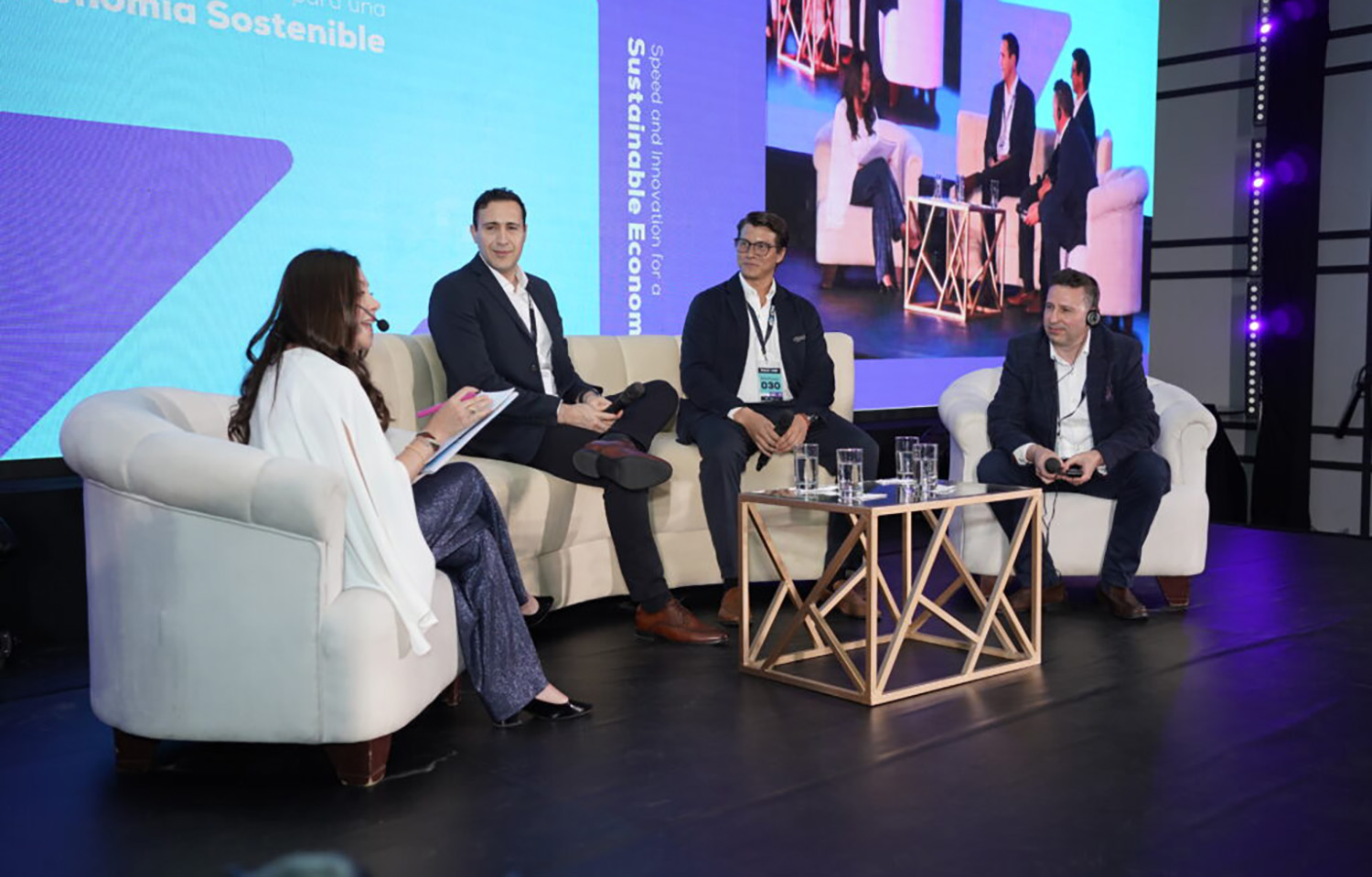
Inter-industry cooperation across the supply chain is needed now more than ever to meet increasing consumer demands for traceability, sustainability, and animal welfare in the shrimp-farming industry, according to a panel of executives during the recent AquaExpo conference in Guayaquil, Ecuador.
The panel, “New paths toward sustainability: How DNA traceability and alternative ingredients are shaping the future of shrimp farming,” said the shrimp industry’s future success depends on its ability to integrate technology, sustainability, and collaboration among companies and international markets.
One such example of a collaboration achieving those goals, according to the panel, is an alliance between Dutch retail chain Albert Heijn; Dutch shrimp importer Klaas Puul; Ecuadorian shrimp-farming firm Cofimar; Norwegian feed producer Skretting; and U.S. animal healthcare information, technologies, and veterinary services provider MSD Animal Health.
Cofimar Sales and Marketing Coordinator Peter Grunauer said the impetus for starting the alliance, at least from his company’s perspective, was that it noticed increasing interest from supermarkets to ensure their supply of shrimp prioritized animal treatment and welfare. That meant companies were beginning to require complete traceability, and transparent information concerning issues such as slaughter methods and eyestalk ablation.
Regarding ablation, MSD Animal Health Global Business Aqua Lead Martin Haberfield said science-based methods to prove ablation is not taking place are needed, as “photos, videos, and other controls are simply not enough.”
He said at Cofimar once egg-producing females are slaughtered and headed, it sends the heads to MSD Animal Health’s laboratories. Scientists there can visually confirm that the head still contains both eyes, and then, they take a DNA sample to obtain the genotype from the female heads. The DNA register can then be used as a reference archive to sample different shrimp and reference back to non-ablated mothers.
One such supermarket demanding this type of rigorous, traceable, and transparent information is Albert Heijn, which requires suppliers to have double certification from Best Aquaculture Practices (BAP) and the Aquaculture Stewardship Council (ASC). This double certification guarantees non-ablation, and that the shrimp are fed with a sustainable diet that features marine ingredient replacements.
Feed is where Skretting comes in. Skretting Sustainability Manager Jorge Díaz said that under the overall collaboration, the feed Skretting crafts for Cofimar’s shrimp that appear on Albert Heijn shelves features deforestation-free certified seed, insect meal produced by Protix, and algal oil from Veramaris.
“This needs to be seen in a more integrated way. The raw ingredients are less available [than traditional marine-based ingredients] and are, therefore, more expensive. They have a higher carbon footprint but a lower marine footprint, so it’s a biodiversity trade-off,” he told SeafoodSource at AquaExpo.
The focus on more humane treatment of sustainably raised shrimp has grabbed the attention of retailers worldwide.
Owned by retail giant Ahold Delhaize, Albert Heijn operates nearly 1,000 stores in the Netherlands, as well as an additional 50 in Belgium. The company sources nearly all its shrimp sold in its refreshed segment from Sykes Seafood-owned Klaas Puul, and the two firms have been collaborating to reduce their environmental impact.
Albert Heijn is not the only retailer seeking to source more sustainable shrimp, though.
U.K.-based retailer Tesco has committed to enhanced shrimp welfare through its new Farmed Decapod Crustacean Welfare Policy, which includes such planned measures as no longer selling live shrimp and ensuring its suppliers electrically stun their shrimp before slaughter. Further, only post-larvae sourced from non-ablated female broodstock will be accepted into Tesco supply chains from 2026 onward for whiteleg shrimp and 2027 onward for tiger prawns.
Also revealed during the AquaExpo conference, U.S. retail giant Walmart announced a new North Star Program in conjunction with Ecuadorian shrimp farmer Omarsa, Skretting, and nonprofit organization The Nature Conservancy (TNC) to help develop and sell more sustainable shrimp products.
Program participants will look to test the operational and economic feasibility of clean energy shrimp production, as well as employ technology to increase efficiency, source deforestation-free soy, and prioritize alternatives to marine ingredients that reduce reliance on wild-caught fish in feed production.
Ecuador's shrimp industry has expanded eightfold since 2010, jumping from exporting 322 million pounds to 2.68 billion pounds in 2023, according to data from the CNA. Ecuador exported USD 6.3 billion (EUR 5.8 billion) worth of shrimp in 2023, representing 25 percent of the country’s exports.
With the country having become a worldwide shrimp-producing powerhouse, Ecuador’s National Aquaculture Chamber (CNA), which organized the AquaExpo conference, has said animal welfare is more essential than ever to ensuring it can maintain that status.
