






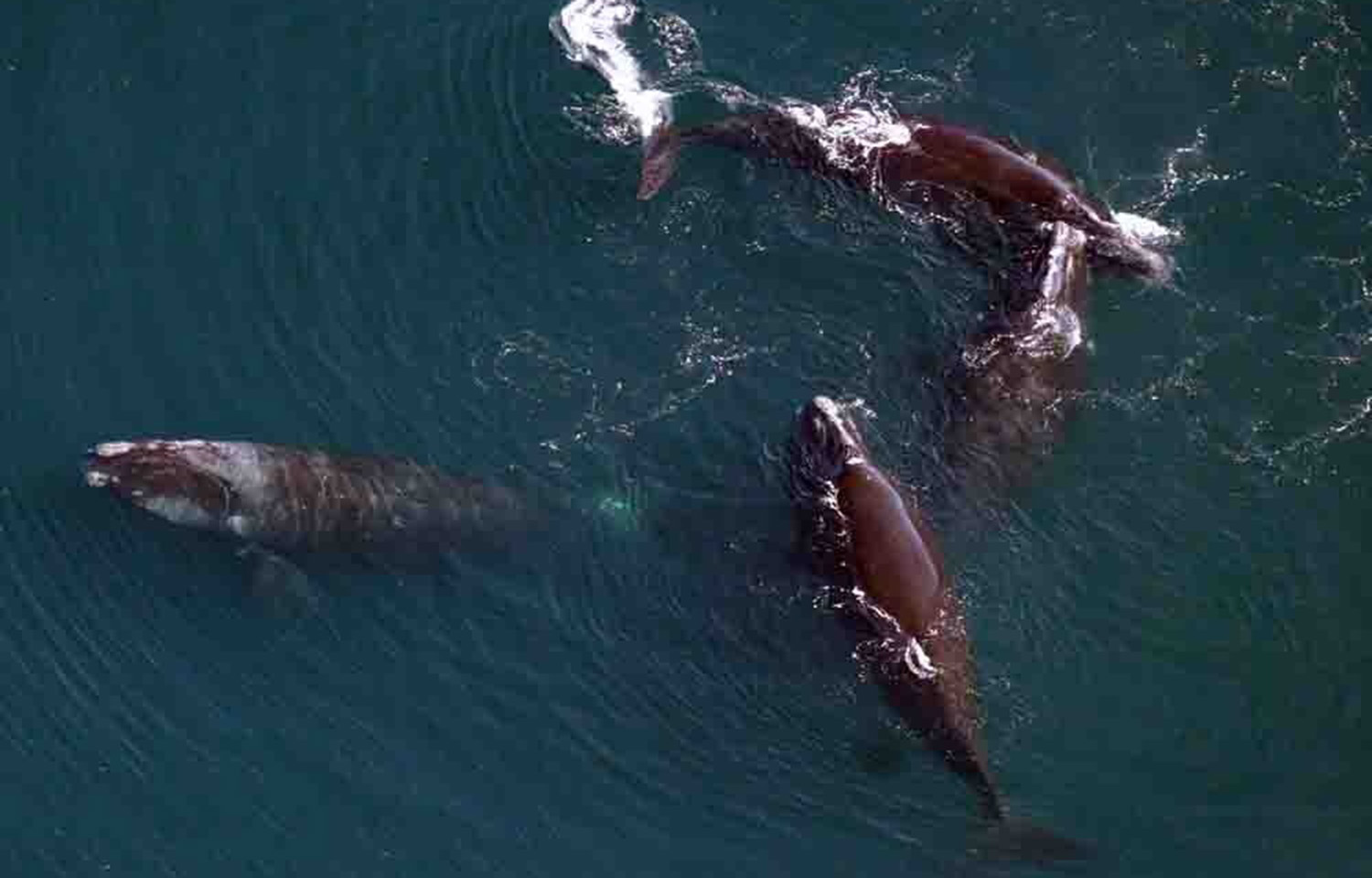
A new estimate of the remaining population of the North Atlantic right whale has determined the species saw continued declines in 2025.
Scientists with NOAA and the New England Aquarium’s Anderson Cabot Center for Ocean Life estimated there are roughly 382 North Atlantic right whales remaining, with a margin of error of roughly plus or minus 11 individuals. That represents a 1.8 percent decline from the 2024 estimate of 389, plus or minus 3. The estimate also found the number of reproductive females held steady at 73.
“The newly released right whale population estimate underscores that more work is needed to protect this species,” Heather Pettis, a researcher with the aquarium and the chair of the North Atlantic Right Whale Consortium, said in a release. “The population is not yet on a clear path to recovery and is incredibly vulnerable to entanglements and vessel strikes – threats we know how to reduce. Recovery for this species depends on sustained protective actions in both the U.S. and Canada.”
Right whales have been at the center of rulemaking and court cases related to the U.S. lobster fishery, which was hit with a court ruling in 2020 that found the fishery was in violation of the Endangered Species Act due to the risk of entangling whales in the vertical lines commonly used by the fishery. That ruling kicked off years of rulemaking by NOAA, further court cases, and eventually congressional rulemaking to grant the fishery a reprieve and prevent a closure. Recently, the U.S. House of Representatives voted to extend that moratorium through 2035.
The latest right whale population estimate has environmental groups again calling for further efforts to stave off extinction of the species.
“These iconic whales will not escape extinction if their population cannot grow. Far too many right whales are dying because of boat strikes and entanglements in fishing gear,” Oceana Marine Scientist Nora Ives said in a release. “Last year’s calving season was the strongest in 17 years, but these whales can’t survive if the very safeguards and laws that protect them are constantly under attack. We must give them a fighting chance for a future.”
