






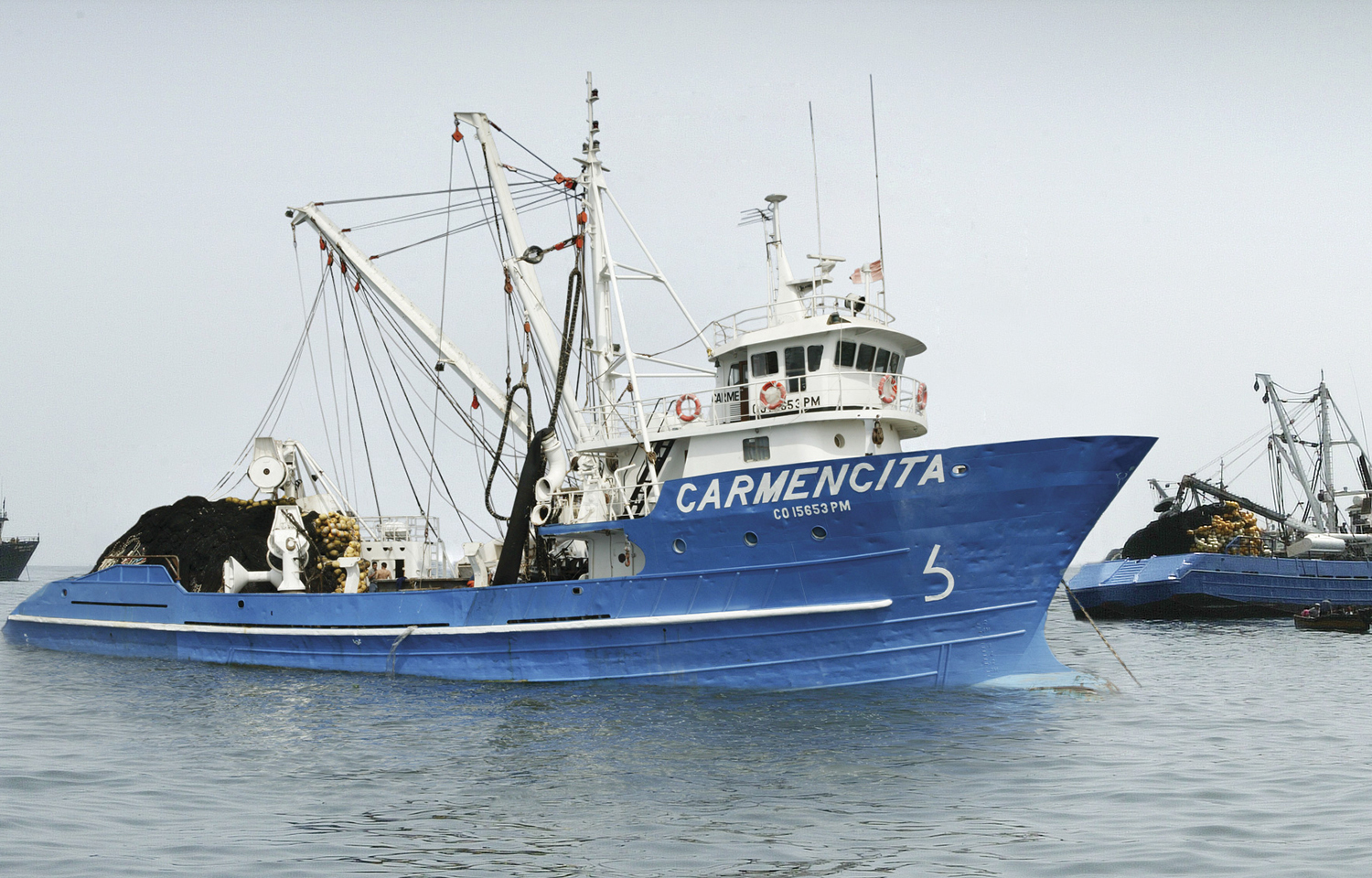
Applying lessons learned from 2023’s El Niño weather pattern that heavily disrupted fishing operations, Peru’s industrial fishing companies now have stronger liquidity ratios, better structured debt, and available credit lines, all of which is likely to help them mitigate adverse impacts expected from this year’s intensifying El Niño.
Three years ago, the cancellation of Peru’s first anchovy-fishing season resulted in an estimated USD 1.4 billion (EUR 1.2 billion) in lost revenue from fishmeal and fish oil exports, leading to losses of 1,500 jobs per month between April and September of that year.
In August 2026, Peru’s Production Ministry (PRODUCE) canceled the country’s North-Central anchovy fishery for the season, leaving over 1 million metric tons (MT) of quota uncaught.
Peru had already set a lower quota for the recently closed season at 1.9 million MT, decreasing from the 3 million MT total allowable catch set for the same fishery in 2025. Despite the season kicking off in early April, fishers had only caught 471,000 MT by the time authorities paused the fishery, which never reopened, with 51.6 percent of that catch comprising juvenile anchovies.
According to local newspaper Semana Economica, the intensification of El Niño as this year progresses makes a second season unlikely and could even delay the start of the first season of 2027 until May or June.
“The recovery will probably be in 2028,” National Fisheries Society (SNP) President Jessica Luna said.
However, many fishing companies are now on better financial footing than they were three years ago, Semana Economica reported, with firms moving to assume more climate volatility as a recurring part of conducting business.
One of the main differences is in debt structures, with companies rescheduling and signing up for longer maturities, facilitated by the possibility of backing loans with high-value assets, such as ships. Meanwhile, liquidity has improved thanks to improved results from 2024 and 2025, giving businesses more cash on hand to maintain operations through the end of the year, according to BCP Business Banking Manager Piero Giannotti, who specializes in agribusiness and fisheries.
Keeping a close eye on cash flow, though, will likely mean that businesses will seek to reduce costs as much as possible, placing many investments on hiatus.
“We have enough liquidity to cover all the fixed costs during this period while reducing investments as much as possible,” Pesquera Exalmar CFO Raúl Briceño said. “The heaviest outlays, such as maintenance and OPEX, which are almost USD 20 million [EUR 17.2 million] a year, have been halted.”
Briceño explained Exalmar recently closed a loan with a one-year grace period, paying only the interest during that time, which has allowed it to preserve cash without needing to activate clauses associated with El Niño.
