



The U.S. Court of International Trade has dismissed a lawsuit filed by a group of environmental NGOs opposed to the U.S. government’s decision to allow swimming crab imports from countries previously banned from shipping to the U.S. over Marine Mammal Protection Act (MMPA) violations.
NOAA Fisheries is charged with ensuring foreign fisheries are meeting the same standards as domestic fisheries for reducing bycatch and protecting marine mammals under the MMPA. To that end, last year, NOAA Fisheries announced its first round of comparability findings to comply with that requirement, determining that 240 foreign fisheries did not comply with MMPA standards. Imports from those fisheries were banned beginning in January 2026.
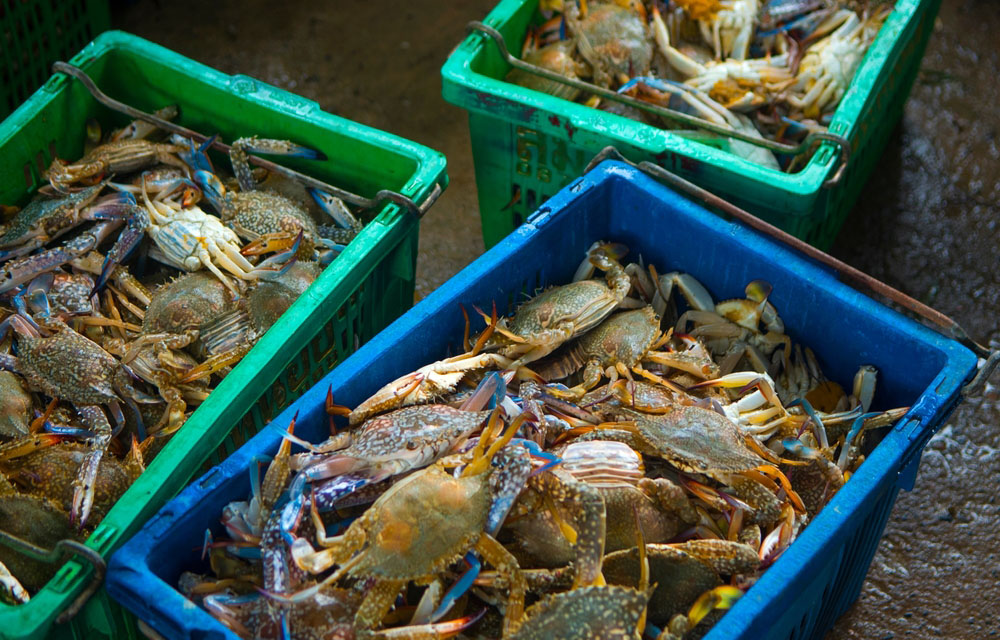
Among the fisheries denied comparability findings were multiple major exporters of swimming crab: Indonesia, Vietnam, the Philippines, Venezuela, and Sri Lanka. The National Fisheries Institute (NFI) told SeafoodSource the findings would have blocked as much as 89 percent of the 62 million pasteurized blue swimming crabs the U.S. imports annually.
As a result, NFI sued over the findings in October 2025.
“It’s devastating, and these are facts; this isn’t arguing opinions,” NFI Chief Strategy Officer Gavin Gibbons told SeafoodSource at the time. “It would be totally, physically impossible to harvest that much crab from U.S. waters in order to make up the difference.”
In November, NFI and NOAA Fisheries settled the lawsuit, with the agency agreeing to stay the import ban on Vietnam, the Philippines, Indonesia, and Sri Lanka as it reconsidered its comparability findings.
In January 2026, though, the Natural Resources Defense Council (NRDC), the Center for Biological Diversity (CBD), and the Animal Welfare Institute sued NOAA Fisheries, claiming the settlement violated MMPA requirements.
“The United States government continues to avoid complying with its legal obligation to ban the importation of fish and fish products that do not meet the standards of the MMPA,” the groups stated in their lawsuit. “For more than 50 years, defendants have failed to comply with this duty, and marine mammals continue to be killed through bycatch in foreign fisheries that export to the United States, even though these foreign fisheries did not demonstrate they met the necessary standards.”
Despite the lawsuit, NOAA Fisheries continued its work on the comparability findings, issuing positive findings in May for Vietnam, Indonesia, and Sri Lanka while issuing another denial to the Philippines’ swimming crab fishery.
According to the court, both parties in the lawsuit agreed that the new comparability findings made the suit moot.
“In light of NMFS’ comparability findings issued on May 12 and the implementation of the related import ban on the relevant Philippine fisheries on June 11, the court concludes that no live controversy remains between the parties and that the issues raised in Plaintiffs’ motion to enforce are moot,” the Court of International Trade said in a 19 August order. “Even as this case comes to an end, the work of carrying out the MMPA continues, as do challenges to specific comparability findings.”
In July, NOAA Fisheries announced that it was soliciting feedback on how to improve the comparability process, noting that the effort currently takes significant resources.
“NMFS' implementation experience indicates that the MMPA import provisions framework is an important tool that can be used to encourage harvesting nations to implement more effective measures to reduce marine mammal bycatch but that administering the program at the scale required by the current regulations is resource-intensive and operationally complex,” the agency said in a 29 July post on the Federal Register. “As [NOAA Fisheries] moved from developing to implementing the regulatory framework, completing the first full round of comparability findings proved to be significantly more complex and time-intensive than [NOAA Fisheries] anticipated when the final rule was promulgated.”
