






Saint Petersburg, Russia-based canned fish maker ROK has unexpectedly put its 2,000 workers on forced leave until 2023, shut down all of its operations, and filed for bankruptcy.
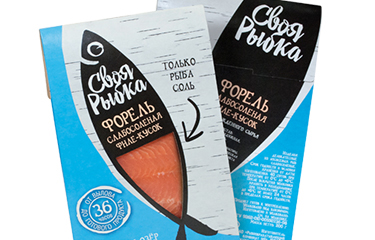
ROK is an acronym for Ryboobrabatyvayustchiy kombinat (The Fish Processing Plant). Founded in 1974, it became a private company in the 1990s and was a significant producer of fish snacks, canned fish, and preserves under the brands ROK, Amore, Svoya Rybka, and Morskaya Planeta – all sold through major Russian retail chains. The company had an annual output close to 60,000 metric tons (MT), and had the largest share of the country’s canned fish market.
In 2021, the company posted revenue of RUB 10.5 billion (USD 168.2 million, EUR 160.2 million), with a net profit of RUB 74.4 million (USD 1.2 million, EUR 1.14 million), down nearly 25 percent decline from 2020. The current majority owner is Alexander Starobinsky, who owns 80.2 percent in ROK, and his father, Igor Starobinsky, who owns 15.95 percent. The remaining 3.85 percent is owned by minor shareholders, Business Petersburg reported.
In November 2022, ROK suddenly stopped production as the state-owned bank Sber – the nation’s largest bank – froze ROK’s bank accounts and other assets after a loan provided by Sber in 2019 to ROK went overdue. The loan was to be used to finance ROk's expansion plan as part an agreement with the government of the Leningrad region involving the construction of a new manufacturing facility and a land-based fish farm.
ROK has plans to relocate its production to the Leningrad region and double its yearly production volume, while the aquafarm was projected to grow 10,000 MT of fish each year. The new facilities were supposed to be finished in 2023, but the project is now frozen, according to Russia's New Prospect magazine.
ROK has current debts of RUB 3.8 billion (USD 60.9 million, EUR 58 million), with 40 percent of that sum loaned by Sber. The company had been in talks with Sber to restructure the debt, Starobinksy told media agency Fontanka.
“We proposed to restructure the debt over the period of eight years. We were going to pay the debt entirely, we just needed one to two years to breathe. But they didn’t want to work with us, and we don’t know why,” Starobinsky said. He said the company offered a deal where Sber would be a shareholder of the plant, but the offer was rejected.
Starobinsky said the company was looking for new investors and seeking support from the government, but the effort failed and it is now planning to auction its facilities.
Starobinsky said the company's financial problems were related to fallout from the Covid-19 pandemic, as well as shortages of raw materials for production and the impact of sanctions of Western countries against Russia due to its war against Ukraine.
In a 2021 interview with Platforma, Starobinsky said Russian fish-processing companies are being “squeezed between fisheries and retail,” with both parties defining prices.
Seafood companies set prices for their catch depending on prices on the global seafood market, while retail is always looking for suppliers that are ready to sell as cheap as possible. As a result, companies like ROK face high prices from fisheries and relatively low prices on the shelf, Platforma said.
“The narrow margin doesn’t allow for development and stimulation of consumption,” he said.
Photo courtesy of ROK
