





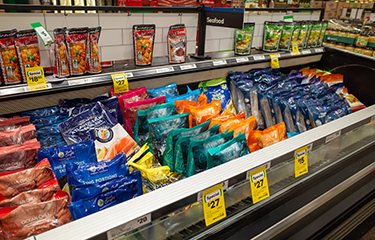
Seafood is one of the fastest-growing frozen food categories as determined by sales to foodservice companies, according to a new report.
Since 2019, 55 percent of foodservice operators reported an increase in seafood purchases, while 75 percent said they purchased more appetizers, and 53 percent bought more vegetables, according to the Power of Frozen in Foodservice report, commissioned by the American Frozen Food Institute (AFFI) and conducted by Technomic Inc. Of the remaining operators, 40 percent bought the same amount of frozen seafood items and 5 percent bought less frozen seafood.
Overall, 66 percent of foodservice operators purchase frozen seafood. The largest buyers are midscale restaurants at 97 percent, followed by supermarket foodservice (87 percent), lodging (80 percent), healthcare (73 percent), casual dining restaurants (68 percent), and quick-service restaurants (65 percent).
More than 90 percent of foodservice operators use frozen foods in menus.
Forty percent of foodservice operators surveyed reported purchasing more frozen foods than they did in 2019, and more than 50 percent said they are using as much as before.
The healthcare, convenience store, and fast-casual restaurant categories have realized the greatest increase in their use of frozen foods since 2019.
The primary benefit of buying frozen food is that they are available year-round, have a long shelf-life, product consistency, and convenience, operators said.
Frozen foods also help operators better handle labor shortages and supply chain problems, AFFI said in a press release.
“Costs and labor continue to be the largest challenges for foodservice operators, and our research found that frozen foods are recognized as valuable solutions,” Technomic Managing Principal Joe Pawlak said. “The high penetration of usage and recorded satisfaction indicate that frozen foods play a vital role in foodservice.”
Frozen seafood suppliers have an opportunity to gain more market share by convincing primarily fresh seafood producers to purchase frozen products, as 32 percent of non-frozen seafood buyers said they will consider buying frozen seafood items, while 48 percent said they “maybe” would consider buying them.
The research also found consumers consider it “highly acceptable” to use frozen ingredients, creating a win-win for both the operator and their customer.
“As operators work to meet future demands such as authentic flavors and taste, frozen innovations and growth in products such as appetizers and ethnic meals offer new options,” AFFI said.
Photo courtesy of Shuang Li/Shutterstock
