






The Russian government has approved plans to invest in the socio-economic development of five cities in the country’s Far East.
The government decree, issued on 24 July, creates a long-term plan for the areas around Yuzhno-Sakhalinsk, Ulan-Ude, Severobaikalsk, Chita, and Tynda. Included in the decree is funding for a number of infrastructure projects – including big funding for the renovation of seaport facilities.
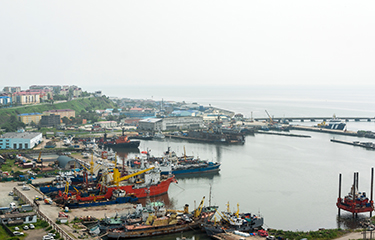
According to Fishnews, the decree contains funding for facilities in the Korsakov seaport. In total, more than RUB 32.6 billion (USD 341 million, EUR 310 million) in federal funding will be invested in new construction and reconstruction of infrastructure in the port.
Of that total, more than RUB 7.1 billion (USD 74 million, EUR 67 million) will be invested in renovating the National Fishery Resource facilities, while RUB 25.5 billion (USD 267 million, EUR 242 million) will be devoted to renovating the Rosmorport facilities – which service cargo and cruise ships.
Sakhalin Regino Governor Valery Limarenko told Fishnews the development is important to the region, and that federal support will be key.
In addition to direct investment in the ports, the government is also planning to invest money into a new runway at the Yuzhno-Sakhalinsk airport, and bypass road connecting seaports with the main federal highway, increasing transport access to the region.
Russia’s Far East is one of the most-productive fishing regions in the country. This year the area has seen a massive pink salmon catch that is exceeding expectations, and the region catches a significant portion of the country’s pollock each year.
However, the region is remote and far from the country’s population base in the west, and has been hugely dependent on trade with China, but its close trading ties were damaged by the Covid-19 pandemic. While Chinese diplomats have pushed for deepening trade between Russia and China, Russia still has few export destinations for its fishery products as Western sanctions from the U.S., European Union, United Kingdom, and multiple Asian nations prevent products from entering.
The government has been working to increase its domestic consumption and utilize its high seafood production, but it has also been dealing with challenging transportation conditions that have led Russia to subsidize rail cargo.
The port modernization initiative, coupled with Russia’s latest round of investment-quota auctions pushing for new processing infrastructure in the region – with some facilities already built via the last round of auctions – will help attract more business to the region, Sakhalin Region Minister of Fisheries Ivan Radchenko told Fishnews.
According to Radchenko, some businesses have already signaled interest in increasing their presence in the region if planned investments in port infrastructure advance. That could include additional fish processing capacity to take advantage of the improved port.
“Enterprises are also interested in the opportunities for servicing the fishing fleet in the port,” he said.
Photo courtesy of Baka Sobaka/Shutterstock
