






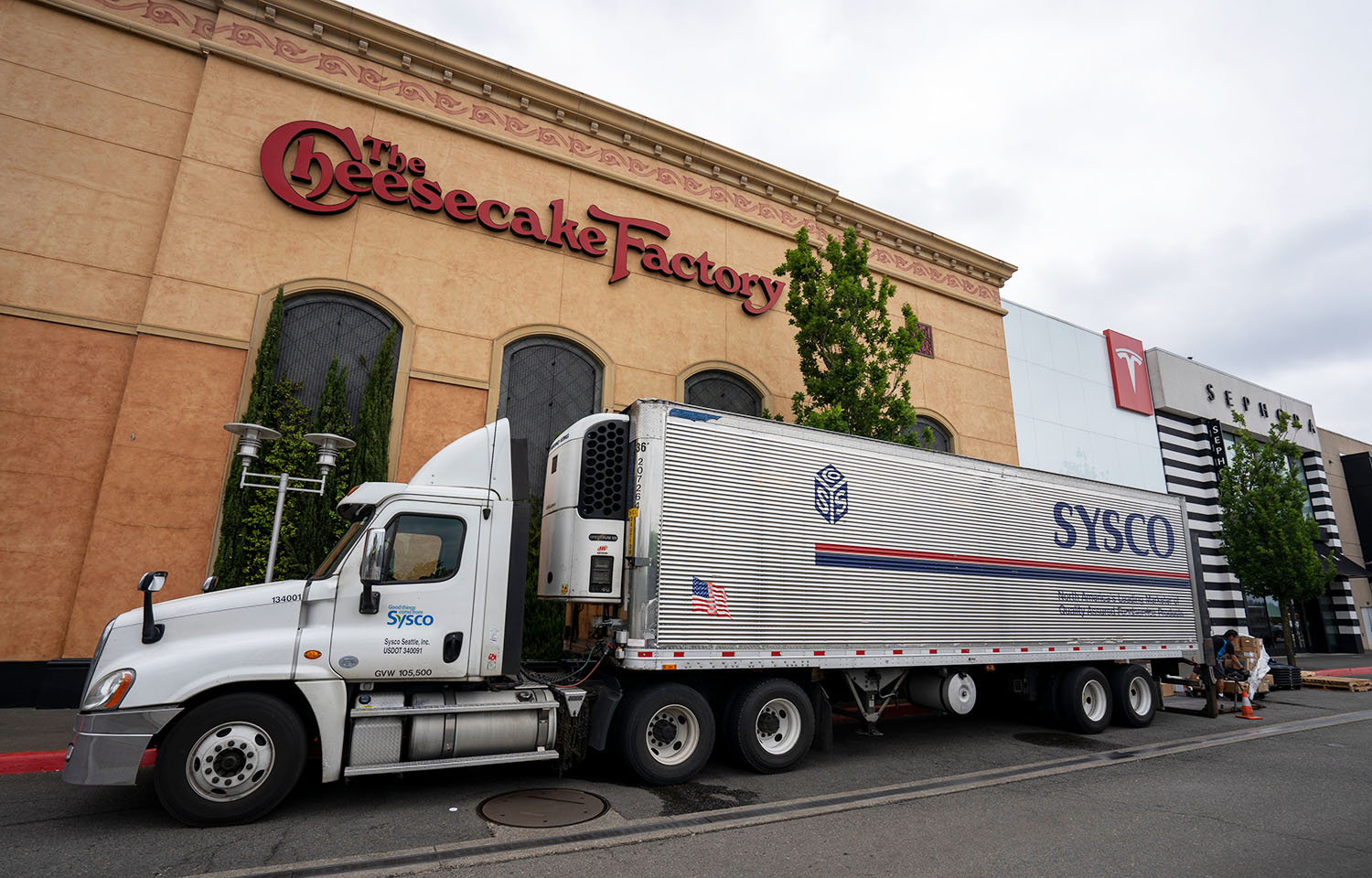
Houston, Texas, U.S.A.-based Sysco, the world’s largest broadline food distributor with more than 600,000 customers, has promised to end its purchasing of all seafood traced back to the Chishan Group – a Chinese processing company linked to the use of Uyghur labor by the Outlaw Ocean Project.
In a 5 January 2024 letter responding to an inquiry from U.S. Rep. Jared Huffman (D-California), Sysco President and CEO Kevin Hourican said he was committed to rooting out illegal labor practices within his company’s supply chain.
“Any act of human trafficking, slavery, forced labor, or child labor within Sysco’s supply chain is unacceptable and, if identified, will be promptly addressed in compliance with our policies and procedures,” he said.
In a 14 December 2023 letter to Hourican, Huffman called out Sysco’s connections with Shandong Haidu and Rongcheng Haibo, both of which are subsidiaries of the Chishan Group. Huffman also questioned apparent weaknesses within Sysco’s auditing process for its seafood supply chain.
Hourican assured Huffman that Sysco is taking steps to tighten its auditing process, including conducting a comprehensive audit of its compliance mechanisms for its supplier code of conduct and the addition of more unannounced audits of the companies and facilities from which it sources products.
“Sysco welcomes the opportunity to work with government and nongovernment entities to help identify solutions and take action to address human rights violations within the global supply chain. We stand ready to collaborate with others in our industry and beyond,” Hourican said. “Achieving traceability and improving transparency in the highly complex seafood supply chain can be extraordinarily difficult to achieve. Solutions require a shared responsibility, including industry and NGO partnerships, regulatory oversight, and access to affordable technology and reporting platforms throughout the global supply chain.”
Hourican said Sysco had terminated its relationship with Shandong Haidu on 14 December 2023 and planned to cease buying from subsidiaries that sourced from the Chishan Group and other processors identified as using forced labor in Outlaw Ocean’s reporting.
On 9 January, a letter signed by Huffman and 21 other U.S. representatives called on U.S. President Joe Biden to take action to urge Sysco to commit to improved practices that helped the company avoid suppliers connected to forced labor and illegal, unreported, and unregulated (IUU) fishing.
“Should Sysco not comply, the members of Congress request that the United States government terminate its relationship with Sysco,” the letter said.
The letter also asked the Biden administration to “prohibit the federal government from acquiring or obtaining any seafood product from companies with substantiated connections to IUU fishing or forced labor; including prohibiting entering into, extending, or renewing contracts with entities involved in the importation or distribution of seafood products produced through IUU fishing or forced labor.”
It said the U.S. government has inadvertently spent more than USD 200 million (EUR 183 million) in the past five years on seafood associated with Uyghur labor for public food programs based on publicly available trade and purchasing data.
“While Sysco Corporation is not the only company implicated, its ties are of particular concern to us, as the United States government holds substantial contracts with Sysco,” the letter said.
The letter faulted both Sysco’s auditing processes and failed federal oversight of the seafood industry for creating a situation where huge amounts of seafood tainted by IUU breaches and forced labor continue to enter the U.S. market.
“This is a cause for concern ... as it relates to the depth in which audits are carried out and ... to auditors asking specific questions to identify forced labor in processing plants in China,” the letter said. “The Outlaw Ocean Project’s latest investigation found that the Chishan Group’s situation is not isolated, revealing that numerous seafood companies are entangled in various issues related to forced labor and/or illegal fishing. The pervasive nature of these problems necessitates a comprehensive reevaluation of how the global seafood industry monitors its supply chains, particularly those passing through China. We have discovered major gaps in our federal process, [including] limitations and failures of the Seafood Import Monitoring Program (SIMP); cross-jurisdictional confusion and data-sharing impediments; definitions of IUU that do not include forced labor; and struggles to implement a government approach throughout the entire seafood supply chain, including on land and at sea, all of which have contributed to the rampant scourge of IUU fishing and forced labor practices tainting our seafood supply chain.”
Photo courtesy of Tada Images/Shutterstock
