






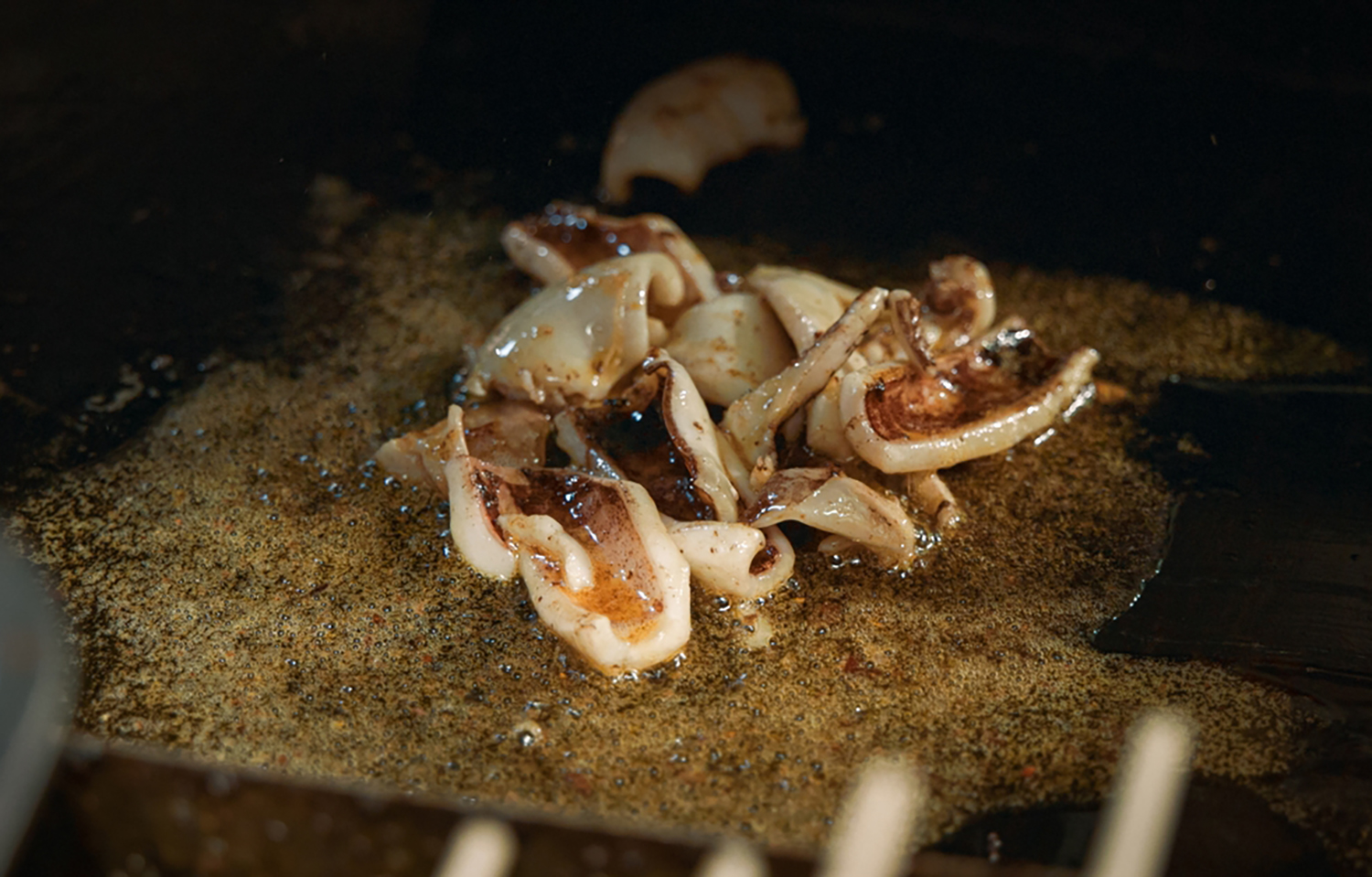
High raw material prices are forcing some Chinese squid processors to use as many parts of the cephalopod as possible in order to extract value and turn a profit.
Trevor Wang, sales manager at Shandong Xinrihai Food Co. told SeafoodSource at the 2025 Seafood Expo Global, which took place 6 to 8 May in Barcelona, Spain, that his company has recently developed an increasingly diverse range of products from cheaper parts of squid, such as the tentacles, in order to combat rising prices.
Based in the eastern port city of Yantai, the firm has been attempting to add value to the cheaper parts of squid by marinating cooked tentacles, for instance, and selling them to key Asian markets like Japan and South Korea, with its sights set on expanding its range of snack items to the wider Asian market.
Chinese squid processors are facing a bevy of challenges that require such innovation to overcome. Even though China continues to increase its squid catch, many Chinese squid-fishing companies aim to sell their catch directly to the E.U. for processing, as they achieve higher prices there.
Chinese processors have tried to implement measures to entice these companies to send their catch back home instead. For example, the municipal government in Zhoushan, a major squid-processing hub, has offered subsidies to fishing companies that transport their catch home for processing.
Besides raw materials from Chinese ships, the country also buys squid imports from countries like Argentina, buying 67 percent of the South American nation’s squid exports in the first quarter of 2025, but low biomass in the area forced neighboring Falkland Islands to cancel squid-fishing activities prematurely in 2024.
If Argentina acts similarly, it could reduce raw materials for China and drive up prices even further.
In addition to raw material issues, the Chinese manufacturing sector is facing several obstacles nationwide.
“Rising wages, an aging workforce, and younger generations’ reluctance to enter traditional factory roles are all impacting our industry,” David Jiang, the managing director of seafood processing and distribution firm Unibond Seafood International, told SeafoodSource in April.
Jiang further explained that many Chinese seafood processors, “especially those reliant on manual filleting, trimming, and parasite removal,” are finding it increasingly difficult to recruit and retain workers.
Processors are also facing heavy competition – another factor driving up prices.
Wang told SeafoodSource that he is keen to see how supply continues to change throughout the year, but will continue to innovate as much as possible in the meantime.
