






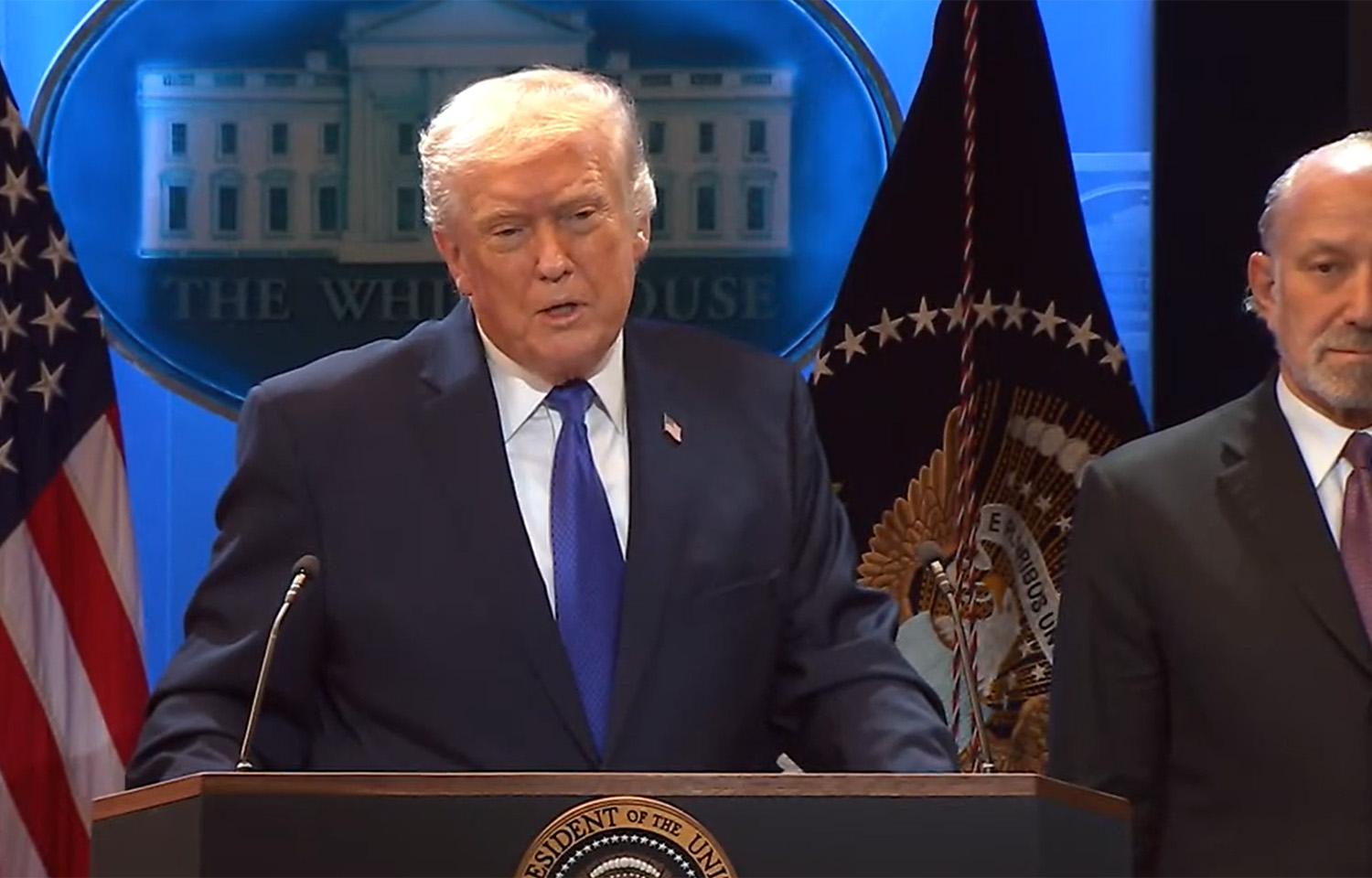
U.S. President Donald Trump said he plans to impose a new 15 percent tariff on all trade following a U.S. Supreme Court decision that invalidated his previous tariffs.
In a press conference following the Supreme Court decision on 20 February – and in a post on his social media site Truth Social that mirrored what he said at the conference – Trump said he plans to use Section 122 of the Trade Act of 1974 to impose a 10 percent tariff “over and above our normal tariffs already being charged.” Section 122 was established to allow the U.S. president to impose duties on other countries related to “large and serious” balance of payments issues.
Following the press conference, on 21 February Trump threatened to increase that tariff rate to 15 percent in a post on his social media site Truth Social.
"During the next short number of months, the Trump Administration will determine and issue the new and legally permissable Tariffs, which will continue our extraordinarily successful process of Making America Great Again - GREATER THAN EVER BEFORE!!!" Trump wrote.
The move comes after the Supreme Court effectively removed Trump’s ability to use the International Emergency Economic Powers Act (IEEPA) of 1977 to implement the sweeping tariffs that became the dominant force of his trade policy in the first year of his second term. Trump promised to enact tariffs before his inauguration and said he will still work to enact them in other ways outside the IEEPA.
“We are also initiating several Section 301 and other investigations to protect our Country from unfair Trading practices,” Trump wrote on Truth Social.
The new tariffs would add to existing tariffs on foreign countries, some of which Trump established during his first term as president. Multiple seafood products are still affected by Section 301 tariffs that Trump enacted against China, which began with a 10 percent tariff in 2018 that kicked off a trade war with China.
Trump’s latest tariffs can only last for a maximum of 150 days based on the statute – though he may have other mechanisms to enact separate tariffs after that deadline passes.
Multiple experts already predicted Trump would use some other method to enact new tariffs.
“The Supreme Court’s ruling that President Trump lacks emergency authority to impose many of his administration’s tariffs removes one arrow from the administration’s quiver, but it doesn’t disarm it,” Emarketer Principal Analyst Zak Stambor said in a release. “While the decision provides some near-term relief, it does not eliminate the broader trade policy uncertainty facing retailers and brands.”
