




U.S. President-elect Donald Trump’s stated plans to raise tariffs on a wide swath of imports has trade experts and seafood trade groups predicting a tumultuous four years for the seafood industry.
Trump has promised to institute a range of trade policies in his coming administration, including adding tariffs as high as 60 percent on goods from China and 20 percent on goods from other countries. Peter Quinter, a U.S. customs and international trade attorney at Florida-based law firm Gunster, told SeafoodSource that any additional import barriers will affect most of the seafood Americans eat.
“Seventy percent of seafood consumed by Americans is from other countries, so whatever international trade policies are espoused by the incoming Trump administration will be significant,” he said. “The incoming Trump administration appears to be very focused on international trade, especially with regard to the implementation of additional tariffs on many commodities applicable to all countries, particularly with China.”
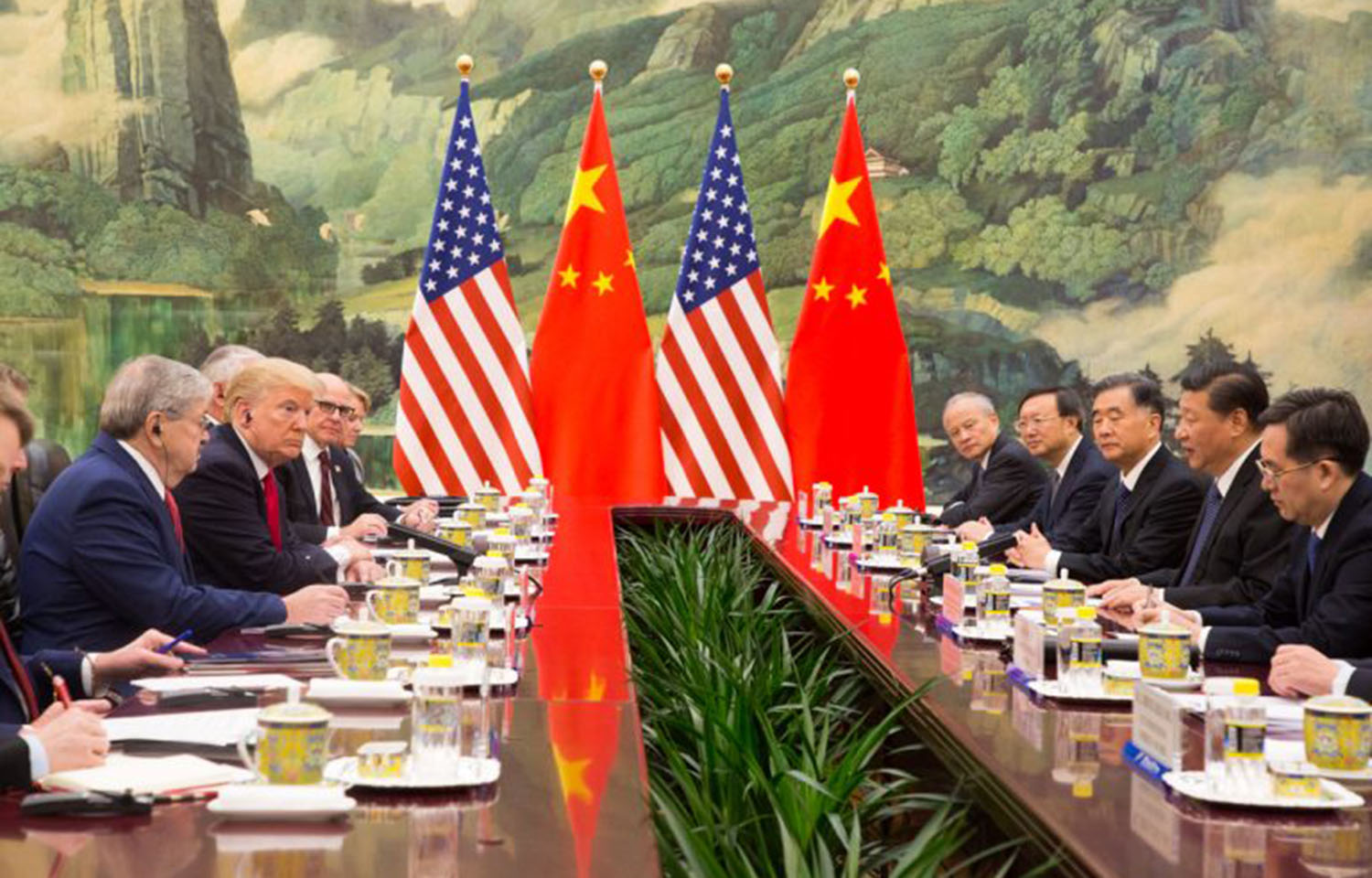
The Trump administration used tariffs extensively during his last four years as president, and he established tariffs on Chinese goods starting in 2018 that impacted several seafood products. Those tariffs kicked off a trade war with China that saw retaliatory tariffs on seafood goods and caused sharp drops in U.S. exports to China. Maine lobster, for example, saw an 84 percent drop in exports immediately following China’s retaliatory tariffs.
However, the Trump administration’s impact on trade will span beyond just tariffs, Quinter said.
As president, he will appoint the secretary of each department in his cabinet, along with the deputy secretary and general counsel. He’ll also appoint the heads of agencies like U.S. Customs and Border Protection (CBP), U.S. Immigration and Customs Enforcement, and the U.S. Trade Representative – all of which will impact trade.
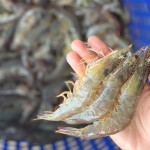
“I expect more antidumping and countervailing duty orders (shrimp is a good example) against countries regarding seafood,” Quinter said. “Particular to China, I expect the Uyghur Forced Labor Protection Act [UFLPA] to continue to expand the number of Chinese seafood suppliers to be added to the UFLPA Entity List maintained by the U.S. Department of Homeland Security.”
The seafood industry in China has been implicated in the use of Uyghur labor, causing some companies in the U.S. to cut ties with Chinese processors and leading U.S. lawmakers to call on the Biden administration to impose Magnitsky sanctions against Chinese companies. The U.S. has also recently implemented new antidumping and countervailing duties on shrimp imports from Ecuador, India, Indonesia, and Vietnam – and Quinter said the U.S. Department of Commerce, NOAA, and U.S. CBP will increase enforcement of trade remedy laws to prevent mislabeling.
Quinter said the administration will likely follow the same playbook it did last time in implementing new tariffs to satisfy legal requirements.
“As the Trump administration did in imposing Section 301 tariffs of 25 percent against products from China being shipped to the United States, the U.S. Department of Commerce had to first examine and establish that China was unfairly engaging in international trade by violating its intellectual property rights obligations,” Quinter said. “There is a provision in all our trade agreements that provides exceptions for ‘national security’ and ‘health and safety,’ and it is likely that the Trump administration will use those same explanations to arguably legally impose new and significant tariffs on imported merchants which would be paid by U.S. importers, despite language to the contrary in our bi-national and multi-national trade agreements and the obligations of membership in the World Trade Organization [WTO].”
Quinter said that the WTO will likely be ineffective at addressing any trade disputes that result from the Trump administration’s plans.
“Unfortunately, it is generally well-known and agreed by members of the WTO that the organization has been ineffective at addressing non-tariff barriers imposed by countries and resolving trade disputes between countries takes far too long,” he said.
Many seafood trade organizations are still waiting to see what comes of Trump’s promises for additional trade barriers. Norwegian Seafood Council Communications Director Martin Skaug told SeafoodSource that it is still “very early days and too soon to tell” the impacts of a Trump administration on Norway’s seafood exports to the U.S.
The U.S. was one of the largest seafood export markets for Norway in October 2024. Norway’s salmon export value increased 11 percent in the month compared to the same period of 2023, and volume increased 17 percent; the country was the largest growth market for both fresh and frozen salmon fillets, according to the NSC.
How that growth will be impacted by the Trump administration remains to be seen, Skaug said.
“Trump’s policies are perceived to be more ‘America first,’ with a stronger tendency on protectionism,” Skaug said. “We are eager to understand how this potentially can impact trade flow in general, specifically for Norwegian exporters with American business partners going forward, but it’s difficult to give a qualified assessment of how this might affect the import of seafood in this point in time.”
The Vietnam Association of Seafood Exporters and Producers (VASEP) is also predicting a mix of opportunities and challenges for its industry’s exports to the U.S. over the next four years. The association said in recent years, the U.S. has been the country’s largest seafood export market, with turnover in the past five years fluctuating between USD 1.5 billion and USD 2.1 billion (EUR 1.4 billion and EUR 1.9 billion) per year.
“Despite always facing strict protection policies such as anti-dumping and anti-subsidy taxes, the demand of the U.S. market is still very large and the quality of Vietnamese seafood is increasingly improved, helping to maintain and expand its position in this market,” VASEP said.
VASEP said the potential for a trade war between the U.S. and China could open up opportunities for Vietnam’s seafood exporters, especially for shrimp and pangasius exports. Vietnam’s pangasius exports to the U.S. have surged in 2024 and haven’t shown signs of slowing.
A trade war and potential supply chain disruptions could also benefit Vietnam’s seafood industry elsewhere, VASEP said. Vietnam could become a source of seafood for countries that want to avoid high tariffs from the U.S., and it could become an alternative supplier.
“To increase seafood exports to the U.S. in the context of changing international trade policies, Vietnamese seafood enterprises need to be proactive and flexible in adapting to market fluctuations,” VASEP said.
Seafood importers could also face trade disruptions leading to both opportunities and challenges, according to Container Exchange Co-Founder an CEO Christian Roeloffs.
“Trump’s re-election could present substantial opportunities for container traders in the U.S. On the domestic front, it’s likely to boost confidence in the economy among our customers (container trades), driving both demand and optimism,” Roeloffs said. “However, the impact of higher tariffs is twofold. While we’ll see inflationary pressure on import prices, volumes may stay stable or even increase, depending on how companies respond to new tariffs and counter-tariffs.”
Stricter trade regulations in the U.S. could cause the supply of containers to tighten, which may impact container availability and add to challenges in the market.
“Overall, while there’s optimism for higher container demand, the evolving policy landscape may introduce volatility and increase costs, particularly as traders adapt to the impact of new tariffs and potential trade barriers,” Roeloffs said.
Some of those trade barriers could also include increased inspections by federal law enforcement agencies at the border, Quinter said.
“I expect more such targeting of Chinese, or suspected Chinese, products by FDA, U.S. Fish and Wildlife, NOAA, CBP, and the Consumer Product Safety Commission,” Quinter said. “An increasing percentage of my legal work is exactly focused on situations in which CBP has either seized seafood or assessed monetary penalties against U.S. seafood companies for allegedly misclassifying imported seafood or misdeclaring the country of origin.”
Trade uncertainty could also impact investments in the seafood industry, Fed By Blue Executive Director Jennifer Bushman told SeafoodSource.
“Continued uncertainty about trade and economic relationships could reduce confidence in international investment and complicate long-term planning for seafood and seaweed exporters and producers,” Bushman said. “Countries that rely on seafood exports to the U.S. might face economic instability if trade policies become more unpredictable.”
Bushman said that Trump’s administration from 2016 to 2020 rolled back environmental regulations, including those related to marine management and marine conservation. That deregulation could lead to increased risks to marine ecosystems and, in turn, disrupt long-term sustainability efforts.
Throughout all of the trade disruptions and potential barriers, a significant portion of the cost will be passed on to the consumer, Quinter said.
“Tariffs are a type of national sales tax paid by the U.S. importer on merchandise purchased overseas and imported into the United States,” he said.
Quinter said despite the myriad potential challenges, there are also opportunities.
“I do think there is an opportunity for the United States to maintain its leadership as the largest economy in the world, to maintain the high standard of living that Americans generally enjoy, and to take advantage of the extraordinary trade and investment by Americans companies with foreign countries that follow our concepts of democracy, rule of law, and capitalism,” he said.
Amid those opportunities, however, trade lawyers will be busy, he said.
“For U.S. Customs and international trade legal experts like me, it’s going to be a wild ride for the next four years,” Quinter said.
